



































Data Analytics in Education: Improving Learning Outcomes
Unlock the full power of data analytics in education to improve student engagement, personalize learning paths, and drive better outcomes in every classroom.
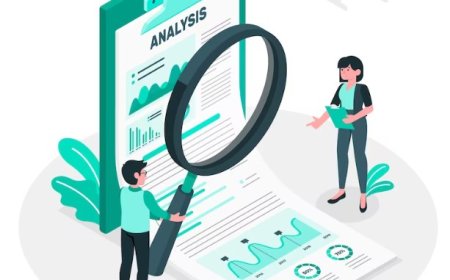
Don't get behind in the educational environment of the future! The various learners of today are difficult for traditional teaching methods to keep up with. Many educators rely on conjecture, and schools struggle to effectively monitor students' progress. This is changing because of data analytics in education, which enables educators to make more informed choices, tailor instruction to each student, and increase overall achievement.
What is Data Analytics in Education?
Basically, educational data analytics is the process of gathering, analyzing, and interpreting data produced in educational settings in order to improve instruction and learning. This information can be in a variety of formats, such as:
-
Student performance on tests and assignments
-
Attendance records

-
Engagement metrics from online learning platforms
-
Interaction data from Learning Management Systems (LMS) like Moodle or Canvas


By analyzing this data, educators can find previously unnoticed patterns and trends that help them make more informed, evidence-based decisions that enhance instruction and promote student learning.
Why Data Analytics Matters in Modern Education
Education is no longer universally applicable. Despite the fact that every student has a different learning style, aptitude, and pace, teachers frequently need to manage big classrooms with few resources. Data analytics can help in this situation:
-
Evidence-Based Decision-Making: Teachers may now organize classes, make well-informed decisions, and enhance overall student learning outcomes by using actual data rather than just their instincts.
-
Early Identification of Struggling Students: By identifying students who are falling behind early on, analytics enables teachers to offer additional assistance, direction, and interventions before minor issues escalate into more significant ones.
-
Personalized Learning Experiences: By using data, teachers may design learning paths that are tailored to the needs, pace, and preferences of individual students, increasing the effectiveness and engagement of their classes.
-
Institutional Performance Improvement: To enhance teaching effectiveness and student outcomes, school administrators can monitor general academic development, pinpoint strengths and shortcomings, and effectively distribute resources.
The significance of data analytics in education becomes evident by offering insightful information throughout the educational system. This is because data analytics in education makes teaching and learning more targeted, effective, and genuinely impactful for every student.
Types of Educational Data Analytics
Understanding the different types of analytics helps to see the full potential of data-driven education:
-
Descriptive Analytics: The query, "What happened?" is addressed by this type. Analyzing a class's average test scores or monitoring attendance trends over a semester are two examples.
-
Diagnostic Analytics: This responds to the question, "Why did it happen?" Teachers are able to pinpoint the causes of poor performance, such as comprehension gaps or low participation.
-
Predictive Analytics: The main question here is "What will happen?" For example, using historical data to anticipate which students are likely to struggle in a course.
-
Prescriptive Analytics: Lastly, prescriptive analytics provides a response to the question, "What should we do?" It recommends solutions such as curriculum modifications, customized assignments, or further tutoring.
Together, these kinds of analytics provide a thorough framework that helps instructors in understanding past achievement and making plans for future advancements.
Key Data Sources in Education
Analytics is built on data, but where does it originate? To better comprehend learning, modern educational institutions gather data from a variety of sources.
-
Learning Management Systems (LMS): Moodle, Canvas, and Blackboard Learn are examples of platforms that efficiently track student involvement, attendance, and assignment submissions.
-
Online Learning Platforms: Data about course progress, module completion, and quiz results are naturally gathered by platforms such as Coursera, edX, and Skillfloor.
-
Student Information Systems: These systems provide a comprehensive picture of the student's journey by storing demographic information, enrollment data, and academic history.
-
Assessment Platforms: Compared to conventional paper-based tests, digital assessments provide more extensive feedback by capturing real-time findings and comprehensive performance insights.
-
Classroom Engagement Tools: Instructors can better understand student involvement by using apps and software that track participation, attention, and interaction levels in the classroom.
-
Library And Resource Usage Data: Digital libraries' and educational resources' analytics monitor what students access, how long they spend using it, and which resources best enhance learning results.
Gathering and merging this data provides a clear picture of how students learn, and data analytics in education enables teachers to evaluate it and make effective strategy improvements.
How Data Analytics Improves Learning Outcomes
At the core of the issue is how data analytics may lead to improved learning. Let's analyze it.
1. Personalized Learning
Every learner learns differently and at a different pace. Educators may tailor classes to each student's unique learning style by using data-driven insights to determine each student's level, strengths, and areas for progress, while encouraging them to study with AI tools that adapt to their individual learning needs.


These findings are used by adaptive learning platforms to design personalized learning pathways that increase learning effectiveness and engagement. Extra exercises are given to students who are having trouble understanding ideas, and difficult assignments are given to advanced students so that everyone advances with confidence.
2. Early Intervention for At-Risk Students
Finding students who are at risk of falling behind is one of predictive data analytics' greatest advantages. Grades, attendance, and engagement trends assist teachers in identifying issues before they become more serious.
Once identified, schools can offer prompt assistance in the form of individualized coursework, mentoring, or tutoring. This proactive strategy depends on careful data analysis to stop minor problems from becoming major academic setbacks.
3. Improving Teaching Strategies
Analytics-driven insights that identify the most effective lessons are beneficial to teachers. Teachers can effectively modify instructional styles and materials when they have a thorough understanding of student performance and engagement.
Teachers can modify their teaching methods, for instance, if pupils react more favorably to interactive videos than text. By ensuring that instruction changes in response to student requirements, this iterative approach demonstrates the true potential of data analytics applications in the classroom.
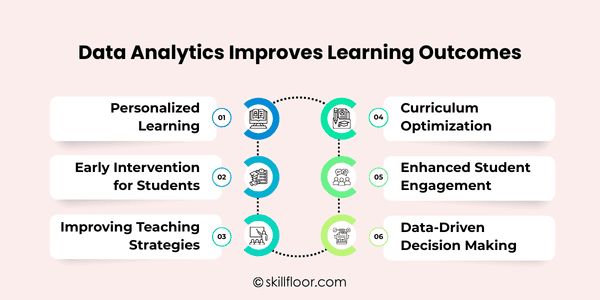
4. Curriculum Optimization
Curriculum analytics identifies the modules in which students perform well or poorly. While easily mastered sections can be accelerated or enhanced, a topic that many students struggle with indicates that it needs to be reviewed.
This method guarantees that the curriculum is effective, pertinent, and in line with learning goals. To increase comprehension and engagement across all subjects, educators can continuously improve their courses.
5. Enhanced Student Engagement
Instructors can monitor student participation in classes, online activities, and discussions by using engagement analytics. By recognizing these trends, teachers can spot distracted students early on.
Instructors can increase interest and involvement by offering interactive content or changing their teaching strategies. Improved comprehension, retention, and general academic achievement are all correlated with higher engagement.
6. Data-Driven Decision Making
Educational data analytics can be used by schools and organizations to make well-informed decisions about instructional practices, policies, and resource allocation. This guarantees that interventions are grounded in facts rather than conjecture.
Data-driven decisions produce quantifiable gains in teaching effectiveness and student learning outcomes, enabling improved academic outcomes overall, from figuring out the ideal class sizes to using new learning technology.
Benefits of Data Analytics for Educators and Learners
Teachers and students can effectively enhance results with the help of data analytics.
For Educators
-
Teachers may improve instruction and pinpoint learning gaps with the use of data-driven insights.
-
Monitoring student participation in class gives a more accurate picture of their conduct.
-
By concentrating on interventions where they are most necessary, teachers can save time and effort.
For Students
-
Students who receive personalized feedback are better able to identify their areas of strength and weakness.
-
Learning becomes more effective and interesting with adaptive learning paths.
-
Early assistance prevents students who are having difficulty from falling behind.
For Institutions
-
Administrators are able to efficiently use resources and monitor overall academic success.
-
Strategic choices about instruction, technology, and curricula are supported by data.
-
Parents and accreditation organizations are among those involved which educational institutions can show improved results to.
Real-World Applications in Education
Data analytics is currently being used by many institutions to enhance learning outcomes:
-
Reducing Dropout Rates: Predictive models are used by universities to track student performance and engagement, identify at-risk individuals, and successfully lower dropout rates.
-
Tracking Classroom Engagement: Dashboards are used in K–12 schools to monitor participation, assignments, and attendance, giving teachers up-to-date information on student engagement.
-
Personalized Learning Resources: EdTech platforms such as Knewton use analytics to offer customized learning resources, enabling students to effectively study at their own speed.
-
Visualizing Complex Data: Teachers and administrators can swiftly evaluate complicated statistics by using tools like Tableau and Power BI, which transform them into charts and dashboards.
-
Enhancing Teacher Performance: To find tactics that enhance learning, assist teachers, and improve student results, schools examine classroom data and instructional methodologies.
-
Optimizing Curriculum Planning: Data is used by institutions to assess the efficacy of their curricula and the distribution of resources, ensuring that resources fulfill the needs of students and optimize learning outcomes.
These applications show how effective use of data can result in quantifiable gains in both institutional efficiency and student achievement.
Challenges and Ethical Concerns
Despite its benefits, data analytics in education comes with challenges:
-
Data Privacy: Unauthorized access or misuse of student information can result in major legal and ethical problems because it is extremely sensitive.
-
Data Privacy: For sensitive student and institutional data to be adequately protected, educational systems must be robust against cyberattacks.
-
Algorithmic Bias: If analytics models are trained on skewed or incomplete datasets, they may unintentionally perpetuate preexisting biases.
-
Misinterpretation of Data: Educators must integrate analytics with human judgment and experience because data by itself cannot supply complete answers.
Although awareness and training are still essential, laws like the General Data Protection Regulation guarantee that educational institutions manage student data properly.
Future of Data Analytics in Education
Education will become more and more data-driven and AI-powered in the future. Among the new trends are:
-
AI-Powered Learning: AI-powered solutions are able to efficiently tailor course content to each student's learning style and speed in real-time.
-
Predictive Success Models: By spotting such problems early on, predictive analytics enables teachers to help kids before they have an adverse effect on their performance.
-
Smart Classroom Technology: For improved student focus and results, classrooms with sensors and analytics enhance lighting, engagement, and learning environments.
-
Enhanced EdTech Integration: In order to provide more effective learning experiences, EdTech platforms are using analytics more and more to track progress, personalize lessons, and increase engagement.
The potential to enhance learning outcomes is practically infinite due to the rapid advancement of technology like artificial intelligence and machine learning.
Do you want to continue leading the way in innovative education? Enroll in a professional and educational data analytics course. Discover how to use AI, predictive models, and real-time insights to improve results, tailor instruction, and increase student engagement—turning data into practical tactics that actually change classrooms.
Using data analytics in education provides teachers and students with access to a more promising and fulfilling educational experience. Teachers may identify problems early, tailor lessons, and design more engaging classrooms by utilizing data insights. Students experience encouragement, confidence in their development, and assistance. Institutions and schools can also make better choices that genuinely support the success of all. With the use of data analytics in education, minor adjustments can have a significant impact, increasing both the effectiveness and enjoyment of instruction. Opportunities abound in the future, and effective use of data analytics in education could have a significant impact right now.
Digital Marketing Courses in Other Locations in India
Ahmedabad | Aurangabad | Bangalore | Bhilai | Bhopal | Bhubaneshwar | Chandigarh | Chennai | Cochin | Coimbatore | Dehra Dun | Delhi | Faridabad | Ghaziabad | Gorakhpur | Guntur | Gurgaon | Guwahati | Hyderabad | Jaipur | Kanpur | Khammam | Kolkata | Lucknow | Madurai | Mumbai | Mysore | Nagpur | Noida | Patna | Pondicherry | Pune | Ranchi | Shimoga | Surat | Thane | Thiruvananthapuram | Tiruchirappalli | Tirupati | Vadodara | Visakhapatnam | Warangal | Jalandhar | Jodhpur | Indore | Durgapur | Jamshedpur | Dhanbad | Kota | Karnal | Udaipur | Amritsar | calicut | Nashik | Ludhiana | varanasi | thrissur | Mangalore | Raipur |