





































How BCom Students Can Start a Career in Data Science
Can BCom students start a career in data science? What skills, steps, and job tips help beginners enter this growing field with ease and confidence for students.
Data science is growing quickly in industries such as e-commerce, banking, and finance. According to statistics from throughout the world, demand is increasing by about 25% annually, and businesses now use data in more than 80% of their decisions.
The majority of data science roles used to be held by engineering students, but this is starting to change. Approximately 35–40% of entry-level data analyst positions are available to non-technical graduates, including BCom students who study Python, SQL, and Excel.
According to hiring sites like LinkedIn, the number of job listings for data roles has grown by over 20–30% annually. Companies now prioritize projects and skills, and more than 60% of recruiters favor real-world experience over degrees.
Technical backgrounds are not a must for data science. Nearly half of new students enrolled in data science courses come from business or commerce fields, according to studies, showing that BCom students can effectively develop professions with regular practice and learning.


What is Data Science (in Simple Terms)?
Data science is the process of gathering, analyzing, and comprehending data in order to help businesses make more informed and better decisions.
To address actual business concerns, data scientists search for patterns and meaningful information concealed in the data rather than only looking at numbers.
Here are some simple real-world examples:
-
Banks use data science to decide whether to approve a loan.
-
E-commerce platforms recommend products based on your browsing history.
-
Companies analyze customer behavior to improve sales and marketing.
So, in short, data science helps businesses answer questions like:
-
What is happening?
-
Why is it happening?
-
What will happen next?
The Growing Importance of Data Science
Every company nowadays gathers a massive amount of data every second, including sales records, consumer purchases, and marketing outcomes. However, unless this material is thoroughly examined and comprehended, it is useless.
Data science helps in transforming this data into insightful knowledge. This is where the practical significance of data science becomes clearly visible. It benefits businesses in several ways, such as:
-
Predicting future trends and customer needs
-
Making better and faster decisions
-
Improving daily business operations
-
Understanding customer behavior more clearly
-
Reducing costs by finding unnecessary spending
-
Increasing profits through better planning
As a result, the need for data specialists is rapidly increasing. In addition to IT companies, it plays a significant role in banking, finance, consulting, retail, healthcare, and many other sectors.
Why BCom Students Have an Advantage in Data Science
BCom students have a strong edge in data science because they already understand business, numbers, and decision-making, which helps them analyze data in a practical way.
-
Understanding Business Basics: Because of your background in commerce studies, you already have a solid understanding of fundamental business concepts like profit, loss, budgeting, and financial planning.
-
Comfort with Numbers: You feel at ease using the financial reports, tables, numbers, and simple computations that are utilized in regular academic assignments.
-
Business Thinking Mindset: Naturally, you consider how real-world business decisions impact costs, earnings, and overall company performance.
-
Basic Excel Exposure: Excel provides a fundamental framework for managing and arranging organized data with ease, and you frequently use it for projects.
-
Real-World Data Connection: Data insights may be readily applied to actual business issues, which is crucial in today's data science careers.
-
Understanding Reports and Analysis: It is easier to understand advanced technologies utilized in data science careers if you already comprehend reports and analysis.



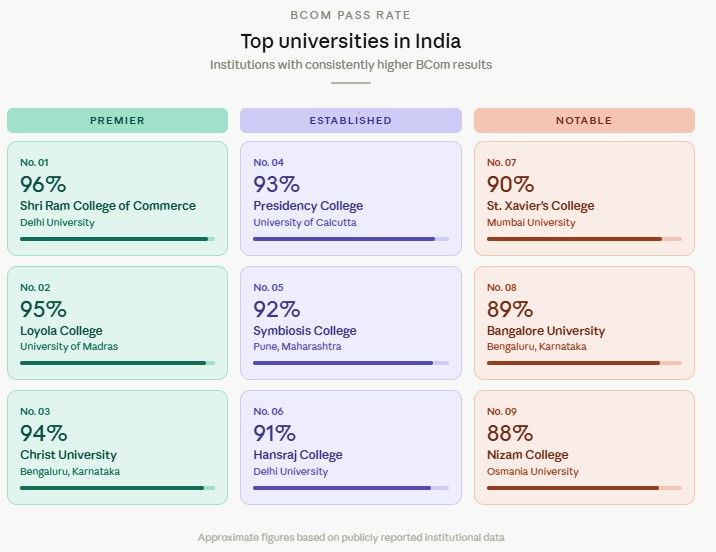
In certain successful academic years, BCom pass rates can reach between 70% and 82%, showing that many students succeed when they understand the fundamentals, adhere to concepts, and prepare regularly.
The Real Challenge for BCom Students
Due to a lack of technical knowledge, uncertain skill paths, and a fear of changing careers, BCom students frequently experience difficulties while joining data science. But with experience and directed study, it is completely possible.
-
Coding Exposure Gap: The majority of BCom students have little to no exposure with the technical tools and code used in data science workplaces.
-
Skill Confusion Issue: Many students don't know what specific skills—like Python, SQL, statistics, or data visualization tools—are required.
-
Career Doubt Fear: Many times, people worry that technical positions like data science or analytics won't accept someone with a background in business.
-
No Clear Roadmap: After graduation, students typically do not receive a systematic, step-by-step learning route that makes it easy for them to pursue careers in data science.
-
Learning Direction Gap: Students find it difficult to choose what to learn first, second, and how to develop practical skills without sufficient guidance.
-
Transition Possibility: With dedication and insistence, BCom students can effectively transition careers because data science focuses on skills rather than degrees.
Skills BCom Students Need to Enter Data Science
You don't have to become an expert in every field at once to pursue a career in data science from a BCom background. Concentrate on gradually developing skills:
1. Excel for Data Analysis
In data analysis, Excel is frequently the first tool used. It helps data organization, basic computations, and the comprehension of fundamental patterns in corporate data.
-
Pivot tables
-
Basic formulas
-
Data cleaning and sorting
-
Charts and dashboards
2. SQL (Structured Query Language)
Large databases that hold business data are worked with using SQL. It facilitates the rapid extraction of pertinent data from structured data systems.
-
Retrieving data using queries
-
Filtering and sorting data
-
Aggregations and joins
-
Managing database tables efficiently
3. Python Programming
Python is a popular programming language in data science that is both simple and effective. It facilitates model construction, automation, and data analysis.
-
Basic programming concepts
-
Libraries like Pandas and NumPy
-
Data manipulation and analysis
-
Writing simple automation scripts
4. Statistics and Probability
Proper understanding and interpretation of facts is helped by statistics. Making precise decisions based on data trends is crucial.
-
Mean, median, mode
-
Probability concepts
-
Correlation and regression basics
-
Understanding data distribution patterns
5. Data Visualization Tools
For ease of comprehension, data visualization tools assist in transforming complex data into easy visual formats like dashboards and charts.
-
Power BI
-
Tableau
-
Excel Charts
-
Google Data Studio
Simple Roadmap for BCom Students to Start a Career in Data Science
This roadmap provides an easy-to-understand explanation of how a BCom student without any technology-related experience might gradually build a career in data science, data analysis, and business analytics.
Step 1: Build Interest in the Data Field
Start by learning the importance of data and how businesses actually use it to make better decisions.
-
Discover how businesses can leverage customer data in simple ways to increase sales, services, and business success.
-
Examine actual examples such as banks and e-commerce platforms that use data to make better decisions.
-
Learn how the basic concepts of data science may help businesses use facts and figures to address basic challenges.
-
Watch introductory videos about the application of data analytics to everyday company operations.
Step 2: Start with Basic Computer Skills
Become comfortable with computers before learning skills to make working with data easier later.
-
Learn how to utilize Excel and basic computer operations, such as files, directories, and basic data entry tasks.
-
For increased speed and confidence, practice typing, data formatting, and using basic computer tools.
-
Learn how to handle data using spreadsheets for basic business activities.
-
Learn how to save, arrange, and handle files for data processing tasks.
Step 3: Learn Simple Data Tools
Learn how to work with structured data using tools that are utilized in actual work.
-
Learn Excel step-by-step to create basic tables, arrange data, and comprehend business numbers with ease.
-
Start a data science course to understand the fundamentals of SQL and how data is retrieved and stored in database systems.
-
Recognize how data analysis tools can be used to identify trends in company data.
-
Find out how databases help businesses with their data science process.
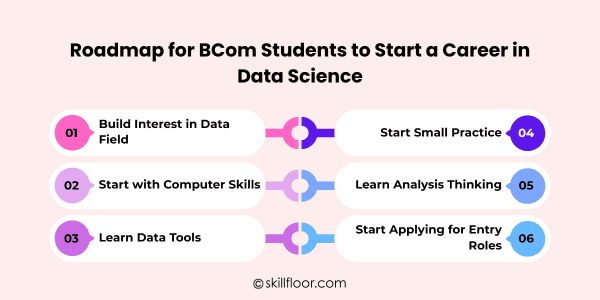
Step 4: Start Small Practice
To gain an understanding of the appearance and behavior of real data, practice with basic datasets.
-
To learn how data functions, try working with basic datasets like sales or marks data.
-
Practice resolving little issues with data sheets, such as calculating averages, totals, and straightforward comparisons.
-
Utilize fundamental data cleaning methods to eliminate mistakes or duplicate values.
-
Discover how data analytics initiatives use small datasets.
Step 5: Learn Basic Analysis Thinking
Instead of speculating on answers, start thinking logically utilizing data.
-
Discover how to spot trends in data, such as changes in numbers over time or increases or decreases.
-
Try to use data rather than conjecture or guesswork to answer basic questions.
-
Recognize how data science principles aid in decision-making.
-
Practice utilizing basic business data analysis to find trends.
Step 6: Start Applying for Entry Roles
After you understand the fundamentals, look into internship and employment opportunities.
-
To obtain experience, apply for jobs as a junior analyst, data entry, or intern.
-
Continue honing your talents as you strive to advance into more senior data science jobs in the future.
-
Gain confidence by completing easy tasks using actual corporate data.
-
Learn the fundamentals of data reporting and analysis occupations.
Best Resources and Certifications to Learn Data Science
To begin working in data science, costly degrees are not necessary. You can start with basic online courses, practice sites, and certificates that gradually assist you in developing practical skills.
-
Google Certification Path: The Google Data Analytics Certificate is an easy-to-learn program that provides fundamental data skills, tools, and basic real-world analysis that are used in many modern businesses.
-
Microsoft Power BI Learning: You may learn how to easily and practically build dashboards, reports, and visual insights from data for business usage with the Microsoft Power BI Certification.
-
Skillfloor Data Science Course: The Skillfloor Data Science Course is an organized introductory curriculum that covers the fundamentals of data science, tools, and hands-on learning in an easy-to-follow manner.
-
Udemy Python Courses: You may learn the fundamentals of coding, data handling, and basic programming required for data analysis and small projects with the help of Udemy's beginner-friendly Python courses.
-
Kaggle Practice Platform: Kaggle is a free site where you can solve challenges, use actual datasets, and learn data science through practical projects and contests.
-
Consistent Self Learning: Choosing a single platform is not as essential as consistent practice. Over time, you can gradually develop strong data science skills by daily learning, little tasks, and revision. With lessons spread across Google, Power BI, Skillfloor, Udemy, and Kaggle, the Recall second brain app gives you one place to save what you learn from each platform. Save a video tutorial, an article, or a course PDF as you go, and it gets summarized and organized automatically, so revision means searching one place instead of hunting across five different tabs.
Career Opportunities After Learning Data Science
After studying data science, students can pursue a variety of increasingly sought-after careers in a variety of sectors, including marketing, finance, IT, and business analytics.
-
Data Analyst: Focuses on gathering, cleaning, and evaluating corporate data so that businesses may use insights to make better, quicker, and more accurate decisions.
-
Business Analyst: Investigates business challenges using data and assists companies in enhancing performance, resolving problems, and making simple, successful strategic choices.
-
Junior Data Scientist: Uses fundamental data science skills to examine datasets, identify trends, and assist senior teams in developing data-driven solutions.
-
Financial Analyst: Evaluates market trends, financial reports, and business performance information to help with budgeting and investment planning.
-
Marketing Analyst: Examines sales data, campaign success, and consumer behavior to enhance marketing tactics and boost consumer engagement.
-
Data Visualization Specialist: Creates simple dashboards, reports, and charts to give teams a clear visual representation of complicated data insights.
How Your Commerce Subjects Help You in Data Science
Commerce curricula provide BCom students with a solid foundation for beginning a career in data science. Many of the principles you have already studied are directly applicable to data analysis and decision-making, even if you lack technical expertise.
-
You can better comprehend numbers, financial records, and organized data by taking Accountancy. When working with datasets in businesses, this is really helpful. Calculations, recordkeeping, and balancing—all crucial aspects of data handling—are already familiar to you.
-
One of the most crucial topics in data science is statistics. You've previously learned the fundamentals of probability, averages, and data interpretation. These are frequently employed in data analysis to identify trends and generate forecasts.
-
You can better comprehend markets, supply, demand, and trends by studying economics. This information aids in the interpretation of business data and helps you comprehend the reasons behind certain shifts in consumer or sales behavior.
-
Business studies teach you how businesses operate, make decisions, and expand. This aids in your comprehension of actual business issues, which is data science's primary objective.
-
You can learn about real-world business data, financial reports, and compliance-related information—all of which are frequently examined in businesses—by taking courses like taxation and finance.
Overall, you have a strong understanding of business and statistics because of your history in commerce, which makes learning data science simpler and more useful.
Common Challenges and How to Overcome Them
When beginning data science, many BCom students face confusion, nervousness, and a lack of direction; nevertheless, these obstacles can be overcome using easy learning techniques.
-
Coding Knowledge Gap: If you don't know how to code, you can start with basic Python and practice every day.
-
Skill Confusion Problem: A clear starter plan for learning data science might help clear up any confusion regarding skills.
-
Fear of Technical Background: By doing small projects and progressively acquiring confidence, one might lessen their fear of technical background.
-
Lack of Guidance: By adhering to online courses, mentors, and structured learning platforms, one can overcome a lack of supervision.
-
Difficulty in Statistics: Learning fundamental ideas like probability and averages gradually can help reduce the difficulty of statistics.
-
Lack of Practice: Working with real datasets and basic practical activities on a regular basis might help overcome a lack of practice.
Simple 6–8-Month Data Science Learning Plan for BCom Students
Month 1: Foundations (Excel + Basic Statistics)
Goal: Get comfortable with data
Learn Microsoft Excel basics:
-
Formulas (SUM, IF, VLOOKUP, INDEX-MATCH)
-
Pivot Tables, Charts
Learn basic statistics:
-
Mean, Median, Mode
-
Percentage, Growth Rate
-
Basic probability
Month 2: Start Programming (Python Basics)
Goal: Learn beginner coding
Install and use Python
Topics:
-
Variables, loops, conditions
-
Lists, dictionaries
-
Functions
Month 3: Data Analysis with Python
Goal: Work with real datasets
Learn libraries:
-
NumPy
-
Pandas
Tasks:
-
Cleaning data
-
Filtering and grouping
-
Handling missing values
Month 4: Data Visualization + SQL
Goal: Present data clearly
Visualization tools:
-
Matplotlib
-
Seaborn
Learn SQL:
-
SELECT, WHERE, GROUP BY
-
Joins
Month 5: Business Analysis + Projects
Goal: Apply your BCom knowledge
Focus on:
-
Business insights from data
-
KPIs (Revenue, Profit Margin, ROI)
Month 6: Intro to Machine Learning
Goal: Learn basics (no heavy math)
Learn:
-
Regression (predict sales)
-
Classification (customer segmentation)
Use:
-
Scikit-learn
Month 7–8: Projects + Job Preparation
Goal: Become job-ready
Build 2–3 strong projects:
-
Loan prediction
-
Customer churn analysis
-
Business dashboard
Create portfolio:
-
Upload projects on GitHub
Prepare:
-
SQL + Python interview questions
-
Case studies
FAQs – Data Science for BCom Students
1. Can a BCom student learn data science?
Yes, a BCom student can easily learn data science by starting with basic tools like Excel, SQL, and Python, along with simple practice.
2. Do I need coding for data science?
Yes, basic coding is needed, but you can start with simple Python and learn step by step without any advanced programming knowledge.
3. Is data science hard for beginners?
No, it is not hard if you learn step by step. Starting with basics makes it simple and easy to understand.
4. What jobs can I get after learning data science?
You can apply for jobs like Data Analyst, Business Analyst, Financial Analyst, and Junior Data Scientist in many industries.
5. How much time does it take to learn data science?
It usually takes around 6 to 8 months of regular practice to learn basics and become job-ready for entry-level roles.
For BCom students, beginning a career in data science is extremely possible if they take a simple and regular course of study. You don't have to be a technical expert or have perfect coding skills. Consistency, curiosity, and practice are what really count. Learning programs like Excel, SQL, and Python gradually might help you gain confidence. You already have an advantage when it comes to business and statistics because of your history in commerce. Continue studying gradually, take on minor tasks, and exercise patience. You may establish a solid and prosperous career in data science over time.
Data Science Course in Bangalore | Data Science Training in Chennai | Data Science Training in Coimbatore | Artificial Intelligence Course in Bangalore | AI Course in Chennai | Digital Marketing Course in Bangalore | Digital Marketing Course in Chennai | Digital Marketing Course in Coimbatore
Digital Marketing Courses in Other Locations in India
Ahmedabad | Aurangabad | Bangalore | Bhilai | Bhopal | Bhubaneshwar | Chandigarh | Chennai | Cochin | Coimbatore | Dehra Dun | Delhi | Faridabad | Ghaziabad | Gorakhpur | Guntur | Gurgaon | Guwahati | Hyderabad | Jaipur | Kanpur | Khammam | Kolkata | Lucknow | Madurai | Mumbai | Mysore | Nagpur | Noida | Patna | Pondicherry | Pune | Ranchi | Shimoga | Surat | Thane | Thiruvananthapuram | Tiruchirappalli | Tirupati | Vadodara | Visakhapatnam | Warangal | Jalandhar | Jodhpur | Indore | Durgapur | Jamshedpur | Dhanbad | Kota | Karnal | Udaipur | Amritsar | calicut | Nashik | Ludhiana | varanasi | thrissur | Mangalore | Raipur |