













































How to Become a Cyber Security Analyst
Learn how to become a cybersecurity analyst step by step with key skills, certifications, and career tips to start and grow in this fast-growing new tech field.

Did you know that cybercrime is projected to cost the world trillions of dollars annually, and yet the demand for skilled professionals to fight it remains largely unmet? Cybersecurity is one of the fastest-growing fields today, as businesses and organizations put increasing emphasis on protecting their digital assets from evolving threats.
A career as a Cybersecurity Analyst offers not only job stability and high demand but also the opportunity to play a critical role in safeguarding sensitive data and networks. With cyber threats on the rise, companies across every sector are actively seeking skilled analysts to secure their systems. Whether you're a complete beginner or an IT professional looking to specialize, this guide breaks down every step you need to take to build a successful career in cybersecurity.
Who is a Cybersecurity Analyst?
A cybersecurity analyst is responsible for monitoring an organization’s systems, databases, and networks to protect them from cyberattacks. They identify security risks, detect suspicious activity, and implement measures to prevent data breaches.
They use various security tools and techniques to analyze threats and respond effectively to incidents. A strong understanding of network security, system administration, and risk management is essential for this role. Knowledge of scripting and programming, such as Python and SQL, can be helpful for automation and analysis. Along with technical skills, expertise in security practices like ethical hacking helps professionals understand and prevent potential cyber threats effectively.


What Does a Cybersecurity Analyst Do?
A Cybersecurity Analyst plays a critical role in protecting an organization's digital assets from ever-evolving cyber threats. They act as the first line of defense, ensuring that systems, networks, and sensitive data remain safe and secure at all times.
-
Monitors Networks and Systems — Continuously watches an organization's network traffic and systems for suspicious activity, unauthorized access, or unusual behavior.
-
Identifies and Responds to Threats — Detects cyberattacks like malware, phishing, and ransomware, and takes immediate action to contain and neutralize them.
-
Conducts Vulnerability Assessments — Regularly tests and scans systems to find security weaknesses before hackers can exploit them.
-
Implements Security Measures — Installs and manages firewalls, antivirus software, encryption tools, and other security solutions to protect data and infrastructure.
-
Investigates Security Breaches — Analyzes past incidents to understand how a breach occurred, what was affected, and how to prevent it from happening again.
-
Ensures Compliance and Reporting — Makes sure the organization follows industry regulations (like GDPR, ISO 27001, HIPAA) and prepares detailed security reports for management.
Skills You Need to Become a Cybersecurity Analyst
Technical Skills
-
Network Security and Architecture: Understanding how networks operate is the foundation of cybersecurity. Analysts must know how data flows, how devices communicate, and how to secure every layer of a network to prevent unauthorized access and protect sensitive information.
-
Operating System Knowledge: Cybersecurity analysts must be comfortable working across multiple operating systems. Proficiency in both Windows and Linux environments is essential for effective threat detection, system monitoring, and incident response in enterprise settings.
-
Ethical Hacking and Penetration Testing: Understanding how attackers think and operate is one of the most valuable skills an analyst can have. Ethical hacking allows analysts to find and fix vulnerabilities before malicious hackers can exploit them and cause damage.
-
SIEM Tools and Threat Detection: Security Information and Event Management tools are at the heart of a cybersecurity analyst's daily workflow. These platforms help collect, analyze, and respond to security events across an entire organization in real time.
-
Cryptography and Data Protection: Cryptography is essential for protecting sensitive information from unauthorized access. Analysts must understand encryption methods and apply them to secure data both in storage and during transmission across networks.
-
Scripting and Programming Knowledge: Knowing how to write and read code is a major advantage for cybersecurity analysts. Scripting skills allow analysts to automate repetitive tasks, analyze malware, build custom security tools, and respond to threats more efficiently.
Non-Technical Skills
-
Analytical and Critical Thinking: Cybersecurity analysts deal with complex and constantly evolving threats that require sharp analytical skills. The ability to think critically helps them assess situations accurately and make well-informed security decisions under pressure.
-
Communication: Clearly expressing technical findings to both technical teams and non-technical stakeholders is essential. Strong communication ensures that security issues are understood and acted upon quickly at all levels of the organization.
-
Attention to Detail: In cybersecurity, even the smallest overlooked detail can lead to a major breach. Analysts must be highly observant and thorough in everything they do, from reviewing system logs to configuring security settings and access controls.
-
Problem-Solving Ability: Cyber threats are unpredictable and rarely follow a script. Cybersecurity analysts must be resourceful and creative problem-solvers who can quickly develop effective solutions when facing new and unknown threats in high-pressure situations.
-
Continuous Learning and Adaptability: The cybersecurity field changes constantly, with new threats, tools, and regulations emerging every day. Analysts who commit to lifelong learning stay ahead of attackers and remain valuable assets to their organizations.
Who Can Learn Cyber Security?
Cybersecurity is not restricted to IT professionals or coding experts. Anyone with curiosity, problem-solving skills, and an interest in technology can pursue this career. Beginners from IT, engineering, or even non-technical backgrounds can start learning cybersecurity fundamentals.
Learn cybersecurity for beginners if you:
-
Like solving problems
-
Are curious about how systems work
-
Want a secure career
-
Are from IT, engineering, or even non-technical backgrounds
Step-by-Step Guide to Becoming a Cybersecurity Analyst
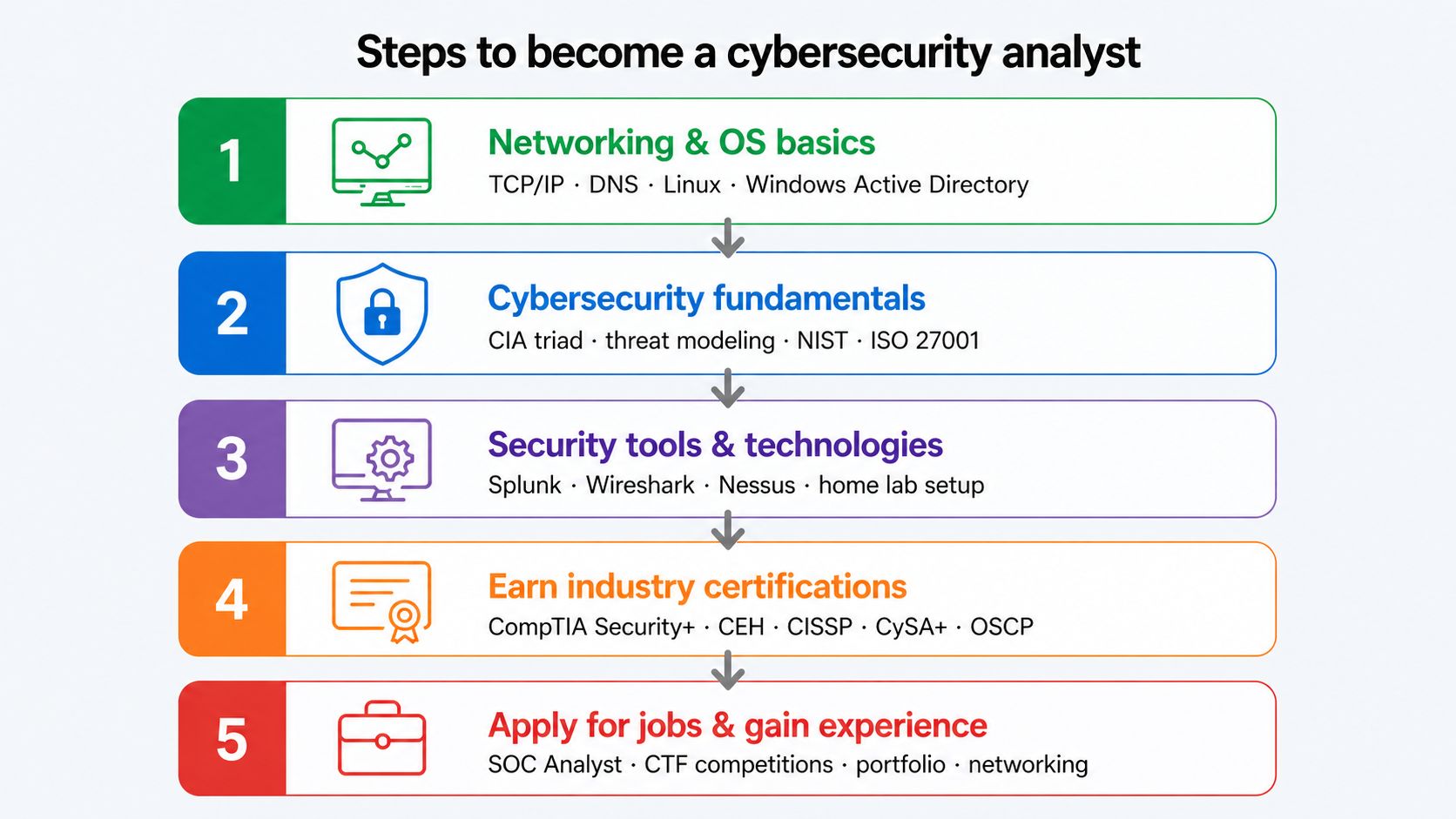
1. Learn the Basics of Networking and Operating Systems: Start by building a strong foundation in how networks and operating systems work. Understanding how data moves across systems and how devices communicate is essential before diving into any cybersecurity concept or tool.
-
Study Network Fundamentals: Learn core concepts like IP addressing, DNS, TCP/IP, HTTP, and how routers and switches manage data flow across a network.

-
Get Comfortable with Linux: Practice using the Linux command line daily, as most cybersecurity tools and server environments are built on Linux-based systems.
-
Understand Windows Environments: Learn how Windows Active Directory, Group Policy, and user permissions work, as most enterprise organizations rely on Windows infrastructure.
-
Use Online Labs: Practice networking and OS skills using free platforms like Cisco Packet Tracer, TryHackMe, or virtual machines to build hands-on experience.


2. Gain Knowledge of Cybersecurity Fundamentals: Once you understand networks and systems, begin learning the core principles of cybersecurity. This step helps you understand how threats work, what defenses exist, and how organizations protect their digital assets from attacks.
-
Learn Security Concepts: Study key topics like the CIA triad (Confidentiality, Integrity, Availability), threat modeling, risk management, and common attack types.
-
Understand Common Threats: Familiarize yourself with malware, phishing, ransomware, denial-of-service attacks, and social engineering tactics used by cybercriminals.
-
Study Security Frameworks: Get introduced to industry frameworks like NIST, ISO 27001, and CIS Controls that guide organizations in building strong security postures.
-
Take Beginner Courses: Enroll in beginner-friendly cybersecurity courses on platforms like Coursera, Udemy, or Cybrary to build a structured knowledge base.
3. Learn Security Tools and Technologies: Hands-on experience with real security tools is what separates a theoretical learner from a job-ready analyst. This step focuses on getting comfortable with the tools used every day in a cybersecurity role.
-
Practice with SIEM Tools: Get hands-on experience with platforms like Splunk or Microsoft Sentinel to learn how to monitor, detect, and respond to security incidents.
-
Use Network Analysis Tools: Learn to capture and analyze network traffic using tools like Wireshark to identify suspicious activity and understand data flow.
-
Explore Vulnerability Scanners: Practice using tools like Nessus or OpenVAS to scan systems for known vulnerabilities and generate detailed security assessment reports.
-
Set Up a Home Lab: Build a personal lab environment using virtual machines to safely test tools, simulate attacks, and practice security scenarios without any real-world risk.
4. Earn Industry-Recognized Certifications: Certifications validate your knowledge and skills to potential employers. They demonstrate that you are serious about cybersecurity and have met a recognized standard of expertise in the field.
-
Start with CompTIA Security+: This entry-level certification covers core security concepts and is widely recognized by employers as a great starting point for beginners.
-
Pursue CEH Certification: The Certified Ethical Hacker certification teaches offensive security techniques and helps you understand how attackers think and operate.
-
Work Toward CISSP: Once you gain experience, aim for the Certified Information Systems Security Professional certification, which is highly valued for senior analyst roles.
-
Add Specialized Certifications: Consider certifications like CompTIA CySA+, AWS Security Specialty, or OSCP to demonstrate expertise in specific areas of cybersecurity.
5. Apply for Jobs and Build Real-World Experience: With skills and certifications in place, it is time to enter the job market. Gaining real-world experience through internships, entry-level roles, or freelance projects will accelerate your growth as a cybersecurity professional.
-
Build a Strong Portfolio: Document your home lab projects, CTF challenge solutions, and security research to showcase your practical skills to potential employers.
-
Apply for Entry-Level Roles: Look for positions like SOC Analyst, IT Security Technician, or Junior Penetration Tester to get your first foot in the door of the industry.
-
Participate in CTF Competitions: Join Capture the Flag competitions on platforms like Hack The Box or PicoCTF to sharpen your skills and gain recognition in the security community.
-
Network with Professionals: Attend cybersecurity conferences, join LinkedIn groups, and connect with industry professionals to discover job opportunities and stay updated on trends.
Training programs like Skillfloor focus on this hands-on learning approach, helping students build practical cybersecurity skills, gain real-world experience with security tools, and become job-ready for industry roles.
Cybersecurity Analyst Job Outlook
The demand for cybersecurity analysts is growing at an exceptional rate worldwide. According to the U.S. Bureau of Labor Statistics (BLS), employment of information security analysts is projected to grow 33% from 2023 to 2033, making it one of the fastest-growing occupations in the technology sector. This surge is driven by the increasing frequency of cyberattacks, widespread digital transformation across industries, and the growing need for organizations to protect sensitive data and critical infrastructure.
In India, the demand is equally strong, with companies across banking, healthcare, IT, and e-commerce sectors actively hiring skilled cybersecurity professionals. With a global shortage of over 3.5 million unfilled cybersecurity positions, as reported by Cybersecurity Ventures, the job outlook for cybersecurity analysts remains extremely promising for years to come.
An Overview of Cybersecurity Analyst Salaries
Cybersecurity analyst salaries in India vary based on experience, specialization, and location. The figures below are sourced from leading platforms such as Glassdoor, Ambitionbox, and LinkedIn Salary Insights (2025–2026).
|
Experience Level |
Average Salary (INR LPA) |
Typical Roles / Notes |
|
Entry-Level (0–2 years) |
₹4 – ₹7 LPA |
Junior Security Analyst, SOC Analyst Level 1, IT Security Technician; learning threat monitoring and basic incident response |
|
Mid-Level (2–5 years) |
₹7 – ₹14 LPA |
Cybersecurity Analyst, Threat Intelligence Analyst; handling vulnerability assessments, SIEM tools, and security policy development |
|
Senior-Level (5–10 years) |
₹14 – ₹22 LPA |
Senior Security Analyst, Security Engineer; leading investigations, designing security architecture, and mentoring junior analysts |
|
Lead / Principal (10+ years) |
₹22 – ₹35+ LPA |
Security Manager, Security Architect, CISO; managing teams, defining security strategy, and overseeing enterprise-wide security programs |
|
Specialized Roles |
₹18 – ₹40+ LPA |
Penetration Tester, Cloud Security Specialist, Digital Forensics Analyst, Malware Analyst; salaries vary based on expertise, certifications, and location |
Frequently Asked Questions (FAQs)
1. Is cybersecurity a good career choice in 2026?
Yes, cybersecurity is a highly in-demand and stable career with growing global opportunities. With over 3.5 million unfilled cybersecurity jobs worldwide and rising cyber threats, it offers strong job security, high salaries, and long-term career growth.
2. Can a non-technical person become a Cybersecurity Analyst?
Yes, even non-technical individuals can enter cybersecurity with the right training and mindset. Starting with basic courses and certifications helps build skills step by step.
3. Which certification is best for a beginner in cybersecurity?
CompTIA Security+ is one of the best beginner-friendly certifications in cybersecurity. Other options include Network+, CEH, and the Google Cybersecurity Certificate.
4. How long does it take to become a Cybersecurity Analyst?
It usually takes 1 to 2 years for beginners to become job-ready in cybersecurity. Those with IT background may transition faster within 6 to 12 months.
5. What is the starting salary of a Cybersecurity Analyst in India in 2026?
Entry-level salaries typically range between ₹4 LPA to ₹7 LPA in India. With experience and certifications, it can grow to ₹14 LPA or more.
Becoming a Cybersecurity Analyst is one of the most rewarding and future-proof career choices you can make in today's technology-driven world. With the right combination of skills, certifications, and hands-on experience, you can build a strong and fulfilling career dedicated to protecting organizations from increasingly sophisticated cyber threats. As businesses across every industry continue to make security a top priority, the demand for skilled and qualified cybersecurity professionals shows no signs of slowing down. Whether you are just starting your journey or transitioning from another IT role, the steps and insights shared in this guide will help you move forward with confidence and clarity on your path to becoming a successful Cybersecurity Analyst.
Artificial Intelligence Course | Data Science Courses | Data Analytics Course | Digital Marketing Course
Digital Marketing Courses in Other Locations in India
Ahmedabad | Aurangabad | Bangalore | Bhilai | Bhopal | Bhubaneshwar | Chandigarh | Chennai | Cochin | Coimbatore | Dehra Dun | Delhi | Faridabad | Ghaziabad | Gorakhpur | Guntur | Gurgaon | Guwahati | Hyderabad | Jaipur | Kanpur | Khammam | Kolkata | Lucknow | Madurai | Mumbai | Mysore | Nagpur | Noida | Patna | Pondicherry | Pune | Ranchi | Shimoga | Surat | Thane | Thiruvananthapuram | Tiruchirappalli | Tirupati | Vadodara | Visakhapatnam | Warangal | Jalandhar | Jodhpur | Indore | Durgapur | Jamshedpur | Dhanbad | Kota | Karnal | Udaipur | Amritsar | calicut | Nashik | Ludhiana | varanasi | thrissur | Mangalore | Raipur |