





























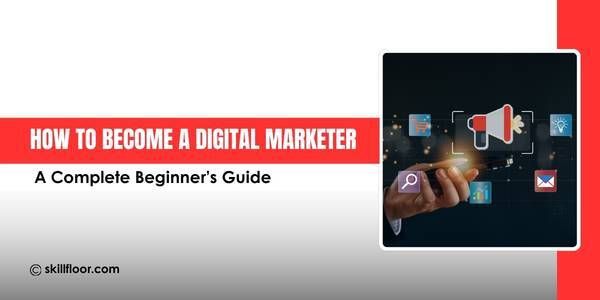
How to Become a Digital Marketer: A Complete Beginner’s Guide
Learn how to become a digital marketer step by step as a beginner. Discover simple skills, tools, and tips to start, grow, and build a strong career in marketing.
Are you preparing for a career that will still be in demand in the next 5 years?
The global digital marketing industry is expected to reach nearly $786 billion by 2026, according to LinkedIn’s digital marketing industry projections. This clearly shows that businesses are investing heavily online, and they need skilled professionals to manage it.
According to Semrush’s 2026 digital marketing statistics report, nearly 70% of marketers use AI for SEO and content, proving that modern marketing is driven by tools and data.
If you don’t build these skills now, you risk falling behind.


And here is something most beginners miss — 95% of B2B buyers are not actively looking to purchase at any given time, as explained in this detailed Search Engine Land article on B2B marketing trends and buyer behaviour.
This means digital marketing is not just about selling. It is about staying visible until the customer is ready.
Industries are moving quickly from traditional marketing to digital platforms. Businesses now rely on social media, search engines, websites, and online ads to reach their audience and grow.
Because of this shift, Digital Marketing has become one of the most practical and high-growth career options today. Whether you are a student, a recent graduate, or planning a career switch, it can open doors to real opportunities, flexible work, and long-term growth.
What Is Digital Marketing?
Digital Marketing is the process of promoting products, services, or brands using online platforms and digital technologies. It allows businesses to reach their target audience through various internet-based channels and communicate with them effectively. Today, Digital Marketing plays a crucial role in helping companies build brand awareness, generate leads, and drive sales.
Digital Marketing includes multiple channels such as:
-
Search engines like Google and Bing, where businesses appear in search results
-
Social media platforms such as Instagram, Facebook, and LinkedIn for audience engagement
-
Websites and blogs are used to share information and attract visitors
-
Email marketing for direct communication with customers
-
Online advertisements, including display ads and paid campaigns
Unlike traditional marketing methods, Digital Marketing offers measurable results. Businesses can track user behavior, analyze campaign performance, and understand customer preferences in real time. It also allows precise audience targeting based on demographics, interests, and online activity. This makes Digital Marketing more cost-effective, flexible, and result-oriented, helping businesses continuously improve their strategies and achieve better outcomes.
Why Digital Marketing Is in High Demand
The quick growth of the internet and smartphone usage has completely changed how people discover, interact with, and purchase from brands. As more consumers spend time online, businesses are shifting their focus from traditional advertising to Digital Marketing to reach their target audience more effectively and efficiently.
Key Industry Statistics
-
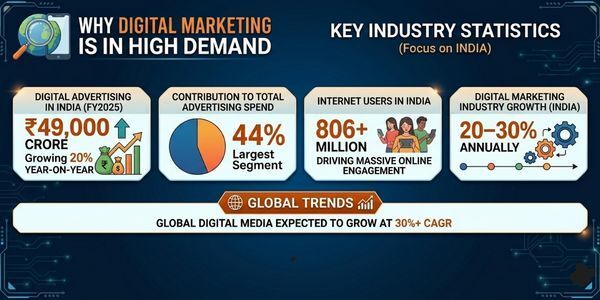
Digital advertising in India reached ₹49,000 crore in FY2025, growing 20% year-on-year
-
It contributes to 44% of total advertising spend, making it the largest segment
-
India has over 806 million internet users, driving massive online engagement
-
The Digital Marketing industry in India is growing at 20–30% annually
-
Global digital media is expected to grow at 30%+ CAGR
What This Means
-
Increasing demand for skilled Digital Marketing professionals
-
Better salary opportunities across roles
-
Strong career stability and long-term growth potential
These trends clearly show why Digital Marketing is one of the fastest-growing and most secure career options today.
Skills Required to Become a Digital Marketer
To build a successful career in Digital Marketing, you need a combination of technical knowledge, creative thinking, and analytical ability. Since Digital Marketing involves multiple channels and strategies, having a well-balanced skill set helps you plan, execute, and optimize campaigns effectively. These skills not only improve your performance but also increase your chances of getting better job opportunities and career growth.


Core Skills
-
Search Engine Optimization (SEO) to improve website visibility on search engines
-
Social Media Marketing (SMM) to engage audiences and build brand presence
-
Content Marketing to create valuable and relevant content
-
Email Marketing to communicate directly with customers
-
Paid Advertising (Google Ads, Meta Ads) to drive targeted traffic and conversions
Technical Skills
-
Basic understanding of HTML and website structure
-
Knowledge of Google Analytics and data tracking tools
-
Ability to use keyword research tools for SEO and content planning
Soft Skills
-
Creativity and storytelling to create engaging campaigns
-
Strong communication skills for effective messaging
-
Analytical thinking to interpret data and improve strategies
Mastering these skills will help you become a well-rounded Digital Marketing professional ready for real-world challenges.
Step-by-Step Guide to Becoming a Digital Marketer
Starting a career in Digital Marketing requires a structured approach that combines learning, practice, and real-world experience. By following these steps, you can build strong skills and grow confidently in this field.
Step 1: Understand Digital Marketing Basics
Begin by learning the core concepts of Digital Marketing to build a strong foundation.
Focus on:
-
SEO basics
-
Social media platforms
-
Content creation
-
Paid advertising
You can learn through:
-
Free online resources
-
YouTube tutorials
-
Beginner-friendly courses
Step 2: Choose Your Specialization
Digital Marketing offers various career paths. Select one based on your interest and strengths.
Popular Specializations:
-
SEO Specialist
-
Social Media Manager
-
Content Marketer
-
Performance Marketer
-
Email Marketing Specialist
Choosing a specialization helps you grow faster and gain deeper expertise.
Step 3: Learn Digital Marketing Tools
Tools are essential for executing and analyzing campaigns effectively.
Important Tools:
-
Google Analytics
-
Google Ads
-
SEMrush or Ahrefs
-
Canva
-
Meta Ads Manager
Learning these tools strengthens your practical Digital Marketing skills.
Step 4: Work on Real Projects
Hands-on experience is key to mastering Digital Marketing.
Start With:
-
Creating your own blog or website
-
Managing social media pages
-
Taking up small freelance projects
This helps you understand real-world applications.
Step 5: Build a Portfolio
A portfolio showcases your work to employers.
Include:
-
SEO projects
-
Social media campaigns
-
Ad performance results
-
Content samples
A strong portfolio proves your Digital Marketing expertise.
Step 6: Get Certifications
Certifications add credibility and improve job opportunities.
Popular Certifications:
-
Google Digital Marketing Certification
-
Meta Ads Certification
-
HubSpot Content Marketing Certification
Step 7: Apply for Jobs or Freelance
Once ready, start applying for roles or freelance work.
Career Options:
-
Digital Marketing Executive
-
SEO Analyst
-
Social Media Manager
-
Freelancer or Consultant
Digital Marketing offers flexible career paths with strong growth potential.
Top Career Roles in Digital Marketing
Digital marketing offers a clear career path where you grow from execution roles to strategy and leadership as your skills improve. At the entry level, roles like SEO Executive or Digital Marketing Executive typically start around ₹3–6 LPA in India, while mid-level professionals handling campaigns and performance earn ₹6–15 LPA, and senior roles can go beyond ₹15–30+ LPA as they drive business growth.
This growth is backed by strong industry demand. According to HubSpot Marketing Statistics (2026), 74% of marketers say content marketing directly generates leads, which shows why companies actively hire skilled professionals. At the same time, India’s digital economy is expanding rapidly, with over 1.5 million new digital marketing jobs expected in recent years, highlighting a strong talent demand. For you, this means one thing: if you build practical skills, there is a clear path to both career growth and higher income in digital marketing.
|
Level |
Job Roles |
Average Salary (India) |
|
Entry-Level Roles |
Digital Marketing Executive, SEO Executive, Social Media Coordinator |
₹3–6 LPA |
|
Mid-Level Roles |
Digital Marketing Manager, Performance Marketer, Content Strategist |
₹6–15 LPA |
|
Advanced Roles |
Head of Digital Marketing, Growth Manager, Marketing Director |
₹15–30+ LPA |
These roles highlight the strong career progression and earning potential in Digital Marketing.
Advantages of Choosing Digital Marketing as a Career
Digital Marketing is growing fast because every business wants to be visible online. I have seen even small businesses invest in digital channels to get customers. This creates a steady demand for skilled professionals.
Another reason this career works well is flexibility. You are not limited to one path. You can work in a company, freelance, or even build your own brand over time.
The work is also not repetitive. You switch between content, ads, analytics, and strategy. This helps you learn faster and avoid boredom.
Key Benefits
-
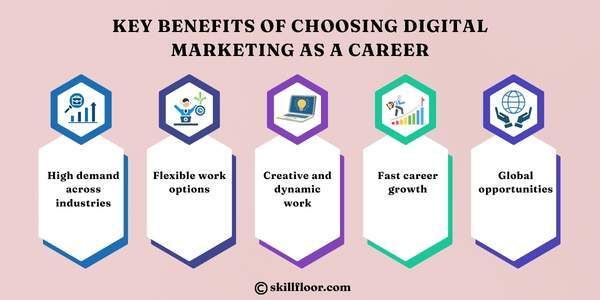
High demand across industries: Almost every industry needs digital marketing. This increases job opportunities for beginners and experienced professionals.
-
Flexible work options (remote/freelance): You can work from anywhere or take freelance projects. This gives you more control over your schedule.
-
Creative and dynamic work: You create content, campaigns, and strategies. It is not just routine work — it requires thinking and ideas.
-
Fast career growth: If you show results, growth can be quick. I have seen people move to better roles within a short time.
-
Global opportunities: You can work with clients or companies from different countries without relocating.
Digital Marketing offers long-term growth if you stay consistent and keep improving your skills.
Challenges in Digital Marketing
Digital Marketing looks easy from the outside, but it comes with real challenges. I have seen beginners struggle when they realise how fast things change in this field.
One major challenge is keeping up with updates. Platforms change frequently, and you need to adapt quickly. Competition is also high. Many people are learning digital marketing, so standing out requires real skills and practical experience.
Another challenge is handling performance pressure. Your work is always measured through data, and results matter.
Common Challenges
-
Continuous learning required: You need to keep updating your skills as tools and trends change regularly.
-
High competition in the job market: Many candidates apply for the same roles, so you need strong practical knowledge to stand out.
-
Frequent algorithm changes: Search engines and social media platforms update often, which can impact your results.
-
Performance pressure: Your campaigns and strategies are tracked. You are expected to deliver measurable outcomes.
With the right mindset and consistency, these challenges become easier to manage and help you grow faster in your career.
Future of Digital Marketing
The future of Digital Marketing is being shaped by rapid technological advancements and continuous innovation. As businesses adopt smarter tools and strategies, Digital Marketing is becoming more data-driven, personalized, and efficient. This evolution is creating new opportunities for professionals who are ready to adapt and learn.
Emerging Trends
-
AI-powered marketing for automation and smarter decision-making
-
Voice and visual search are transforming user behavior
-
Personalized marketing experiences based on user data
-
Growth of influencer marketing across platforms
-
Use of automation tools to improve efficiency
With increasing investments, Digital Marketing will continue to offer strong career growth and long-term opportunities.
How Long Does It Take to Become a Digital Marketer?
The time required to learn Digital Marketing depends on your consistency and practice. With focused effort, you can build job-ready skills within a short period.
Timeline
-
Basics: 1–2 months
-
Skill development: 3–6 months
-
Practical experience: 6–12 months
With dedication and hands-on learning, you can start your Digital Marketing career within a year.
Who Can Become a Digital Marketer?
Digital Marketing is a flexible career option that is open to individuals from all educational and professional backgrounds. It does not require a specific degree, making it accessible to anyone willing to learn and build practical skills. Whether you are starting your career or planning a transition, Digital Marketing offers equal opportunities for growth.
Suitable For
-
Students exploring career options
-
Fresh graduates starting their careers
-
Working professionals looking to switch fields
-
Business owners aiming to grow online
-
Freelancers seeking flexible opportunities
In Digital Marketing, skills, creativity, and practical experience matter more than formal qualifications.
Frequently Asked Questions
1. Do I need a degree to become a digital marketer?
No, a specific degree is not required. Skills, practical knowledge, and a strong portfolio matter more.
2. How long does it take to learn digital marketing?
You can learn the basics in 1–2 months and become job-ready in 4–6 months with consistent practice.
3. Is digital marketing a good career for freshers?
Yes, it offers strong entry-level opportunities. Freshers can start with basic skills and grow quickly.
4. Which digital marketing skill should I learn first?
Start with SEO and content marketing. They help you understand how traffic and audience behaviour work.
5. Can I earn through freelancing in digital marketing?
Yes, but after gaining basic experience. Start with small projects and build your portfolio first.
Digital marketing is not just a trending skill; it is a practical career path with real demand. I have seen students, fresh graduates, and even professionals from different fields build strong careers once they focused on learning and applying the right skills.
The key is simple. Don’t try to learn everything at once. Start with the basics, practice consistently, and build proof of your work. This approach works far better than relying only on theory or certifications.
There will be challenges, fast changes, competition, and performance pressure. But these are part of the learning process. If you stay consistent and keep improving, growth will follow.
If you are serious about how to become a digital marketer, start today. Even small steps matter. Over time, they build into real skills and real opportunities.
Digital Marketing Courses in Other Locations in India
Ahmedabad | Aurangabad | Bangalore | Bhilai | Bhopal | Bhubaneshwar | Chandigarh | Chennai | Cochin | Coimbatore | Dehra Dun | Delhi | Faridabad | Ghaziabad | Gorakhpur | Guntur | Gurgaon | Guwahati | Hyderabad | Jaipur | Kanpur | Khammam | Kolkata | Lucknow | Madurai | Mumbai | Mysore | Nagpur | Noida | Patna | Pondicherry | Pune | Ranchi | Shimoga | Surat | Thane | Thiruvananthapuram | Tiruchirappalli | Tirupati | Vadodara | Visakhapatnam | Warangal | Jalandhar | Jodhpur | Indore | Durgapur | Jamshedpur | Dhanbad | Kota | Karnal | Udaipur | Amritsar | calicut | Nashik | Ludhiana | varanasi | thrissur | Mangalore | Raipur |