


































Impact of Social Media Algorithms on User Behavior
Discover how social media algorithms shape user behavior, influencing content consumption, engagement patterns, and online interactions.
Many users log onto social media to check a single notification, but often end up browsing for much longer than they intended. One of the main reasons users stay online is due to FOMO, or the fear of missing out. On average, people spend about 2 hours and 24 minutes per day on social media, often without realizing how quickly time flies.
This phenomenon is not accidental. Every video, reel, and post you see is carefully selected for you. Apps like YouTube, Instagram, and TikTok use sophisticated social media algorithms to keep you engaged. For example, TikTok users spend approximately 95 minutes a day on the app, highlighting the effectiveness of these systems in maintaining users’ attention and shaping strategies in social media marketing.
These systems operate silently in the background. They look at what you watch, what you enjoy, and even what you don't watch. Recommendations, not searches, account for about 80% of the content seen on YouTube. This shows the extent to which these systems influence people's daily perceptions, thoughts, and activities.
What Are Social Media Algorithms?
In simple terms, social media algorithms are collections of guidelines and computations that platforms employ to determine what material shows up in your feed.


These algorithms prioritise information based on what they believe you will interact with the most, rather than displaying posts in chronological order. They examine a range of signals, including:
-
Posts you like or share
-
Videos you watch until the end
-
Accounts you interact with frequently
-
Time spent on certain types of content
Social media algorithms create a digital profile of your hobbies over time. They use the data they collect about what you watch, like, and share to forecast what will entice you to browse for extended periods of time.
As far as users are concerned, this seems practical. You see more of what appeals to you and less of what doesn't. But social media algorithms also affect your decisions and behaviours in ways that go beyond customisation or ease of use.
The Positive Side of Social Media Algorithms
Social media algorithms can enhance the user experience by presenting relevant content, assisting users in finding new interests, and putting them in touch with the communities and information that are most important to them.
1. Personalized Content
Social media algorithms make it simpler to enjoy information without wasting time searching by recommending posts, videos, and updates based on your preferences. This also highlights the social media marketing importance for businesses aiming to reach the right audience.
2. Time Efficiency
By removing unnecessary information, these algorithms highlight the most important content and encourage people to spend time on worthwhile postings rather than scrolling endlessly.
3. Discover New Interests
Social media algorithms automatically broaden your interests by introducing hobbies, concepts, or subjects you might not have previously noticed based on their analysis of your behaviour.
4. Better Connections
They make it simpler to connect with like-minded people online by recommending friends, communities, and organisations based on your behaviour.
5. Enhanced Engagement
Social media algorithms promote interaction by displaying material that suits your tastes, increasing users' activity, involvement, and engagement on their preferred platforms.
6. Support for Creators
These algorithms enable smaller voices to become more visible and successfully expand their communities by assisting creators in reaching audiences that are interested in their content.
The Negative Impact of Social Media Algorithms
By promoting addictive behaviour, disseminating false information, and producing "filter bubbles," social media algorithms can have a detrimental impact on users' thoughts, feelings, and even everyday routines without them fully realizing it.
1. Addiction and Overuse
Social media algorithms encourage users to scroll by repeatedly displaying interesting content, which can result in extended screen time and habit-forming behaviour.
2. Reduced Attention Span
Users find it more difficult to concentrate on longer, more in-depth content when they are constantly exposed to brief, interesting postings because social media algorithms promote rapid consumption.
3. Filter Bubbles


By displaying content that is similar to your interests, these algorithms restrict your exposure to opposing viewpoints and foster echo chambers that strengthen existing opinions.
4. Misinformation Spread
Social media algorithms frequently give preference to content that encourages interaction, which can occasionally disseminate inaccurate or misleading information more quickly than factual information and even have an impact on ppc advertising tactics on social media platforms.
5. Validation Pressure
Because social media algorithms emphasise popular content and create comparison-driven behaviours, users may rely on likes, comments, and shares for self-esteem.
6. Impact on Creativity
Because social media algorithms favour viral or algorithm-friendly information over originality, content creators may feel compelled to follow trends, which can hinder true expression.
How Social Media Algorithms Shape Our Behavior
Social media algorithms have an impact on our thoughts, behaviours, and online activities. Without our knowledge, they influence our decisions, tastes in information, and even how we interact with others.
1. Shaping Public Opinion
Social media algorithms give priority to particular postings and subjects, determining what trends and shapes public opinion. This can influence how people see events, but if left unchecked, it could also propagate false information.
2. FOMO (Fear of Missing Out)
Social media algorithms produce FOMO by displaying information that is popular with friends and followers. Users may experience anxiety, make rash decisions, and change their social behaviour as a result of feeling under pressure to stay up.
3. Consumer Behavior
Based on user choices, social media algorithms provide product recommendations and tailored advertisements. This affects consumer choices, promoting impulsive purchases, and is crucial for conversion rate optimisation and affiliate marketing.
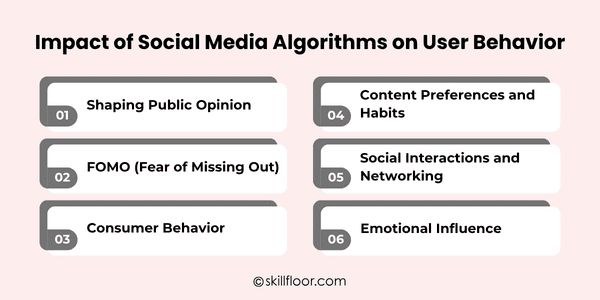
4. Content Preferences and Habits
Social media algorithms influence viewing habits and interests by constantly displaying comparable posts. Users form preferences for particular kinds of material, which influence organisations' digital marketing strategies.
5. Social Interactions and Networking
Social media algorithms use past activity to recommend friends, communities, or groups. This affects both personal and professional networks by directing users' interactions, connections, and social engagement.
6. Emotional Influence
Posts that generate strong emotions are highlighted by social media algorithms, ranging from startling news to inspirational tales. This can have a significant impact on feelings, responses, and even decisions about politics, society, or purchases.
Tips to Take Control of Social Media Algorithms
You can utilize social media platforms more carefully if you are aware of their algorithms. You may have a healthier internet experience, lessen stress, and sharpen your attention by making minor adjustments.
1. Curate Your Feed
Change your content preferences and the people you follow. Then, posts that genuinely interest you will be displayed by social media algorithms, assisting you in avoiding time-wasting or stressful irrelevant or hazardous content.
2. Limit Screen Time
To stop yourself from scrolling endlessly, set daily app restrictions. By controlling your usage, you may concentrate on more crucial offline chores because social media algorithms have less control over your day.
3. Engage Mindfully
You should only like, comment on, or share something that truly piques your curiosity. The content you view is more positively shaped by thoughtful engagement since social media algorithms give preference to postings that have interactions.
4. Diversify Content
Keep up with a range of communities, creators, and topics. This prevents narrow filter bubbles and expands your perspectives by encouraging social media algorithms to display a greater variety of content.
5. Turn Off Notifications
Cut back on pointless notifications and interruptions. You have greater choice over when and how you use social media because social media algorithms can't bring you back again without continual cues.
6. Regular Digital Detox
Spend a few days or hours away from social media. This aids in re-establishing routines and lessens the influence social media algorithms have over your focus and feelings.
The Future of Social Media Algorithms
Social media algorithms and artificial intelligence are shaping the future of social media. While these technologies raise concerns about privacy, ethics, and digital well-being, they will also make content more personalised, user experiences more intelligent, and online engagement more dynamic.
1. Greater Personalization
In order to provide highly personalized content, recommendations, and experiences that instantly adjust to each user's interests and online behaviours, social media algorithms will conduct a more thorough analysis of user behaviour.
2. Transparent Algorithms
In order to help consumers understand content prioritisation and promote trust, responsible use, and understanding of the technology underlying their feeds, platforms may disclose how social media algorithms operate.
3. User-Controlled Feeds
With social media algorithms modifying material visibility based on personal preferences, users may have more influence over their feeds, resulting in a customised and adaptable online experience.
4. Ethical Content Management
In order to ensure that material is fair, impartial, and secure for all users, social media algorithms will increasingly require guidelines to minimise bias, misinformation, and manipulation.
5. Enhanced Content Discovery
Users can find new creators, subjects, and trends outside of their typical interests thanks to more intelligent social media algorithms, increasing interaction and discovery without being restricted to small bubbles.
6. Balanced Digital Well-Being
By restricting addictive tendencies, encouraging breaks, and assisting users in interacting with digital platforms more thoughtfully, future social media algorithms may promote better online habits.
Our everyday lives are now shaped by social media, which has an impact on how we think, communicate, and spend time online. Social media algorithms have a significant impact on this, influencing our perceptions, interactions, and even emotions. They can impact our behaviours, decisions, and feelings in ways we may not be aware of, even while they also make information more engaging and assist us in learning new concepts or forming connections with people. We can use social media more thoughtfully, appreciate the content we love, and take action to reduce distractions if we understand how these systems operate. Little things like curating feeds, establishing boundaries, and taking breaks can have a significant impact, giving us greater control and a more positive online experience.
Digital Marketing Courses in Other Locations in India
Ahmedabad | Aurangabad | Bangalore | Bhilai | Bhopal | Bhubaneshwar | Chandigarh | Chennai | Cochin | Coimbatore | Dehra Dun | Delhi | Faridabad | Ghaziabad | Gorakhpur | Guntur | Gurgaon | Guwahati | Hyderabad | Jaipur | Kanpur | Khammam | Kolkata | Lucknow | Madurai | Mumbai | Mysore | Nagpur | Noida | Patna | Pondicherry | Pune | Ranchi | Shimoga | Surat | Thane | Thiruvananthapuram | Tiruchirappalli | Tirupati | Vadodara | Visakhapatnam | Warangal | Jalandhar | Jodhpur | Indore | Durgapur | Jamshedpur | Dhanbad | Kota | Karnal | Udaipur | Amritsar | calicut | Nashik | Ludhiana | varanasi | thrissur | Mangalore | Raipur |