













































What Are Core Web Vitals? A Digital Marketing Guide
Learn what Core Web Vitals are and why they matter in digital marketing. Discover LCP, INP, and CLS and how they impact SEO, rankings, and user experience.

Website performance is a crucial factor in today’s digital industry, influencing both user experience and search engine rankings. Users expect websites to load quickly, remain visually stable, and offer smooth interactions across all devices. This is where Core Web Vitals come into focus. Core Web Vitals are a set of performance metrics introduced by Google to measure real user experience on a website. For professionals involved in digital marketing, understanding Core Web Vitals is essential, as they directly affect SEO visibility, user engagement, and conversion rates. Optimizing these metrics helps businesses deliver better experiences and achieve stronger digital marketing results.
What Are Core Web Vitals?
Core Web Vitals are a set of specific website performance metrics introduced by Google to measure real user experience on a webpage. These metrics focus on how fast a page loads, how responsive it feels, and how stable the content appears while loading.
In simple terms, Core Web Vitals help answer three key questions:
-
How fast does the main content load?

-
How quickly can users interact with the page?
-
Does the page content stay stable while loading?


Google considers these factors critical for delivering a good user experience, which is why Core Web Vitals are now part of Google’s ranking signals.
Why Core Web Vitals Matter in Digital Marketing
Core Web Vitals are not just technical metrics; they have a direct impact on digital marketing outcomes. A slow or unstable website can reduce traffic, increase bounce rates, and lower conversion rates.
Here’s why Core Web Vitals are important for digital marketing:
-
Faster websites keep users engaged longer
-
Better user experience improves brand trust
-
Improved rankings increase organic visibility
-
Smooth performance leads to higher conversions
-
Mobile experience becomes more reliable
In competitive digital marketing campaigns, even small improvements in site speed or stability can lead to noticeable growth in leads and sales.
The Three Core Web Vitals
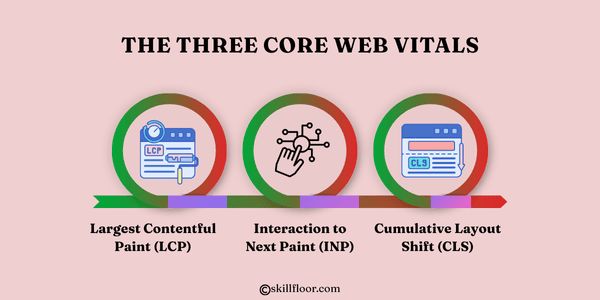
Google currently focuses on three main Core Web Vitals metrics. Each one measures a different aspect of user experience.
1. Largest Contentful Paint (LCP)
What it measures:
LCP tracks how long it takes for the largest visible element on a page to load. This could be a hero image, banner, or main text block.
Ideal LCP score:
-
Good: 2.5 seconds or less
-
Needs improvement: 2.5–4 seconds
-
Poor: Over 4 seconds
Why it matters for digital marketing:
If your main content loads slowly, users may leave before seeing your message, offer, or call-to-action. In digital marketing, where first impressions matter, LCP directly impacts user retention.
2. Interaction to Next Paint (INP)
(Replaced First Input Delay as the main responsiveness metric)
What it measures:
INP measures how responsive a page is when users interact with it, such as clicking buttons, filling forms, or navigating menus.
Ideal INP score:
-
Good: Under 200 milliseconds
-
Needs improvement: 200–500 milliseconds
-
Poor: Over 500 milliseconds


Why it matters for digital marketing:
A website that responds slowly feels broken or unreliable. This affects form submissions, checkout processes, and lead generation—key goals in digital marketing strategies.
3. Cumulative Layout Shift (CLS)
What it measures:
CLS measures how much the page layout shifts unexpectedly while loading.
Ideal CLS score:
-
Good: Less than 0.1
-
Needs improvement: 0.1–0.25
-
Poor: Above 0.25
Why it matters for digital marketing:
Unexpected layout shifts frustrate users and can cause accidental clicks, leading to poor user experience and lower trust—both harmful to digital marketing performance.
How Core Web Vitals Affect SEO
Google officially confirmed that Core Web Vitals are part of its Page Experience ranking signals. While content relevance remains crucial, poor performance metrics can weaken your rankings, especially when competing with similar content.
SEO benefits of good Core Web Vitals include:
-
Higher visibility in search results
-
Better crawl efficiency
-
Improved mobile rankings
-
Lower bounce rates
-
Stronger engagement signals
For digital marketing professionals, optimizing Core Web Vitals strengthens both technical SEO and user-focused marketing goals.
Core Web Vitals and Mobile Experience
Most digital marketing traffic now comes from mobile devices. Core Web Vitals are especially important for mobile users because:
-
Mobile networks are often slower, increasing the impact of page speed
-
Smaller screens make layout shifts more noticeable
-
Touch-based interactions require fast and responsive pages
Google uses mobile-first indexing, meaning it primarily evaluates the mobile version of your website for rankings. As a result, poor mobile performance can negatively affect search visibility. Optimizing Core Web Vitals helps ensure smooth mobile experiences, stronger user engagement, and better results from digital marketing campaigns across all devices.
How to Measure Core Web Vitals
You don’t need to be a developer to track Core Web Vitals. Several user-friendly tools make monitoring website performance simple and actionable. Popular tools include
-
Google PageSpeed Insights
-
Google Search Console (Core Web Vitals report)
-
Lighthouse
-
Chrome User Experience Report
These tools provide insights based on real user data and clearly highlight performance issues across different pages. For digital marketing teams, this information helps prioritize improvements, align SEO efforts with user experience goals, and ensure websites perform effectively across devices and search results.
Common Issues That Hurt Core Web Vitals
Many websites struggle with Core Web Vitals due to recurring performance problems that negatively affect user experience. Common issues include:
-
Large, unoptimized images that slow page load times
-
Excessive JavaScript that delays interactivity
-
Slow server response times
-
Poor or outdated hosting infrastructure
-
Ads or pop-ups are loading without proper space allocation
-
Fonts are loading late and causing layout shifts
Identifying and addressing these issues is the first step toward improving website performance. For digital marketing professionals, resolving these problems supports better SEO rankings, stronger user engagement, and improved campaign results.
Best Practices to Improve Core Web Vitals
Improving Core Web Vitals often involves collaboration between marketers and developers. Here are proven best practices:
To improve LCP:
-
Optimize and compress images
-
Use faster hosting and CDNs
-
Reduce server response time
-
Load critical content first
To improve INP:
-
Minimize JavaScript execution
-
Break long tasks into smaller ones
-
Optimize third-party scripts
-
Improve frontend performance
To improve CLS:
-
Always set image and video dimensions
-
Reserve space for ads and embeds
-
Avoid inserting content above existing elements
-
Use stable fonts and layouts
These improvements directly support better digital marketing results by enhancing usability and engagement.
Core Web Vitals in a Digital Marketing Strategy
Core Web Vitals should not be treated as a one-time technical fix. They should be part of an ongoing digital marketing optimization strategy.
How marketers can integrate Core Web Vitals:
-
Audit landing pages before campaigns
-
Optimize performance for high-traffic pages
-
Monitor changes after site updates
-
Align UX improvements with conversion goals
-
Use performance insights to guide content and design decisions
A fast, stable website strengthens every digital marketing channel, from SEO and paid ads to email campaigns and social media traffic.
Future of Core Web Vitals
Google continues to refine Core Web Vitals to better reflect real user experiences and changing browsing behaviors. While specific metrics may evolve over time, the core focus will remain consistent, emphasizing key aspects of website performance such as
-
Speed, to ensure pages load quickly, even on slower networks
-
Interactivity, so users can engage with content without delays
-
Visual stability, preventing unexpected layout shifts during page load
As user expectations rise and mobile usage grows, these factors will become even more important. For digital marketing professionals, staying updated with Core Web Vitals changes is essential. Understanding future updates helps maintain strong SEO performance, improve user satisfaction, and support sustainable digital growth in an increasingly competitive online environment.
Core Web Vitals are no longer just technical SEO metrics; they are key indicators of user experience and overall business performance. In today’s competitive digital marketing industry, websites that load quickly, respond smoothly, and maintain visual stability have a clear advantage. By understanding and optimizing Core Web Vitals, businesses can improve search rankings, strengthen user engagement, and drive higher conversions. Whether you are a marketer, business owner, or student learning digital marketing, mastering Core Web Vitals is an essential step toward building high-performing websites that earn trust from both users and search engines.
Digital Marketing Courses in Other Locations in India
Ahmedabad | Aurangabad | Bangalore | Bhilai | Bhopal | Bhubaneshwar | Chandigarh | Chennai | Cochin | Coimbatore | Dehra Dun | Delhi | Faridabad | Ghaziabad | Gorakhpur | Guntur | Gurgaon | Guwahati | Hyderabad | Jaipur | Kanpur | Khammam | Kolkata | Lucknow | Madurai | Mumbai | Mysore | Nagpur | Noida | Patna | Pondicherry | Pune | Ranchi | Shimoga | Surat | Thane | Thiruvananthapuram | Tiruchirappalli | Tirupati | Vadodara | Visakhapatnam | Warangal | Jalandhar | Jodhpur | Indore | Durgapur | Jamshedpur | Dhanbad | Kota | Karnal | Udaipur | Amritsar | calicut | Nashik | Ludhiana | varanasi | thrissur | Mangalore | Raipur |