












































Top 5 Machine Learning Roles You Didn’t Know Existed
Discover 5 hidden machine learning roles that could truly redefine your career in AI. Explore unique opportunities beyond data scientist and engineer positions.

"Are you messing up the most exciting machine learning careers?" The terms "data scientist," "ML engineer," and "AI researcher" are the most common ones that come to mind. These are the well-known positions you see all over LinkedIn and that everyone discusses.
However, the field of machine learning is far more expansive and exciting than these well-known jobs. There are undiscovered positions that not only stand out but also have the potential to accelerate your career, increase your impact, and provide you with the opportunity to influence AI's future.
This is for you if you've ever wondered if your skills are sufficient or if AI is developing too quickly while reading job postings. We'll look at five machine learning jobs in this post that you probably haven't heard of, but that might significantly change your professional path.
Why the Usual Machine Learning Roles Aren’t Enough
Most people only consider positions as ML engineers or data scientists. However, the field of AI is significantly larger, and restricting oneself can hinder one's machine learning career's advancement. In fact, according to LinkedIn, more than 60% of AI jobs nowadays are in new, specialized positions that the majority of people ignore.


-
Traditional roles are crowded: over 45,000 data scientist jobs in the U.S. alone face stiff competition for high-impact projects.
-
Many ML positions focus mainly on coding or model building, missing real-world deployment and ethical considerations.
-
AI teams often fail in production: Gartner reports 70% of ML models never reach full production because roles lack specialized skills.
-
Working in mainstream roles can feel repetitive, offering less creativity and fewer opportunities to innovate in AI systems.
-
Growth in common roles is slower: Glassdoor shows median promotion time for data scientists is 3–5 years, longer than niche positions.
-
Emerging areas like AI ethics, ML Ops, and data curation are growing fast—projected 35% annual growth in specialized ML roles by 2028.
You could fall behind if you focus only on popular roles. By exploring lesser-known positions, you can increase your impact, accelerate growth, and truly distinguish your machine learning career.
Hidden Machine Learning Roles You Should Know
Many people are only aware of typical AI jobs, however there are undiscovered machine learning roles that offer special chances, practical applications, quicker development, and thrilling experiences that can greatly influence your career.
1. ML Ops Engineer: The Unsung Hero Behind AI in Production
Reality strikes hard when AI models leave the lab and go into the real world. Models that performed flawlessly during testing can abruptly malfunction, slow down, or exhibit erratic behavior. ML Ops Engineers can help with it.
Why it Matters:
-
They design workflows to deploy, monitor, and scale ML models seamlessly.
-
They ensure AI systems are reliable, efficient, and maintainable.
-
They troubleshoot and fix issues before they affect users or business outcomes.
-
They optimize AI pipelines to save time, reduce costs, and improve performance.
-
They collaborate with engineers, data scientists, and stakeholders to align models with real-world needs.
Real-world Impact:
ML Ops engineers are crucial to the seamless operation of recommendation engines, fraud detection systems, and predictive models at companies like Uber and Netflix. Even the most intelligent algorithms are worthless without them.
Career Takeaway:
For problem solvers who enjoy creating connections between development, operations, and AI innovation, ML Ops is ideal. Even while demand is soaring, traditional ML professions are still more congested.
2. Data Labeling Strategist: The Secret Architect of Quality AI
This is a fact that frequently surprises beginners: machine learning models only function well when the data they are trained on is accurate, comprehensive, and well-labeled.
The silent expert who makes sure datasets are impartial, consistent, high-quality, and appropriate for developing successful AI systems is known as a data labeling strategist, or data curator.
Responsibilities:
-
Designing robust data labeling workflows.
-
Ensuring accuracy, consistency, and fairness in datasets.

-
Minimizing biases that could derail AI applications.
-
Reviewing datasets for errors regularly.
-
Collaborating with teams to improve data quality.


Why it’s exciting:
An AI system could learn the incorrect behaviour from a single mislabel in a dataset. You actually influence what AI "understands" about the world as a Data Labelling Strategist. Power is that.
Pro Tip:
Skilled data curators are desperately needed by companies working on large-scale NLP projects, driverless vehicles, or medical imaging. This position is ideal if you are satisfied with accuracy and detail.
3. AI Ethics Specialist: Guarding the Future
AI cares about responsibility as much as speed and accuracy. AI systems impact hiring, financing, healthcare, and justice daily. One faulty model can lead to significant prejudice or damage.
AI Ethics Experts intervene to stop these problems. They guarantee that AI systems are just, open, responsible, and moral, shielding users, businesses, and society from unforeseen repercussions.
Responsibilities:
-
Auditing AI systems for ethical risks.
-
Implementing fairness metrics and accountability frameworks.
-
Educating teams about responsible AI practices.
-
Reviewing AI decisions for potential bias.
-
Advising leadership on ethical AI policies.
Emotional Angle:
This position enables you to safeguard individuals, society, and the integrity of technology if you've ever been concerned about AI's expanding influence. In your position, millions of lives are literally impacted by your work.
Career Takeaway:
AI ethics are no longer a choice. There is an increasing need for experts who can blend technological know-how with ethical vision as forward-thinking businesses invest in ethical AI teams.
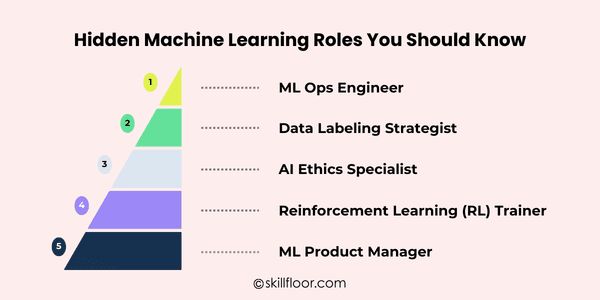
4. Reinforcement Learning (RL) Trainer: The AI Coach
Although exciting, reinforcement learning (RL) is infamously difficult. AI agents navigate challenging settings to accomplish objectives by learning from making mistakes. However, who leads them? The RL Trainer is that.
Role in Action:
-
Designing simulated environments for training artificial intelligence.
-
Tuning reward signals to shape desired behaviors.
-
Observing agents and refining learning strategies.
-
Testing agent performance under different conditions.
-
Recording results for future model improvements.
Why it excites:
You're coaching an AI agent, assisting it in exploring, adapting, and mastering tasks—you're not just coding. RL Trainers are the unsung coaches of intelligent systems in a variety of fields, including robotics, gaming, and finance.
Career Takeaway:
RL is a specialized field with significant influence but high entrance barriers. This position offers countless opportunities for learning and excitement if you like experimentation, problem-solving, and strategic thinking.
5. ML Product Manager: The Bridge Between Code and Vision
Lastly, the ML Product Manager is a position that blends leadership, technology, and business. They direct AI initiatives, build teamwork, and guarantee that sophisticated machine learning solutions successfully and efficiently address real-world issues.
Why it exists:
-
ML projects often fail because teams lose sight of business goals.
-
Someone needs to translate complex ML capabilities into solutions users actually need.
-
Ensuring AI projects deliver real value to customers and business objectives.
-
Coordinating cross-functional teams to prevent misalignment and delays.
-
Bridging gaps between technical possibilities and practical business applications.
Responsibilities:
-
Guiding ML projects from concept to launch.
-
Communicating between engineers, executives, and stakeholders.
-
Defining success metrics and aligning AI outcomes with business strategy.
-
Prioritizing tasks and features for maximum impact.
-
Monitoring project progress to ensure timely, successful delivery.
Emotional Hook:
The ML Product Manager position allows you to lead projects, coordinate teams, and turn complicated concepts into useful, practical AI solutions that genuinely matter if you've ever been annoyed by clever individuals producing products that no one uses.
Career Takeaway:
ML Product Managers are becoming more and more important as businesses embrace AI more widely. This position is ideal for strategic thinkers who like leadership, are passionate about technology, and want to make sure AI initiatives have a positive impact on businesses.
Why You Should Care About These Roles Now
AI is expanding more quickly than before. In ways that most people miss, hidden machine learning roles present exceptional chances to make an impression, have a practical impact, and grow your career.
1. Rapid Job Growth
AI employment is rising quickly, with specialist occupations growing by more than 35% a year, providing early adopters with high-demand jobs and distinctive opportunities.
2. Less Competition Roles
Hidden roles have fewer applicants than mainstream ML positions, which makes it simpler to get noticed and progress swiftly.
3. High Impact Work
Professionals in specialized jobs can directly affect AI results, enhance performance, dependability, and equity while having a practical impact on enterprises.
4. Faster Skill Growth
These jobs enable professionals to get flexible experience for upcoming AI issues by teaching skills beyond coding, such as operations, ethics, strategy, and leadership.
5. Career Acceleration Potential
Due to their early exposure and ability to address important gaps, hidden ML roles sometimes result in quicker promotions and leadership chances.
Exploring these undiscovered positions today offers you the opportunity to advance more quickly, acquire special machine learning skills, and have a significant impact on AI, differentiating your career from the competition.
The Skills and Preparation You Need to Succeed
You need a combination of technical expertise, real-world experience, and soft skills to succeed in hidden machine learning tasks and differentiate yourself from other applicants.
1. Technical Proficiency
To create models efficiently, learn Python, SQL, and ML frameworks like TensorFlow or PyTorch.
2. Data Understanding
Acquire expertise in dataset management, labeling, and cleaning to guarantee precise, superior machine learning results.
3. AI Operations Knowledge
Recognize how to effectively install, monitor, and scale models in real-world production settings.
4. Problem-Solving Skills
To solve model problems, streamline processes, and consistently enhance AI performance, cultivate critical thinking skills.
5. Communication Skills
Learn how to effectively communicate technical ideas to non-technical teams and organizational decision-makers.
6. Ethics and Responsibility
To create secure, accountable, and reliable systems, research AI fairness, accountability, and bias mitigation.
How to Stand Out and Succeed in These Roles
It takes more than just skills to land a hidden machine learning role; you also need to show that you are valuable, take initiative, and can immediately make a significant effect.
1. Build a Strong Portfolio
Showcase your own AI projects, Kaggle contests, or open-source contributions to effectively illustrate your practical machine learning skills.
2. Gain Relevant Experience
Practical experience can be gained through research, internships, or freelancing work in ML operations, data curation, or AI ethics.
3. Learn Continuously
Keep abreast of new frameworks, tools, and trends to stay competitive in rapidly changing machine learning domains.
4. Network Strategically
Attend AI conferences, participate in groups, and establish connections with people in the field to efficiently uncover untapped employment prospects.
5. Develop Soft Skills
Proficient communication, teamwork, and problem-solving abilities facilitate team navigation and positively impact decisions.
Explore Hidden Machine Learning Roles if you want to advance quickly, have a significant effect, and be unique in AI. These jobs provide the chance to work on worthwhile initiatives, pick up uncommon talents, and have an impact on how AI is applied in practical settings. You stand out from the competition by being proactive, honing your skills, and comprehending the particular requirements of these Machine Learning Roles. Those that take advantage of these chances and take on the challenge of new Machine Learning Roles now will have a bright future.
Digital Marketing Courses in Other Locations in India
Ahmedabad | Aurangabad | Bangalore | Bhilai | Bhopal | Bhubaneshwar | Chandigarh | Chennai | Cochin | Coimbatore | Dehra Dun | Delhi | Faridabad | Ghaziabad | Gorakhpur | Guntur | Gurgaon | Guwahati | Hyderabad | Jaipur | Kanpur | Khammam | Kolkata | Lucknow | Madurai | Mumbai | Mysore | Nagpur | Noida | Patna | Pondicherry | Pune | Ranchi | Shimoga | Surat | Thane | Thiruvananthapuram | Tiruchirappalli | Tirupati | Vadodara | Visakhapatnam | Warangal | Jalandhar | Jodhpur | Indore | Durgapur | Jamshedpur | Dhanbad | Kota | Karnal | Udaipur | Amritsar | calicut | Nashik | Ludhiana | varanasi | thrissur | Mangalore | Raipur |