














































Data Analytics Portfolio: How to Build a Job-Ready Profile
Learn how to build a strong Data Analytics portfolio with real projects, tools, and best practices to stand out to recruiters and employers.
Businesses largely rely on data-driven insights to make more informed decisions in today's data-driven world. This growing demand has made Data Analytics one of the most sought-after career paths across industries. However, having technical skills alone is not enough to secure a job. Employers want to see how you apply your knowledge in real situations. This is where a strong Data Analytics portfolio becomes essential. A well-structured portfolio showcases your practical skills, problem-solving ability, and understanding of business data. Whether you are a student, fresher, or working professional, a Data Analytics portfolio helps you stand out in a competitive job market and proves your readiness for real-world roles.
What Is a Data Analytics Portfolio?
A Data Analytics portfolio is a curated collection of projects that demonstrates your practical skills, experience, and understanding of data analysis. It shows how you approach real data problems, process raw information, and turn insights into meaningful conclusions.
Unlike a resume, which only lists tools and skills, a portfolio clearly highlights how you apply Data Analytics concepts in real-world or simulated scenarios.
A Data Analytics Portfolio Typically Includes:


- Real-world or practice-based data projects
- Data cleaning, transformation, and preparation steps
- Analytical methods and key insights
- Data visualizations and interactive dashboards
- Clear explanations of findings and business impact
A well-built portfolio allows recruiters and hiring managers to evaluate your abilities beyond degrees or certifications and understand your readiness for professional Data Analytics roles.
Why a Data Analytics Portfolio Is Important
The demand for Data Analytics professionals is rising rapidly across industries, but competition for quality roles is increasing just as fast. A strong portfolio helps you stand out by clearly showcasing your real-world capabilities rather than just theoretical knowledge. Employers prefer candidates who can demonstrate how they work with data, solve problems, and communicate insights effectively.
Key Reasons a Portfolio Matters
- Demonstrates practical Data Analytics skills
- Highlights problem-solving and analytical thinking
- Builds credibility and trust with employers
- Compensates for limited or no work experience
- Makes your profile job-ready and interview-ready
For freshers, career switchers, and experienced professionals, a well-structured Data Analytics portfolio often carries more weight than certifications alone.
Who Needs a Data Analytics Portfolio?
A Data Analytics portfolio is valuable at every stage of a data professional’s career. It helps individuals clearly demonstrate their skills, experience, and readiness to work with real data. Whether you are just starting out or looking to advance, a portfolio strengthens your professional profile.
Ideal For:
- Students learning Data Analytics concepts
- Freshers applying for entry-level roles
- Professionals planning a career transition
- Analysts seeking better job opportunities
- Freelancers and consultants showcasing expertise
Regardless of your background, a strong portfolio improves visibility and credibility in the competitive Data Analytics job market.
Core Skills to Showcase in a Data Analytics Portfolio
A strong Data Analytics portfolio should clearly highlight the core skills that employers look for when hiring data professionals. It must demonstrate not only your technical expertise but also your ability to analyze data and communicate insights effectively.
Technical Skills
- Data cleaning, transformation, and preprocessing
- SQL for extracting and managing structured data
- Excel for analysis, reporting, and basic automation
- Python or R for data manipulation and analysis
- Data visualization tools such as Power BI or Tableau
Analytical Skills
- Defining business problems using data
- Interpreting datasets to uncover insights
- Identifying patterns, trends, and anomalies
- Applying basic statistical and hypothesis testing methods
Communication Skills
- Explaining insights in a clear, simple manner
- Presenting results through effective visuals
- Writing concise summaries for technical and non-technical audiences
Showcasing these skills helps position your portfolio as job-ready and professionally credible.
Types of Projects to Include in a Data Analytics Portfolio
When building a Data Analytics portfolio, the relevance and depth of your projects are more important than the total number. Well-chosen projects show your ability to handle increasing levels of complexity and responsibility.
Beginner-Level Projects
- Sales performance and trend analysis
- Customer demographics and segmentation studies
- Basic dashboards created using Excel
Intermediate-Level Projects
- Marketing campaign performance evaluation
- E-commerce data analysis and reporting
- Business queries and insights using SQL
Advanced-Level Projects
- Predictive and forecasting analysis
- Customer churn and retention studies
- In-depth insights from financial or healthcare datasets
Including projects across these levels highlights your learning journey and demonstrates steady growth in practical Data Analytics skills.
Step-by-Step Guide to Building a Data Analytics Portfolio
Building a strong Data Analytics portfolio requires a clear plan and a structured approach. Each project should reflect how you handle data from start to finish.
Step 1: Choose the Right Data
Select datasets that are relevant, reliable, and meaningful.
Sources for Data:
- Public datasets from government portals
- Open data platforms
- Simulated or sample business datasets
Choose data related to common Data Analytics domains such as sales, marketing, finance, or operations.
Step 2: Define the Problem Statement
Every project should begin with a clear objective.
Examples
- Analyze sales trends
- Understand customer behavior
- Improve operational efficiency
A well-defined problem statement demonstrates structured thinking in Data Analytics.
Step 3: Clean and Prepare the Data
Data preparation is a critical stage of Data Analytics.
Include tasks such as:
- Handling missing values
- Removing duplicates
- Formatting and normalizing data
Documenting this process shows attention to detail.
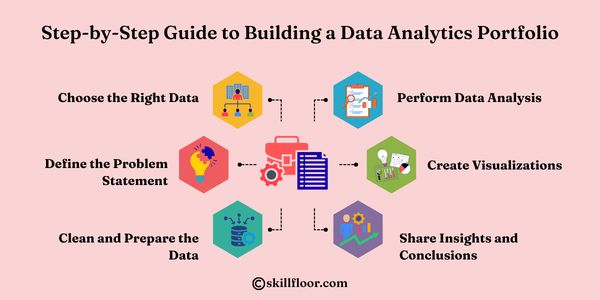
Step 4: Perform Data Analysis


Apply relevant Data Analytics techniques:
- Use descriptive statistics
- Identify patterns and trends
- Compare key metrics
- Segment datasets
Explain why specific methods were chosen.
Step 5: Create Visualizations
Visuals help communicate insights clearly.
Common visualizations include:
- Bar charts
- Line graphs
- Pie charts
- Interactive dashboards
Ensure visuals support your analysis.
Step 6: Share Insights and Conclusions
Clearly explain what the data reveals and why it matters.
Include:
- Key insights
- Business impact
- Actionable recommendations
Strong storytelling completes an effective Data Analytics project.
Tools to Use in a Data Analytics Portfolio
Using industry-relevant tools strengthens your portfolio.
Commonly Used Tools
- Excel for analysis
- SQL for database queries
- Python or R for advanced analytics
- Power BI or Tableau for dashboards
Mentioning tools adds credibility to your Data Analytics experience.
How to Present a Data Analytics Portfolio
The way you present your Data Analytics portfolio is just as important as the projects themselves. A well-organized and professional presentation makes it easier for recruiters and hiring managers to understand your work and assess your skills.
Best Practices
- Use clear and descriptive project titles
- Write simple, easy-to-understand explanations
- Show the complete step-by-step workflow
- Highlight key insights, results, and outcomes
- Maintain a consistent structure across all Data Analytics projects
A clean and logical presentation improves readability, reflects professionalism, and helps your portfolio stand out in a competitive Data Analytics job market.
Common Mistakes to Avoid in a Data Analytics Portfolio
To maintain professionalism, it is important to avoid common errors that can weaken your Data Analytics portfolio. A well-curated portfolio should focus on clarity, relevance, and real value rather than quantity or complexity.
Mistakes to Avoid
- Including irrelevant or outdated projects
- Copying projects without adding originality or personal insights
- Providing poor or unclear documentation
- Using overcomplicated explanations that reduce clarity
- Ignoring the business problem and practical context
Avoiding these mistakes helps ensure your Data Analytics portfolio remains clean, focused, and impactful. A thoughtful and well-documented portfolio leaves a strong, positive impression on recruiters and hiring managers.
How a Data Analytics Portfolio Helps in Job Interviews
A well-prepared Data Analytics portfolio plays a crucial role during job interviews, as recruiters often base their questions on real project work. It allows candidates to move beyond theory and demonstrate practical experience with confidence.
Interview Benefits
- Makes it easier to explain Data Analytics skills clearly
- Provides real project examples for discussion
- Serves as proof of hands-on Data Analytics experience
- Builds confidence when answering technical and business questions
Your portfolio becomes a strong talking point that showcases your problem-solving ability, analytical thinking, and readiness for real-world Data Analytics roles, significantly improving your chances of success in interviews.
Updating Your Data Analytics Portfolio Regularly
Data Analytics is a constantly evolving field, with new tools, technologies, and best practices emerging regularly. Keeping your portfolio updated ensures it remains relevant and competitive in the job market.
Why Updates Matter
- Reflects knowledge of new Data Analytics tools and techniques
- Aligns your work with current industry trends and requirements
- Showcases continuous skill development and learning progress
Regular updates demonstrate your commitment to growth and adaptability in Data Analytics. An up-to-date portfolio signals to employers that you stay current with industry changes and are serious about long-term career development.
Future Value of a Data Analytics Portfolio
As businesses rely more on data, portfolios will become even more important.
Future Trends
- Increased demand for practical Data Analytics skills
- Portfolio-based hiring
- Focus on data storytelling and ethics
A portfolio ensures long-term relevance in Data Analytics careers.
A Data Analytics portfolio is more than a collection of projects; it is a reflection of your skills, mindset, and problem-solving ability. In a competitive job market, it provides clear proof of what you can do with data. By focusing on real-world projects, clear documentation, and continuous improvement, you can build a portfolio that opens doors to exciting opportunities in Data Analytics. Whether you are a student, fresher, or professional, investing time in creating a strong portfolio is one of the smartest steps toward a successful data-driven career.
Digital Marketing Courses in Other Locations in India
Ahmedabad | Aurangabad | Bangalore | Bhilai | Bhopal | Bhubaneshwar | Chandigarh | Chennai | Cochin | Coimbatore | Dehra Dun | Delhi | Faridabad | Ghaziabad | Gorakhpur | Guntur | Gurgaon | Guwahati | Hyderabad | Jaipur | Kanpur | Khammam | Kolkata | Lucknow | Madurai | Mumbai | Mysore | Nagpur | Noida | Patna | Pondicherry | Pune | Ranchi | Shimoga | Surat | Thane | Thiruvananthapuram | Tiruchirappalli | Tirupati | Vadodara | Visakhapatnam | Warangal | Jalandhar | Jodhpur | Indore | Durgapur | Jamshedpur | Dhanbad | Kota | Karnal | Udaipur | Amritsar | calicut | Nashik | Ludhiana | varanasi | thrissur | Mangalore | Raipur |