

























Trending Online Courses to Learn in 2026
Explore the trending online courses to learn in 2026. Find some popular courses in AI, data science, digital marketing, cybersecurity, cloud computing and more.

Every career-defining decision starts with one uncomfortable question: what should I actually learn right now? With new tools, technologies, and job titles appearing every few months, choosing the right path can feel overwhelming, especially when the wrong choice can cost you a year of momentum. This is exactly why in-demand, skill-based programs have become the starting point for students, freshers, and graduates trying to build a future-ready career in 2026.
So, what makes a course worth learning right now? Simply put, it's a program aligned with current industry hiring trends, covering fields like digital marketing, data science, AI, and cybersecurity. It matters because employers now prioritize practical, demonstrable skills over degrees alone. And how should you choose one? By matching it to real job demand, hands-on projects, and your own career goals not just popularity.
The job market isn't waiting for anyone to "figure it out later." Every month spent without a relevant skill is a month a more prepared candidate uses to get ahead. Let's break down exactly what's worth learning this year and why.
What’s Actually Changing in the 2026 Job Market?
The 2026 job market is placing greater emphasis on AI knowledge, practical experience, and specialized skills. Recent employer research also shows that skills-based hiring and upskilling are becoming more important in India.


-
AI Skills Matter: 91% of Indian organizations increased their AI investment over the past year,highlighting the growing focus on AI adoption across Indian businesses.
-
Skills Over Credentials: Employers are increasingly looking beyond degrees and focusing on candidates’ practical skills and abilities.
-
Practical Experience Matters: Real-world experience, projects, and hands-on knowledge can help candidates demonstrate their ability to perform a job.
-
Upskilling Is Essential: About 63% of Indian workers are expected to require training by 2030 to meet changing skill demands.
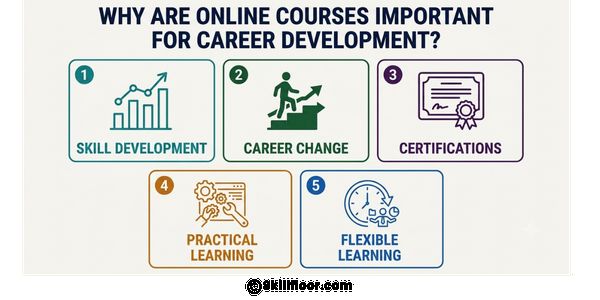
Why Are Online Courses Important for Career Development?
Online courses help learners build relevant skills, explore new career paths, and gain practical experience without committing to a long-term degree program.
-
Skill Development: Learn job-ready and industry-relevant skills.
-
Career Change: Reskill for fields like digital marketing, data analytics, or UI/UX.
-
Certifications: Add recognized credentials to strengthen your resume.
-
Practical Learning: Build projects, portfolios, and real-world experience.
-
Flexible Learning: Learn at your own pace alongside studies or work.
Top Trending Online Courses to Learn in 2026
1. Digital Marketing: Digital marketing helps businesses promote products online, reach target audiences, and measure campaign performance.
Key Skills:
-
SEO: Improve website visibility in search results.
-
Google Ads: Create and optimize paid search campaigns.
-
Social Media Marketing: Build brand presence across social platforms.
-
Content Marketing: Create useful content to attract audiences.
-
Analytics: Measure traffic, engagement, and campaign results.
Career Opportunities:
-
Digital Marketing Executive: Manage different online marketing activities.
-
SEO Specialist: Improve website rankings and organic traffic.
-
Social Media Manager: Plan and manage social media campaigns.
-
Performance Marketing Analyst: Track and optimize paid campaigns.
-
Content Strategist: Plan content based on business and audience needs.
2. Data Science: Data science uses data, statistics, and technology to identify patterns and support better business decisions.
Key Skills:


-
Python: Work with data and build analytical solutions.
-
SQL: Extract and manage data from databases.
-
Statistics: Understand patterns and relationships in data.
-
Machine Learning: Build models to make predictions and identify trends.
-
Data Visualization: Present insights through charts and dashboards.
Career Opportunities:
-
Data Scientist: Analyze data and develop predictive models.
-
Data Analyst: Find useful insights from business data.
-
BI Analyst: Create reports to support business decisions.
3. Artificial Intelligence: AI courses help learners understand intelligent technologies and use AI tools to solve practical business and technical problems.
Key Skills:
-
Python: Develop and work with AI applications.
-
Machine Learning: Teach systems to identify patterns.
-
Generative AI: Work with tools that create text, images, and other content.
-
Prompt Engineering: Create effective instructions for AI systems.
-
Neural Networks: Understand models used in advanced AI applications.
-
AI Tools: Apply AI tools to practical tasks and workflows.
Career Opportunities:
-
AI Associate: Support AI-related projects and applications.
-
Generative AI Developer: Build solutions using generative AI technologies.
-
AI Product Support Specialist: Help users implement and troubleshoot AI products.
4. Machine Learning: Machine Learning teaches systems to learn from data and make predictions without being explicitly programmed for every task.
Key Skills:
-
Python: Develop and test machine learning solutions.
-
Supervised Learning: Train models using labeled data.
-
Unsupervised Learning: Find patterns in unlabeled data.
-
Scikit-learn: Build and evaluate machine learning models.
-
TensorFlow: Develop and train advanced ML models.
-
Data Preprocessing: Prepare data for accurate model training.
Career Opportunities:
-
Junior ML Engineer: Develop and maintain machine learning models.
-
ML Associate: Support machine learning projects and workflows.
-
Data Science Trainee: Assist with data analysis and model development.
5. Data Analytics: Data Analytics helps businesses convert raw data into useful insights for better planning and decision-making.
Key Skills:
-
Excel: Organize, calculate, and analyze business data.
-
SQL: Retrieve useful information from databases.
-
Power BI: Build interactive dashboards and reports.
-
Tableau: Visualize data for easier understanding.
-
Data Cleaning: Prepare accurate and usable datasets.
-
Statistics: Interpret data and identify important trends.
Career Opportunities:
-
Data Analyst: Analyze data and identify business insights.
-
Business Analyst: Connect data insights with business requirements.
-
Reporting Analyst: Prepare reports and performance dashboards.
6. Cybersecurity: Cybersecurity focuses on protecting networks, systems, applications, and data from digital threats.
Key Skills:
-
Network Security: Protect networks from unauthorized access.
-
Ethical Hacking: Identify security weaknesses responsibly.
-
SOC Operations: Monitor systems for potential threats.
-
Security Tools: Use tools to detect and investigate risks.
-
Risk Assessment: Identify and evaluate cybersecurity risks.
Career Opportunities:
-
SOC Analyst: Monitor security systems and investigate alerts.
-
Security Analyst Trainee: Support security monitoring and analysis.
-
IT Security Associate: Assist with organizational security activities.
7. Cloud Computing: Cloud computing teaches learners how businesses use online infrastructure and services to manage applications, data, and systems.
Key Skills:
-
AWS: Work with Amazon's cloud services and infrastructure.
-
Microsoft Azure: Manage cloud-based applications and services.
-
Google Cloud: Use Google Cloud platforms and services.
-
Cloud Architecture: Understand how cloud systems are designed.
-
DevOps: Connect development and operations for efficient delivery.
-
Virtualization: Run multiple computing environments on shared resources.
Career Opportunities:
-
Cloud Support Associate: Help manage and troubleshoot cloud services.
-
Junior Cloud Engineer: Support cloud infrastructure and deployments.
-
DevOps Trainee: Assist with development and deployment processes.
8. UI/UX Design: UI/UX Design focuses on creating digital products that are visually appealing, easy to use, and useful for customers.
Key Skills:
-
Figma: Design interfaces and interactive prototypes.
-
Wireframing: Plan the basic structure of digital products.
-
Prototyping: Create interactive versions of designs.
-
User Research: Understand user needs and expectations.
-
Usability Testing: Identify problems in user experiences.
-
Design Systems: Maintain consistent design across products.
Career Opportunities:
-
UI/UX Designer: Design user-friendly digital experiences.
-
Product Design Associate: Support product design and development.
-
Visual Designer: Create attractive visual elements for digital products.
9. Full-Stack Development: Full-Stack Development teaches learners to build both the front-end and back-end parts of websites and applications.
Key Skills:
-
HTML & CSS: Build and style website structures.
-
JavaScript: Add functionality and interactivity to websites.
-
React: Create modern and interactive user interfaces.
-
Node.js: Develop server-side applications.
-
Databases: Store and manage application data.
-
Git: Track and manage changes in development projects.
Career Opportunities:
-
Junior Full-Stack Developer: Build and maintain complete web applications.
-
Frontend Developer: Develop the user-facing part of websites.
-
Backend Developer Trainee: Support server-side application development.
10. Business Analytics: Business analytics combines data analysis and business knowledge to help organizations make informed decisions.
Key Skills:
-
Excel: Analyze and organize business information.
-
SQL: Retrieve data needed for business analysis.
-
Data Interpretation: Convert data into useful business insights.
-
Business Intelligence: Use data to understand business performance.
-
Reporting: Present findings through clear reports and dashboards.
-
Communication: Explain insights to business teams and stakeholders.
Career Opportunities:
-
Business Analyst: Analyze business needs and recommend solutions.
-
Operations Analyst: Use data to improve business operations.
-
Reporting Associate: Prepare reports and track business performance.
Compare the Top Trending Online Courses for 2026
Choosing a trending online course is easier when you compare each option based on who it suits and its career growth potential. The table below provides a quick overview to help students, freshers, and graduates identify courses that align with their interests and career goals.
|
Course |
Suitable For |
Growth Potential |
|
Digital Marketing |
Students from any academic background seeking a fast career entry |
High – Opportunities across SEO, performance marketing, and AI-assisted marketing |
|
Data Science |
Analytical learners with math or statistics backgrounds |
Very High – Strong demand across data and technology roles |
|
Artificial Intelligence |
Tech-focused students and graduates |
Very High – Growing opportunities across AI-related roles |
|
Machine Learning |
Students with math, statistics, or computer science backgrounds |
High – Strong relevance in AI and automation |
|
Data Analytics |
Beginners and non-coders interested in data careers |
High – Consistent demand across industries |
|
Cybersecurity |
Students interested in IT, networking, and security |
High – Increasing need for cybersecurity professionals |
|
Cloud Computing |
IT and engineering graduates |
High – Growing adoption of cloud infrastructure |
|
UI/UX Design |
Creative and user-focused learners |
Moderate to High – Opportunities in digital products and applications |
|
Full-Stack Development |
Students aspiring to enter software development |
High – Consistent demand across startups and technology companies |
|
Business Analytics |
Commerce, management, and business graduates |
Moderate to High – Opportunities in strategy, reporting, and operations |
How to Choose the Right Online Course in 2026
Choosing a course based only on popularity or advertisements can lead to the wrong decision. Before enrolling, consider these important factors:
-
Career Goals: Choose a course that matches your target job role and industry.
-
Syllabus Depth: Check whether the course covers current tools, concepts, and industry practices.
-
Practical Projects: Look for providers such as Skillfloor that include practical projects to help you apply what you learn.
-
Certification: Check whether the certification adds value to your resume and supports your career goals.
-
Internship Opportunities: Consider courses that provide internship exposure and practical workplace experience.
-
Trainer Expertise: Look for trainers with relevant industry experience and practical knowledge.
-
Course Duration: Ensure the duration is suitable for the depth of skills being taught.
-
Learning Format: Choose online or offline classes based on your schedule and learning preference.
-
Career Support: Check whether the provider offers career guidance, interview preparation, or placement assistance.
-
Portfolio Opportunities: Choose a course that helps you create practical work that can be showcased to recruiters.
FAQ
1. What are the most trending online courses in 2026?
Digital marketing, AI, data science, data analytics, cybersecurity, cloud computing, UI/UX, and full-stack development are popular career-focused options.
2. Which online course is best for freshers?
Digital marketing, data analytics, UI/UX, and business analytics are beginner-friendly options. The right choice depends on your interests and career goals.
3. Which course is best for getting a job?
Courses that include practical projects, internships, and portfolio building can improve job readiness.
4. Is digital marketing a good course in 2026?
Yes. Digital marketing offers opportunities in SEO, performance marketing, social media, content, and analytics.
5. Can beginners learn online courses without technical knowledge?
Yes. Courses like Digital Marketing, UI/UX, and Data Analytics can be started without advanced technical knowledge.
Choosing from the trending online courses in 2026 is not simply about following what is popular. The right course should match your career goals, interests, current skills, and the type of work you want to pursue. Practical projects, relevant certifications, internships, and portfolio-building opportunities can also make your learning more useful for the job market. Whether you choose digital marketing, Data Analytics, AI, Cybersecurity, cloud computing, or another career-focused course, focus on gaining skills you can apply in real situations. For learners interested in building practical digital marketing skills, a structured program such as Skillfloor can provide training, projects, internships, and career support. The best time to build relevant skills is before you need them. Start by identifying your career goal, compare suitable courses, and choose a learning path that helps you move toward it.
Digital Marketing Courses in Other Locations in India
Ahmedabad | Aurangabad | Bangalore | Bhilai | Bhopal | Bhubaneshwar | Chandigarh | Chennai | Cochin | Coimbatore | Dehra Dun | Delhi | Faridabad | Ghaziabad | Gorakhpur | Guntur | Gurgaon | Guwahati | Hyderabad | Jaipur | Kanpur | Khammam | Kolkata | Lucknow | Madurai | Mumbai | Mysore | Nagpur | Noida | Patna | Pondicherry | Pune | Ranchi | Shimoga | Surat | Thane | Thiruvananthapuram | Tiruchirappalli | Tirupati | Vadodara | Visakhapatnam | Warangal | Jalandhar | Jodhpur | Indore | Durgapur | Jamshedpur | Dhanbad | Kota | Karnal | Udaipur | Amritsar | calicut | Nashik | Ludhiana | varanasi | thrissur | Mangalore | Raipur |


-
 ayush paltrending jobs skill in regardening usess skill improving ai data science in computing security in buisness regarding response online buisness build on carrres