












































Cyber Security Engineer Jobs: High-Paying Career Guide
Explore Cyber Security Engineer Jobs, required skills, salary details, career growth, and opportunities to build a successful future in the cybersecurity field.

What if your job was to think like a hacker and get paid six figures to stop them?
That is exactly what cybersecurity engineers do. Every bank transaction you make, every medical record a hospital stores, and every app you log into, a cybersecurity engineer is making sure no one can steal, hack, or break into it. It is one of the most important jobs in the world right now. And companies cannot hire enough people to do it.
Here is the reality: 3.5 million cybersecurity jobs are sitting empty worldwide, not because companies do not want to hire, but because there are not enough skilled people to fill them. That means if you build the right skills today, employers will come looking for you. Not the other way around.
We have studied hundreds of cybersecurity engineer job listings, spoken to hiring managers, and tracked what actually gets people hired in this field. The truth is simple: you do not need a fancy degree. You need the right skills, the right certifications, and a clear roadmap.


This guide gives you exactly that, whether you are a student exploring your options or someone ready to make a career change. The jobs are there. The salaries are real. The only question is whether you will be ready when the opportunity knocks.
What Is a Cyber Security Engineer?
A cybersecurity engineer protects networks, systems, and sensitive data from cyber threats and hacking attacks. They design secure systems, identify vulnerabilities, and prevent security breaches before they occur. In 2026, global cybercrime damages are expected to exceed $10.5 trillion, increasing demand for skilled professionals and creating strong opportunities for cybersecurity job roles worldwide.
People imagine cybersecurity engineers spending their days fighting hackers in real time. In reality, most enterprise cybersecurity work is preventive. Engineers typically spend more time configuring security controls, reviewing alerts, maintaining firewall policies, validating network segmentation, and reducing vulnerabilities before attackers can exploit them. This proactive approach is what helps organizations avoid costly breaches and operational disruptions.
Core Responsibilities of a Cybersecurity Engineer
-
Network Protection – Designing firewalls, encryption systems, and secure network architectures to prevent unauthorized access and cyberattacks.
-
Threat Detection – Monitoring systems continuously to identify malware, suspicious activities, and potential security breaches at early stages.
-
Penetration Testing – Conducting ethical hacking tests to discover vulnerabilities before attackers exploit organizational systems and applications.
-
Incident Response – Investigating cyber incidents, reducing operational damage, and restoring systems quickly after security breaches occur.
-
Security Policies – Developing cybersecurity guidelines and compliance procedures that employees follow to maintain strong organizational data protection.
-
Risk Assessment – Evaluating infrastructure risks regularly and recommending improvements against evolving hacking methods and cyber threats.
-
System Monitoring – Tracking security logs, network activity, and unusual behavior to ensure continuous digital infrastructure protection.
-
Team Collaboration – Working with IT teams and developers to integrate cybersecurity into software, applications, and business systems.
The Demand for Cybersecurity Professionals Is Exploding
Cybersecurity has become one of the fastest-growing career fields because cyber threats continue increasing across every industry worldwide. Businesses need skilled professionals to protect sensitive data, prevent attacks, and reduce financial losses caused by cybercrime.
Cyber Security Industry Growth and Statistics
-
Cybersecurity employment is projected to grow 33% between 2023 and 2033, much faster than average occupations worldwide.
-
Global cybercrime damages are expected to exceed $10.5 trillion annually, making cybersecurity a critical business investment worldwide.
-
India recorded 265 million cyberattacks in 2026, highlighting massive digital risk growth across enterprises.
-
Around 700,000 cybersecurity positions remain vacant across the United States due to increasing digital security threats nationwide.
-
Cyberattacks in India are swiftly increasing in 2026, with AI-driven threats and ransomware targeting critical sectors nationwide.
-
Indian cybersecurity reports in 2026 highlight manufacturing, healthcare, and education as the most targeted sectors for malware attacks
-
Rising ransomware attacks, phishing scams, and data breaches continue driving massive demand for skilled cybersecurity engineers globally.
-
Cybersecurity professionals receive competitive salaries, strong career growth opportunities, and long-term job stability across multiple technology industries.
Cyber Security Engineer Salary Trends in India 2026
According to recent salary insights from AmbitionBox, cybersecurity professionals in India continue receiving competitive salary packages in 2026 due to rising industry demand and digital security investments.
|
Experience Level |
Average Salary in India 2026 |
Key Insights |
|
Entry-Level Engineer |
₹4 LPA – ₹6.5 LPA |
Freshers with cybersecurity certifications and technical skills receive strong starting salaries in major Indian cities. |
|
Junior Cyber Security Engineer |
₹7 LPA – ₹10 LPA |
Professionals with 1–3 years of experience earn higher salaries through practical security and networking expertise. |
|
Mid-Level Security Engineer |
₹12 LPA – ₹18 LPA |
Mid-level engineers managing cloud security, risk assessment, and threat detection receive competitive salary packages. |
|
Senior Cybersecurity Engineer |
₹20 LPA – ₹35 LPA |
Experienced cybersecurity professionals handling enterprise security systems earn premium salaries across leading technology companies. |
|
Security Architect / Lead Engineer |
₹40 LPA+ |
Leadership roles involving advanced security strategy and infrastructure design offer some of India’s highest cybersecurity salaries. |
|
Highest-Paying Industries |
Varies by industry |
Banking, fintech, healthcare, IT services, and cloud computing sectors provide the highest cybersecurity salary opportunities. |
|
Career Growth Potential |
Quickly increasing |
Growing cyberattacks and digital transformation continue driving cybersecurity salary growth and strong job demand across India. |
Specializations Within Cyber Security Engineering
Cybersecurity engineering includes multiple specialized career paths focused on protecting digital systems, networks, applications, and cloud environments. As cyber threats continue increasing globally, organizations actively seek professionals with expertise in ethical hacking, cloud security, compliance, and advanced threat protection technologies, while rising cybersecurity engineer salary trends continue attracting more professionals into the industry.
1. Cloud Security Engineer: Cloud security engineers protect cloud platforms like AWS, Microsoft Azure, and Google Cloud from cyber threats and unauthorized access. They help organizations secure cloud-based applications, storage systems, and digital infrastructure against evolving cyberattacks.
Key Responsibilities
-
Designing secure cloud architectures and implementing advanced security controls across hybrid, public, and private cloud environments.

-
Monitoring cloud systems continuously to identify vulnerabilities, suspicious activities, and unauthorized access attempts before security breaches occur.


Salary
-
Entry-level cloud security engineers in India typically earn between ₹8 LPA and ₹14 LPA annually across industries.
-
Experienced cloud security professionals can earn above ₹30 LPA in multinational companies and enterprise cloud security roles.
2. Penetration Tester (Ethical Hacker): Penetration testers, also known as ethical hackers, simulate cyberattacks to identify vulnerabilities before malicious attackers exploit organizational systems. Their expertise helps businesses strengthen digital defenses and improve cybersecurity protection strategies effectively.
Key Responsibilities
-
Conducting ethical hacking assessments to identify weaknesses across applications, enterprise networks, servers, and cloud-based infrastructures securely.
-
Preparing detailed vulnerability reports and recommending effective cybersecurity improvements to strengthen organizational defense systems continuously.
Salary
-
Entry-level ethical hackers in India generally earn between ₹6 LPA and ₹10 LPA annually in cybersecurity organizations.
-
Experienced penetration testers and CEH-certified professionals can earn above ₹20 LPA in specialized cybersecurity consulting companies.
3. Security Architect: Security architects design enterprise-level cybersecurity frameworks that protect organizational systems, applications, networks, and sensitive business information effectively. They play a strategic role in developing long-term cybersecurity infrastructure and advanced enterprise security solutions.
Key Responsibilities
-
Designing enterprise cybersecurity frameworks aligned with organizational infrastructure, regulatory compliance requirements, and long-term security strategies effectively.
-
Collaborating with IT teams to implement secure architectures that protect enterprise systems against advanced cyber threats continuously.
Salary
-
Security architects in India typically earn between ₹25 LPA and ₹45 LPA across enterprise technology and financial organizations.
-
Senior security architects with advanced certifications can earn above ₹50 LPA in multinational cybersecurity leadership roles.
4. Incident Response Engineer: Incident response engineers lead cybersecurity teams during cyberattacks and help organizations recover quickly from digital security incidents. Their expertise becomes critical during ransomware attacks, phishing incidents, and enterprise-level cybersecurity breach investigations globally.
Key Responsibilities
-
Investigating cyber incidents swiftly and implementing recovery procedures to restore compromised systems after security breaches occur.
-
Monitoring threat intelligence continuously to improve incident response strategies and minimize organizational cybersecurity risks effectively.
Salary
-
Incident response engineers in India commonly earn between ₹10 LPA and ₹18 LPA in growing cybersecurity organizations.
-
Experienced incident response professionals can earn above ₹28 LPA in enterprise cybersecurity operations and threat management roles.
5. Governance, Risk, and Compliance (GRC) Specialist: GRC specialists ensure organizations follow cybersecurity regulations, privacy laws, and compliance standards like GDPR, HIPAA, and CCPA effectively. Their role helps businesses reduce legal risks, financial penalties, and enterprise data privacy violations significantly.
Key Responsibilities
-
Developing compliance frameworks to ensure organizations meet cybersecurity regulations, governance standards, and enterprise risk management requirements effectively.
-
Conducting regular risk assessments to identify compliance gaps and strengthen enterprise cybersecurity management strategies continuously across operations.
Salary
-
GRC specialists in India generally earn between ₹8 LPA and ₹16 LPA across regulated industries and enterprise organizations.
-
Experienced compliance professionals can earn above ₹25 LPA in banking, healthcare, and multinational technology companies nationwide.
6. AI and Machine Learning Security Engineer: AI and machine learning security engineers protect artificial intelligence systems against cyber threats, manipulation attacks, and unauthorized exploitation attempts. This emerging specialization is swiftly becoming one of cybersecurity’s most valuable and future-focused career paths.
Key Responsibilities
-
Securing artificial intelligence systems against adversarial attacks, data poisoning, and unauthorized machine learning model manipulations effectively.
-
Developing AI-powered cybersecurity solutions, improving automated threat detection, incident response, and enterprise security monitoring capabilities continuously.
Salary
-
AI security engineers in India commonly earn between ₹15 LPA and ₹30 LPA in advanced technology organizations nationwide.
-
Experienced AI cybersecurity professionals can earn above ₹40 LPA in research-driven and multinational technology companies globally.
Essential Skills Every Cybersecurity Engineer Needs
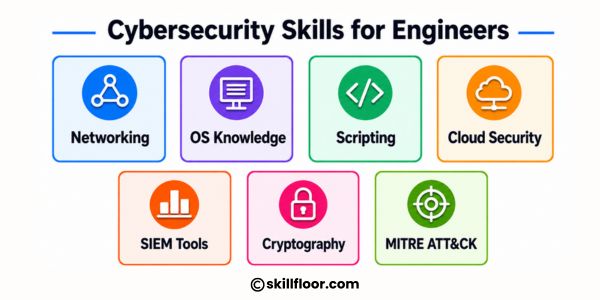
Cybersecurity engineers require a combination of technical expertise, analytical thinking, and problem-solving abilities to defend digital systems effectively. As cyberattacks continue increasing globally, organizations prioritize professionals with strong networking, cloud security, scripting, and threat detection skills.
Essential Technical Skills for Cyber Security Careers
-
Networking Fundamentals: Strong networking knowledge helps engineers secure enterprise systems, as over 90% of cyberattacks target network vulnerabilities and configurations.
-
Operating System Knowledge: Understanding Linux and Windows Server environments is essential because most enterprise cybersecurity infrastructures rely heavily on these platforms.
-
Programming and Scripting Skills: Python, Bash, and PowerShell scripting skills help automate security tasks, threat detection, and vulnerability management processes efficiently.
-
Cloud Security Expertise: Cloud security skills are highly demanded because more than 94% of organizations globally now use cloud computing services.
-
SIEM Tools Knowledge: Experience with SIEM tools like Splunk and IBM QRadar improves threat monitoring, incident detection, and enterprise security visibility significantly.
-
Encryption and Cryptography: Encryption knowledge protects sensitive business information, especially as ransomware attacks continue targeting organizations across multiple industries worldwide.
-
MITRE ATT&CK Framework Knowledge: Understanding MITRE ATT&CK frameworks helps cybersecurity professionals identify attacker techniques and improve organizational threat detection capabilities effectively.
Certifications That Boost Your Career and Salary
Cyber security certifications improve technical expertise, industry credibility, and salary opportunities across swiftly growing digital security industries worldwide. Employers highly prefer certified professionals because certifications validate practical cybersecurity skills, threat management knowledge, and enterprise security capabilities.
-
Industry Demand – Nearly 89% of hiring managers prefer certified cybersecurity professionals during recruitment processes globally.
-
Career Growth – Around 90% of professionals consider cybersecurity certifications valuable for salary growth and career advancement.
-
CompTIA Security+ – Beginner-friendly certification covering cybersecurity fundamentals, network security, and risk management concepts effectively.
-
CEH Certification – Develops ethical hacking, penetration testing, and vulnerability assessment skills for cybersecurity professionals worldwide.
-
CISSP Certification – Preferred certification for senior cybersecurity leadership, enterprise security management, and architect-level positions globally.
-
CISM Certification – Ideal for professionals moving into cybersecurity management and enterprise-level security leadership roles successfully.
-
Cloud Certifications – AWS and Azure certifications validate cloud security expertise and enterprise infrastructure protection capabilities.
-
OSCP Certification – Advanced hands-on certification focusing on penetration testing and offensive cybersecurity skill development globally.
-
Skillfloor Certifications – Provides practical cybersecurity training, live projects, internships, and industry-recognized job-ready technical expertise.
Educational Pathways Into Cyber Security
Cybersecurity offers flexible learning pathways, allowing students and professionals from different educational backgrounds to enter the industry. While degrees strengthen technical foundations, certifications, bootcamps, and hands-on projects also help build successful cybersecurity careers.
-
Computer Science – Builds strong programming, algorithms, and system architecture knowledge for advanced cybersecurity career opportunities.
-
Information Technology – Focuses on practical IT operations, networking, and enterprise security management skills for cybersecurity roles.
-
Cyber Security Degree – Specialized programs teaching ethical hacking, threat detection, risk management, and digital security concepts effectively.
-
Computer Engineering – Useful for hardware security, embedded systems protection, and enterprise-level cybersecurity infrastructure development roles.
-
Skill-Based Hiring – Many companies now prioritize certifications, technical projects, and practical cybersecurity skills over traditional degrees.
-
Skillfloor Training – Skillfloor provides practical cybersecurity training, internships, certifications, and job-focused industry learning opportunities successfully.
Is a Career in Cyber Security Right for You?
Cybersecurity is an ideal career for individuals who enjoy solving technical problems and protecting digital systems from threats. This field rewards continuous learning, analytical thinking, ethical responsibility, and adaptability in fast-changing technology environments worldwide.
Essential Characteristics for Cyber Security Professionals
-
Continuous Learning – Cybersecurity professionals constantly learn, developing technologies, hacking methods, and advanced digital security protection strategies worldwide.
-
Problem Solving – Strong analytical thinking helps professionals identify vulnerabilities and solve complex cybersecurity challenges effectively under pressure.
-
Ethical Mindset – Cybersecurity careers require strong ethical values because security skills protect organizations from harmful cyberattacks globally.
-
Career Flexibility – Cybersecurity offers multiple specialized career paths, including cloud security, ethical hacking, compliance, and threat intelligence.
-
High Salary Potential – Cybersecurity professionals receive competitive salaries and strong career growth opportunities across global technology industries.
Getting Started: Your Action Plan
Starting a career in cybersecurity requires consistent learning, practical experience, and industry-recognized certifications. With the right roadmap and hands-on practice, beginners can gradually build technical expertise and enter high-demand cybersecurity roles successfully.
-
Learn Fundamentals – Start learning networking, operating systems, internet fundamentals, and cybersecurity basics through beginner-friendly online learning resources.
-
Earn Certifications – Obtain CompTIA Security+ certification to build foundational cybersecurity knowledge and improve entry-level career opportunities effectively.
-
Build Practical Skills – Practice cybersecurity scenarios using home labs, TryHackMe, and Hack The Box platforms regularly for experience.
-
Choose Specialization – Explore cybersecurity domains like cloud security, ethical hacking, or incident response before selecting specialized career paths.
-
Network Professionally – Join cybersecurity communities, attend industry conferences, and connect with professionals through LinkedIn and technology forums.
-
Apply Consistently – Begin with IT support or help desk roles to gain technical experience before transitioning into cybersecurity positions.
-
Skillfloor Training – Skillfloor provides practical cybersecurity training, internships, certifications, and real-world project experience for career preparation.
FAQs
1. What does a cybersecurity engineer do?
A cybersecurity engineer protects networks, systems, and applications from cyberattacks, hacking attempts, malware, and data breaches.
2. Is cybersecurity a good career in 2026?
Yes, cybersecurity remains one of the fastest-growing and highest-paying technology careers due to increasing digital security threats.
3. What qualifications are required for cybersecurity jobs?
A degree in computer science, IT, or cybersecurity helps, but certifications and practical skills are equally important.
4. Can I start a cybersecurity career without coding knowledge?
Yes, beginners can start with networking and security fundamentals before gradually learning scripting and programming concepts later.
5. Which certification is best for beginners in cybersecurity?
CompTIA Security+ is considered one of the best beginner-friendly certifications for starting a cybersecurity career successfully.
Cybersecurity continues to become one of the most rewarding and future-proof technology careers because organizations worldwide urgently need skilled digital security professionals. With rising cyber threats, strong salary growth, and millions of unfilled positions globally, this field offers excellent opportunities for career stability, continuous learning, and long-term professional success. Whether you are starting fresh, upgrading technical skills, or switching careers, building cybersecurity expertise today can open doors to high-demand roles and meaningful real-world impact in the swiftly evolving digital industry.
Digital Marketing Courses in Other Locations in India
Ahmedabad | Aurangabad | Bangalore | Bhilai | Bhopal | Bhubaneshwar | Chandigarh | Chennai | Cochin | Coimbatore | Dehra Dun | Delhi | Faridabad | Ghaziabad | Gorakhpur | Guntur | Gurgaon | Guwahati | Hyderabad | Jaipur | Kanpur | Khammam | Kolkata | Lucknow | Madurai | Mumbai | Mysore | Nagpur | Noida | Patna | Pondicherry | Pune | Ranchi | Shimoga | Surat | Thane | Thiruvananthapuram | Tiruchirappalli | Tirupati | Vadodara | Visakhapatnam | Warangal | Jalandhar | Jodhpur | Indore | Durgapur | Jamshedpur | Dhanbad | Kota | Karnal | Udaipur | Amritsar | calicut | Nashik | Ludhiana | varanasi | thrissur | Mangalore | Raipur |