












































How to Become a Cyber Security Engineer in Ahmedabad?
Want to become a cyber security engineer in Ahmedabad? Explore the skills, courses, certifications, salary, training and steps to start your career successfully.

Cybersecurity matters for businesses because more work is now done online. Companies rely on digital payments, cloud services, and business apps. These tools can face dangers like scams, data theft, and harmful software. Strong security helps keep data and everyday work safe.
For students, fresh graduates, and working people in Ahmedabad, cybersecurity can be a career option. Companies need people who can find risks, check systems, and protect private information. Roles include security analyst, SOC analyst, network security engineer, and ethical hacker.
To start, learners should build basic skills in computer networks, Windows, Linux, and programming. They should also learn how common attacks happen and how to lower risk. Practice in safe labs, simple projects, and network checks can help build useful skills.
Certifications like CompTIA Security+, Cisco CCNA, and CEH can support learning, along with hands-on practice. Learners can follow trusted guidance from CERT-In and NIST to stay up to date. Regular study and practice can help you get a strong start in cybersecurity.


Understand What a Cyber Security Engineer Does
Before you decide to pursue cybersecurity as a career, you should first understand what a cybersecurity engineer actually does.
A cybersecurity engineer works to keep an organisation's computer systems, networks, applications, and sensitive information safe from cyber threats. They find security gaps, put security measures in place, watch for suspicious activity, and help organisations keep their IT environment secure.
Some of the common responsibilities include:
-
Network Security: Protecting computer networks with firewalls, monitoring systems, and security settings.
-
Threat Detection: Detecting suspicious activities, malware, phishing attempts, and unauthorised access.
-
Vulnerability Assessment: Looking for weak spots in applications, networks, and operating systems.
-
Security Implementation: Putting in place security controls, encryption, access management, and endpoint protection.
-
Incident Response: Looking into security incidents and helping organisations reduce their impact.
-
Risk Management: Assessing security risks and suggesting suitable preventive measures.
Cybersecurity is a wide field, so your duties will depend on your organisation, your experience, and your area of specialisation.
Why Choose Cybersecurity as a Career in Ahmedabad?
Ahmedabad is a major hub for business and technology in Gujarat. The city is home to companies working in IT services, manufacturing, banking, pharmaceuticals, finance, and other technology-based industries.
As businesses move to digital platforms, cloud infrastructure, online transactions, and connected systems, keeping sensitive information safe becomes more and more important.
Here are some reasons to consider a cybersecurity career in Ahmedabad.
-
Growing Need for Digital Security: Companies need trained experts to keep customer data, financial records, applications, and networks safe from cyberattacks and other online security threats.
-
Opportunities Across Different Industries: Cybersecurity professionals can find jobs in IT, banking, healthcare, manufacturing, e-commerce, and consulting, where protecting data matters.
-
Different Career Specialisations: You can pick from several career paths, including ethical hacking, network security, cloud security, security operations, and information security management.
-
Opportunities for Freshers and Experienced Professionals: Freshers can begin with internships and junior positions, while experienced IT professionals can apply their current skills to move into cybersecurity.
What Qualifications Are Required to Become a Cyber Security Engineer?
A question beginners often ask is whether you must have a certain degree to get into cybersecurity.
A bachelor's degree in Computer Science, Information Technology, Computer Engineering, or a similar field can give you a strong base.
However, your educational background is not the only thing that counts. Practical skills, technical knowledge, certifications, and hands-on experience also help prepare you for your career.
Educational Qualifications
Some relevant educational qualifications include:
-
B. Tech or B.E. in Computer Science
-
B. Tech or B.E. in Information Technology
-
BCA (Bachelor of Computer Applications)
-
MCA (Master of Computer Applications)
-
B.Sc. in Computer Science or Information Technology

-
Diploma in Computer Engineering or related disciplines


Can Non-IT Students Become Cyber Security Engineers?
Yes. People from non-IT backgrounds, including students and professionals, can also look into cybersecurity.
But first, they need to build a grasp of computer basics, networking, operating systems, and simple programming.
Beginning with courses designed for beginners and hands-on practice can make the switch smoother.
Essential Skills Required to Become a Cyber Security Engineer
Becoming a cyber security engineer requires a combination of technical know-how and soft skills. These skills help you understand security risks, safeguard systems, and deal with cyber threats.Developing these abilities can also prepare you for future cyber security engineer jobs across different industries.
Technical Skills
1. Networking Fundamentals
Study TCP/IP, DNS, VPNs, routers, switches, and firewalls to understand how networks operate and how data travels safely between connected systems.
2. Linux and Windows Administration
Familiarize yourself with Linux and Windows operating systems, focusing on user permissions, system settings, and file management. This knowledge will help you identify security issues and protect computer systems.
3. Programming and Scripting
Learn basic programming languages such as Python, Bash, and PowerShell. These skills will enable you to automate tasks, analyze data, and manage everyday security tasks effectively.
4. Network Security
Understand firewalls, access controls, encryption, and network monitoring to safeguard connected systems from unauthorized access and common cyber threats.
5. Cloud Security
Gain knowledge of cloud platforms, data protection measures, user access management, and security settings. This understanding will allow you to help businesses secure their cloud systems and sensitive information.
6. Vulnerability Assessment and Penetration Testing
Learn how to identify security vulnerabilities, conduct authorized penetration testing, and recommend effective solutions for any security issues you uncover.
Soft Skills
1. Analytical Thinking
Develop the ability to identify security issues, understand the associated risks, and formulate effective solutions through clear and logical thinking.
2. Problem-Solving Skills
Learn to address sudden security incidents by determining their causes and taking appropriate actions to protect systems and business data.
3. Communication and Teamwork
Collaborate closely with IT teams, communicate security concerns clearly, and share valuable information with colleagues to help them make informed security decisions.
4. Continuous Learning and Adaptability
Stay updated on emerging cyber threats, security tools, and technologies to enhance your knowledge and adapt to evolving security requirements.
Step-by-Step Roadmap to Become a Cyber Security Engineer in Ahmedabad
If you're a beginner, following a clear learning path can help you develop the necessary skills and prepare for job opportunities in cybersecurity.
Step 1: Build Your IT Foundation
Start by learning about computer networks, operating systems, hardware, and basic system administration. Understanding these fundamentals will make it easier to grasp cybersecurity concepts.
Step 2: Learn Cybersecurity Fundamentals
Familiarize yourself with common cyber threats, encryption techniques, authentication methods, access control, and network security measures. These topics will help you identify security risks and understand how systems are protected.
Step 3: Develop Programming and Scripting Skills
Learn basic programming languages such as Python and Bash. Practice writing simple scripts to analyze files, process logs, automate tasks, and retrieve system information.
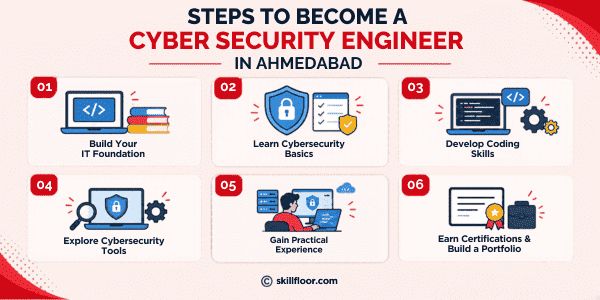
Step 4: Learn Essential Cybersecurity Tools
Explore commonly used security tools to see how professionals identify vulnerabilities, monitor networks, and test systems. Begin practicing with these tools in authorized environments.
Some important tools include:
-
Wireshark: Analyses network traffic and communication.
-
Nmap: Identifies network devices and open ports.
-
Burp Suite: Helps test web application security.
-
Metasploit: Supports authorised security testing and vulnerability assessments.
Step 5: Gain Hands-On Practical Experience
Learn cybersecurity concepts by using virtual labs, CTF challenges, and guided exercises. Take on small projects to grow your technical knowledge and build confidence.
Step 6: Earn Certifications and Build Your Portfolio
Pick cybersecurity certifications that fit your goals, and keep a record of your practical projects, lab exercises, and skills. A solid portfolio can help you show potential employers what you can do.
Which Cybersecurity Certifications Should You Consider?
Professional certifications can enhance your technical knowledge, validate your skills, and strengthen your resume when applying for cybersecurity jobs.
These certifications cover essential security concepts, risk management, network security, and threat detection, making them an excellent choice for beginners entering the field of cybersecurity.
2. ISC2 Certified in Cybersecurity (CC)
Designed for those just starting, this certification teaches fundamental security principles, network security, access controls, and incident response, and it does not require any prior work experience.
3. Certified Ethical Hacker (CEH)
This certification introduces ethical hacking methods, attack techniques, and security testing. It is particularly beneficial for individuals interested in penetration testing and offensive security.
4. CompTIA CySA+
Focusing on threat detection, security monitoring, vulnerability management, and incident response, this certification is well-suited for learners with basic cybersecurity knowledge and some practical experience.
Important: Keep in mind that a certification alone cannot guarantee you a job in cybersecurity. To enhance your career prospects, combine your certification with hands-on projects, practical skills, and thorough interview preparation.
How to Gain Practical Cybersecurity Experience in Ahmedabad?
Practical experience matters when you want to build a successful career in cybersecurity. Besides theoretical knowledge, you need to practise using security tools, work on projects, and learn how security issues are dealt with in real environments. Below are some ways to get hands-on experience.
1. Join a Cybersecurity Training Programme
Pick a training programme in Ahmedabad that provides practical lab sessions, industry-related projects, and guidance from experts. Before you enrol, look at the course content, the trainer's experience, and the lab facilities.
2. Create Your Own Cybersecurity Lab
Build a home lab with virtual machines so you can practise Linux, network monitoring, firewall settings, and vulnerability testing. Practising regularly helps you grasp security concepts.
3. Participate in CTF Challenges
Join Capture the Flag (CTF) challenges to solve security-related problems. These activities strengthen your technical knowledge, logical thinking, and problem-solving skills.
4. Work on Practical Cybersecurity Projects
Finish beginner-friendly projects so you can put your technical knowledge to use. Keep a record of your work, tools, and findings to build a portfolio that shows your practical cybersecurity skills.
How to Choose the Right Cyber Security Training Institute in Ahmedabad?
Picking the right training institute matters when you want to build cybersecurity skills. Before you decide, compare the course content, hands-on training, trainer experience, and career support.
-
Course Curriculum: Pick courses that cover networking, Linux, ethical hacking, and security basics.
-
Practical Lab Training: Find out if students get regular hands-on practice with security tools.
-
Experienced Trainers: Look for trainers who know the industry and have real teaching experience.
-
Real-World Projects: Choose programmes that include practical assignments and projects related to the industry.
-
Certification Preparation: Check if the course helps you prepare for recognised cybersecurity certifications.
-
Placement Assistance: Look at resume support, interview preparation, internship opportunities, and placement guidance.
Cyber Security Engineer Salary in Ahmedabad
The salary of a cyber security engineer in Ahmedabad depends on experience, job role, technical skills, certifications, and industry knowledge.
|
Experience Level |
Job Role |
Estimated Annual Salary |
|
Fresher (0–2 Years) |
SOC Analyst / Junior Security Analyst |
₹3–6 LPA |
|
Mid-Level (2–5 Years) |
Cyber Security Engineer |
₹6–12 LPA |
|
Experienced (5–8 Years) |
Security Engineer / Penetration Tester |
₹12–20 LPA |
|
Senior (8+ Years) |
Senior Security Engineer / Security Architect |
₹20 LPA and Above |
Note: These are indicative salary ranges for general career guidance, not verified Ahmedabad-specific salary averages. Actual salaries may vary depending on the company, technical expertise, certifications, and responsibilities.
Why Choose Skillfloor for Cyber Security Training in Ahmedabad?
Skillfloor provides cybersecurity training in Ahmedabad for students, fresh graduates, and working professionals who want to build a career in this field. The course aims to help learners grasp key security concepts, build technical skills, and learn about commonly used cybersecurity tools through structured lessons.
Picking the right training programme can make your learning journey smoother. Before you enroll, look into Skillfloor's course curriculum, hands-on training sessions, trainer experience, and the career support it offers. These details can help you judge whether the programme fits your learning needs and your future cybersecurity career goals.
FAQs About Becoming a Cyber Security Engineer in Ahmedabad
1. How can I become a cyber security engineer in Ahmedabad?
Learn networking, Linux, programming, and security fundamentals. Gain practical experience, earn certifications, complete projects, and apply for cybersecurity jobs.
2. What qualifications are required to become a cyber security engineer?
A degree in Computer Science or IT is helpful, but practical skills, relevant certifications, and experience also matter.
3. Which cybersecurity course is best for beginners in Ahmedabad?
Choose a course covering networking, Linux, ethical hacking, security tools, practical labs, industry projects, and expert guidance.
4. How long does it take to become a cyber security engineer?
It may take 6–12 months to develop foundational skills, depending on your learning pace, technical knowledge, and practical experience.
5. Is cybersecurity a good career option for freshers?
Yes, freshers can explore SOC Analyst, Junior Security Analyst, and Security Operations roles by developing technical skills and gaining practical experience.
Becoming a cybersecurity engineer in Ahmedabad requires a combination of technical knowledge, practical experience, continuous learning, and the right career direction.
Begin with the fundamentals of networking, operating systems, and programming. Gradually build your understanding of cybersecurity concepts, explore industry tools, practice through hands-on labs, and pursue certifications that align with your career goals.
Whether you are a student, recent graduate, or working professional, the best approach is to follow a structured learning roadmap instead of trying to master every cybersecurity concept at once.
Most importantly, focus on developing practical skills that demonstrate your ability to identify security risks, understand vulnerabilities, and protect digital systems.
With consistent effort and the right learning approach, you can work towards building a rewarding career in cybersecurity in Ahmedabad.
Digital Marketing Courses in Other Locations in India
Ahmedabad | Aurangabad | Bangalore | Bhilai | Bhopal | Bhubaneshwar | Chandigarh | Chennai | Cochin | Coimbatore | Dehra Dun | Delhi | Faridabad | Ghaziabad | Gorakhpur | Guntur | Gurgaon | Guwahati | Hyderabad | Jaipur | Kanpur | Khammam | Kolkata | Lucknow | Madurai | Mumbai | Mysore | Nagpur | Noida | Patna | Pondicherry | Pune | Ranchi | Shimoga | Surat | Thane | Thiruvananthapuram | Tiruchirappalli | Tirupati | Vadodara | Visakhapatnam | Warangal | Jalandhar | Jodhpur | Indore | Durgapur | Jamshedpur | Dhanbad | Kota | Karnal | Udaipur | Amritsar | calicut | Nashik | Ludhiana | varanasi | thrissur | Mangalore | Raipur |