













































How to Build a Powerful Digital Marketing Portfolio
Learn how to build a powerful Digital Marketing portfolio with real projects, results, and tools. Step-by-step guide for beginners, freelancers, and professionals.

Building a strong Digital Marketing portfolio is one of the best ways for students to stand out in today’s competitive job market. A portfolio is more than just a collection of projects; it shows what you can actually do. As a student, it helps you demonstrate your skills, creativity, and ability to handle real-world marketing challenges to potential employers or internship providers. Whether you are learning SEO, social media marketing, content creation, or paid campaigns, having a well-organized portfolio lets you showcase your projects, results, and growth. Even if you are new to the field, starting your portfolio early can make a big difference in getting noticed and building opportunities in the world of Digital Marketing.
What Is a Digital Marketing Portfolio?
A Digital Marketing portfolio is a collection of your projects, campaigns, and results that shows your practical skills. Unlike a resume, it provides tangible proof of what you can accomplish. It acts as a personal showcase, helping employers or clients see your expertise and creativity in action.
Key benefits of a Digital Marketing portfolio:
-
Demonstrates practical experience: Shows you can apply Digital Marketing theories to real projects.

-
Builds credibility: Evidence of completed campaigns enhances trust with employers and clients.
-
Highlights results: Measurable outcomes such as traffic growth, conversion rates, or engagement metrics prove effectiveness.
-
Supports career growth: A strong portfolio can help secure job offers, promotions, or freelance opportunities.
-
Showcases versatility: By including multiple types of campaigns, you demonstrate proficiency in various Digital Marketing channels.


In summary, a standout portfolio showcases your abilities and gives you an edge in Digital Marketing.
Who Should Build a Digital Marketing Portfolio?
A Digital Marketing portfolio is valuable for anyone looking to showcase their skills, regardless of experience level. It helps demonstrate practical knowledge and results, making it easier to get noticed by employers, clients, or mentors.
Typical audiences include:
-
Students and fresh graduates: Helps secure first jobs, internships, or project opportunities.
-
Career switchers: Highlight transferable skills and prove readiness for a Digital Marketing role.
-
Freelancers: Showcases the ability to manage campaigns and deliver measurable results.
-
Marketing professionals: Supports promotions, role expansions, or internal project recognition.
-
Entrepreneurs: Demonstrates marketing expertise and personal branding efforts for their business.
Even beginners can start small, gradually adding projects to build a strong and credible portfolio.
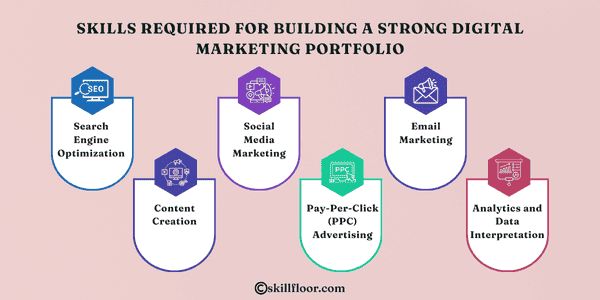
Skills required for building a strong digital marketing portfolio
To build a strong Digital Marketing portfolio, you need a mix of technical knowledge, creative thinking, and analytical skills. Employers and clients look for portfolios that show not only what tools you know, but also how effectively you apply them to achieve real results. Developing the right skills helps you create meaningful projects, explain your strategies clearly, and present measurable outcomes.
Key skills required include:
-
Search Engine Optimization (SEO): Understanding how search engines work and optimizing content to rank higher in search results is essential. This includes keyword research, on-page SEO, off-page SEO, and basic technical SEO practices.
-
Content Creation: The ability to create engaging and high-quality content is a core Digital Marketing skill. This includes writing blog posts, creating social media content, designing visuals, and producing basic video content.
-
Social Media Marketing: Managing platforms such as Facebook, Instagram, LinkedIn, and Twitter helps build brand awareness, engage audiences, and drive website traffic through consistent and strategic content.
-
Pay-Per-Click (PPC) Advertising: Running paid ad campaigns on platforms like Google Ads and Facebook Ads requires skills in audience targeting, budget optimization, and performance analysis.
-
Email Marketing: Creating and executing email campaigns to nurture leads and retain customers involves writing compelling copy, designing templates, and analyzing open and click-through rates.
-
Analytics and Data Interpretation: Using tools like Google Analytics to track campaign performance, understand user behavior, and optimize Digital Marketing strategies is critical for data-driven decision-making.
Mastering these skills will help you build a credible, results-driven Digital Marketing portfolio.
Step-by-Step Guide to Building Your Digital Marketing Portfolio
Even beginners can create a professional portfolio with the right approach.
Step 1: Choose Your Focus Area
Decide which Digital Marketing skills you want to highlight first:


-
SEO and content creation
-
Paid advertising campaigns
-
Social media management
-
Email marketing or automation
Focusing on a few key areas initially prevents your portfolio from being overwhelming.
Step 2: Start with Real or Practice Projects
-
Launch a personal blog or website
-
Run mock campaigns for social media
-
Create Google Ads or email campaigns for practice
-
Analyze website traffic or engagement metrics
Even hypothetical campaigns demonstrate understanding and initiative.
Step 3: Document Your Work
-
Record objectives, strategy, and tools used
-
Track performance metrics
-
Include screenshots, dashboards, or reports
-
Write insights and lessons learned
This documentation turns a simple project into a compelling case study.
Step 4: Organize Your Portfolio
Structure your portfolio logically:
-
Introduction/About
-
Skills Overview
-
Projects and Case Studies
-
Tools and Platforms
-
Metrics and Results
-
Certifications
-
Testimonials
A clear structure improves readability and professionalism.
Step 5: Choose a Hosting Platform
Options for showcasing your portfolio:
-
Personal website or blog
-
LinkedIn Featured section
-
Notion or Google Drive pages
-
GitHub for dashboards and analytics
Ensure your portfolio is easy to access and share with recruiters or clients.
Step 6: Keep It Updated
Digital Marketing evolves rapidly. Regularly update your portfolio with:
-
New campaigns and results
-
Updated tools and certifications
-
Refined strategies and insights
An up-to-date portfolio signals continuous learning and growth.
Common Pitfalls to Avoid When Building a Digital Marketing Portfolio
A Digital Marketing portfolio should clearly reflect your skills, strategy, and real-world experience. However, many students and professionals make common mistakes that reduce its effectiveness. Avoiding these pitfalls will help you create a stronger, more credible portfolio that appeals to employers and clients.
-
Listing tools and platforms without explaining how you used them in real projects.
-
Focusing too much on theory instead of showcasing practical Digital Marketing campaigns.
-
Adding too many projects, which can confuse or overwhelm the viewer.
-
Ignoring key results such as traffic growth, leads, conversions, or engagement metrics.
-
Copying portfolio content from others, which reduces originality and trust.
-
Poor organization, unclear explanations, or messy presentation.
-
Not updating the portfolio regularly with new skills or projects.
-
Failing to tailor the portfolio to specific Digital Marketing roles or career goals.
A well-structured, focused portfolio that highlights results and real work is far more impactful than a long, cluttered one.
How Recruiters Evaluate a Digital Marketing Portfolio
Recruiters typically look for:
-
Clear understanding of Digital Marketing principles
-
Ability to execute campaigns across channels
-
Problem-solving and analytical skills
-
Demonstrated results and measurable outcomes
-
Professional presentation and organization
They value practical application over theoretical knowledge, making your portfolio essential.
Portfolio for Freelancers and Entrepreneurs
A Digital Marketing portfolio is just as important for freelancers and entrepreneurs as it is for job seekers. It helps you clearly present your expertise and attract the right clients or business opportunities.
It allows you to:
-
Showcase past projects and campaigns to build client trust
-
Demonstrate return on investment (ROI) through real results
-
Highlight versatility across SEO, social media, content, and paid campaigns
-
Build a strong personal brand and establish credibility in your niche
Even small, self-initiated, or experimental projects can leave a strong impression and help potential clients understand your Digital Marketing capabilities.
Tips for Making Your Portfolio Stand Out
-
Include a mix of channels: SEO, content, ads, social media
-
Focus on measurable results
-
Use concise and clear language
-
Highlight problem-solving and strategizing
-
Keep design clean and professional
-
Include insights on lessons learned and improvements
A portfolio that shows growth and adaptability stands out in the Digital Marketing field.In the Digital Marketing industry, a portfolio is more than just a collection of work, it’s your proof of skill, creativity, and results. Whether you are a beginner, job seeker, freelancer, or entrepreneur, building a Digital Marketing portfolio is a critical step toward professional success. Focus on real projects, measurable results, and clear documentation, and update your portfolio regularly. With a strong portfolio, you not only demonstrate competence but also earn trust, credibility, and opportunities in the competitive Digital Marketing world.
Digital Marketing Courses in Other Locations in India
Ahmedabad | Aurangabad | Bangalore | Bhilai | Bhopal | Bhubaneshwar | Chandigarh | Chennai | Cochin | Coimbatore | Dehra Dun | Delhi | Faridabad | Ghaziabad | Gorakhpur | Guntur | Gurgaon | Guwahati | Hyderabad | Jaipur | Kanpur | Khammam | Kolkata | Lucknow | Madurai | Mumbai | Mysore | Nagpur | Noida | Patna | Pondicherry | Pune | Ranchi | Shimoga | Surat | Thane | Thiruvananthapuram | Tiruchirappalli | Tirupati | Vadodara | Visakhapatnam | Warangal | Jalandhar | Jodhpur | Indore | Durgapur | Jamshedpur | Dhanbad | Kota | Karnal | Udaipur | Amritsar | calicut | Nashik | Ludhiana | varanasi | thrissur | Mangalore | Raipur |