









































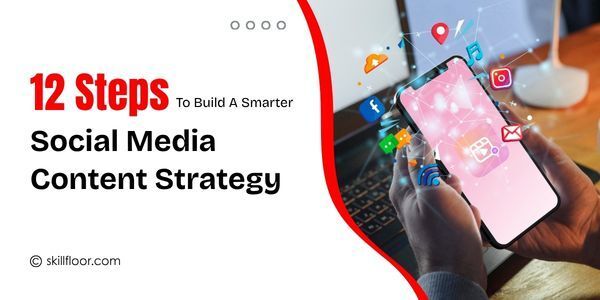
12 Proven Steps to Build a Social Media Content Strategy That Works
Build a social media content strategy that gets results with 12 proven steps to reach your audience, plan better posts, stay consistent, and grow your brand.
Social media has become a powerful digital marketing channel that enables brands to connect with audiences, build credibility, and foster meaningful relationships through strategic communication.
With over 5.79 billion social media users worldwide as of April 2026 (DataReportal), businesses must adopt effective social media marketing strategies that combine audience research, creative storytelling, and performance tracking to enhance visibility and engagement.
Many brands face challenges because they publish content without clear objectives, customer insights, or a structured plan, which leads to limited reach and inconsistent results.
A successful social media content strategy allows businesses to align their messaging with audience needs. By utilizing data-driven decisions, content planning, and analytics, brands can improve awareness, customer interactions, and overall marketing performance.


What Is a Social Media Content Strategy?
A social media content strategy is a well-defined plan that helps companies in choosing what to post, where to post, and how to engage their audience. It focuses on producing valuable content that advances corporate objectives and fosters trust.
A plan lets you communicate the right message to the right people at the right time, instead of posting randomly. A strong social media marketing approach includes publishing schedules, audience needs, content ideas, and methods to identify what works best.
Why a Social Media Content Strategy Is More Important Than Ever
Millions of posts compete for attention every day. Not only is your audience comparing your content to that of your rivals, but they are also comparing it to every amusing video, industry analysis, and popular meme that appears on their page.
Without a strategy, it's easy to fall into common traps:
-
Posting only when inspiration strikes
-
Chasing every trend without relevance
-
Repeating the same content
-
Ignoring analytics
-
Losing consistency
-
Failing to engage
Social media is one of the biggest ways for businesses to reach potential customers because billions of people use it globally, according to DataReportal. But it's not enough to just be visible. Consumers interact with companies that continuously offer value, genuineness, and insightful dialogues.
12 Essential Steps to Create a Winning Social Media Content Strategy
Step 1: Define Clear Social Media Goals
Before creating your first post, ask yourself one simple question:
What do you actually want social media to achieve?
Without clear objectives, every metric becomes meaningless.
Your goals might include:
-
Increasing brand awareness
-
Driving website traffic
-
Generating leads
-
Building an engaged community
-
Growing online sales
-
Improving customer loyalty
Use the SMART framework to create goals that are Specific, Measurable, Achievable, Relevant, and Time-bound.
For example: Instead of saying "Grow Instagram," aim for "Increase Instagram engagement by 25% within three months."
Clear goals make every content decision easier and create a strong foundation for your overall digital marketing efforts.
Step 2: Understand Your Target Audience


Understanding your audience is the first step toward an effective social media strategy. It's like speaking without knowing who is listening when you create content without knowing your fans.
Research your audience's:
-
Age and demographics
-
Interests and preferences
-
Challenges and pain points
-
Buying behavior
-
Preferred social media platforms
-
Content consumption habits
One way to facilitate this process is to create audience personas. Your ideal client is represented by a buyer persona, which aids in determining the kind of content that will draw in and keep them interested.
For example:
A fitness brand targeting young professionals may focus on:
-
Quick workout videos
-
Healthy lifestyle tips
-
Time-saving fitness routines
A B2B software company may focus on:
-
Industry insights
-
Case studies
-
Product education
When you understand your audience, your content becomes more relevant, valuable, and engaging.
Step 3: Choose the Right Social Media Platforms
A common error made by businesses is to attempt to be active on all social media platforms. But the key to success is to select channels where your audience is most engaged.
Each platform has a different purpose:
-
Instagram: Best for visual content, reels, lifestyle brands, and community building.
-
LinkedIn: Ideal for B2B marketing, professional insights, and industry authority.
-
Facebook: Useful for communities, local businesses, and diverse audiences.
-
YouTube: Great for educational videos, tutorials, and long-form content.
Focus on quality rather than quantity. It is better to manage two platforms effectively than to create weak content across five platforms.
Step 4: Analyze Your Competitors
You may learn what works in your sector and find ways to set your brand apart by conducting a competitor analysis.
Study your competitors':
-
Most successful content formats
-
Posting frequency
-
Engagement levels
-
Topics they cover
Ask questions like:
-
What type of posts receive the most engagement?
-
What questions are customers asking?
-
Which content formats are performing well?
-
What can we do differently?
Instead of copying competitors, the objective is to take note of their tactics and produce better, more valuable content.
Opportunities to present your brand differently can be found by doing a competitor content assessment.
Step 5: Define Your Brand Voice and Content Pillars
Building a recognizable brand on social media requires consistency.
How you interact with your audience is determined by your brand voice. It needs to convey the essence of your brand.
Your tone could be:
-
Professional and informative
-
Friendly and conversational
-
Inspirational
-
Educational
-
Trustworthy and authoritative
Next, identify the pillars of your content. These are the main subjects that your organization regularly creates content based on in order to inform, involve, and assist its audience.
For example, a digital marketing institution may use:
-
Digital marketing tutorials and industry concepts
-
SEO, social media marketing, and content marketing insights
-
Student success stories and career journeys
-
Course updates, workshops, and certification programs
-
Marketing trends, tools, and expert tips
A well-structured digital marketing course can help professionals understand content strategy, audience engagement, SEO, and other essential skills needed to create effective online campaigns.
Maintaining consistency, enhancing brand identification, and making sure that every social media post benefits your target audience are all made possible by clear content pillars.
Step 6: Create a Balanced Content Mix
A strong social media content strategy requires a variety of content types. Posting only promotional content can reduce engagement because audiences want value, not constant advertisements.
A balanced content mix includes:
-
Educational Content: Educational content uses useful and instructive resources to assist your audience learn, solve problems, and comprehend industry topics.
-
Engagement Content: By giving people a chance to express their thoughts and experiences, engagement content promotes dialogue, fosters relationships, and boosts audience interaction.
-
Promotional Content: Promotional content draws attention to your goods, services, or offerings by outlining their advantages and motivating prospective buyers to take significant action.
-
Entertaining Content: With imaginative stories, relatable concepts, and captivating experiences that enhance brand recall, entertaining content builds emotional connections with your audience.
Long-term social media marketing success is supported by a well-balanced content mix, which also keeps your audience engaged and enhances your online visibility.
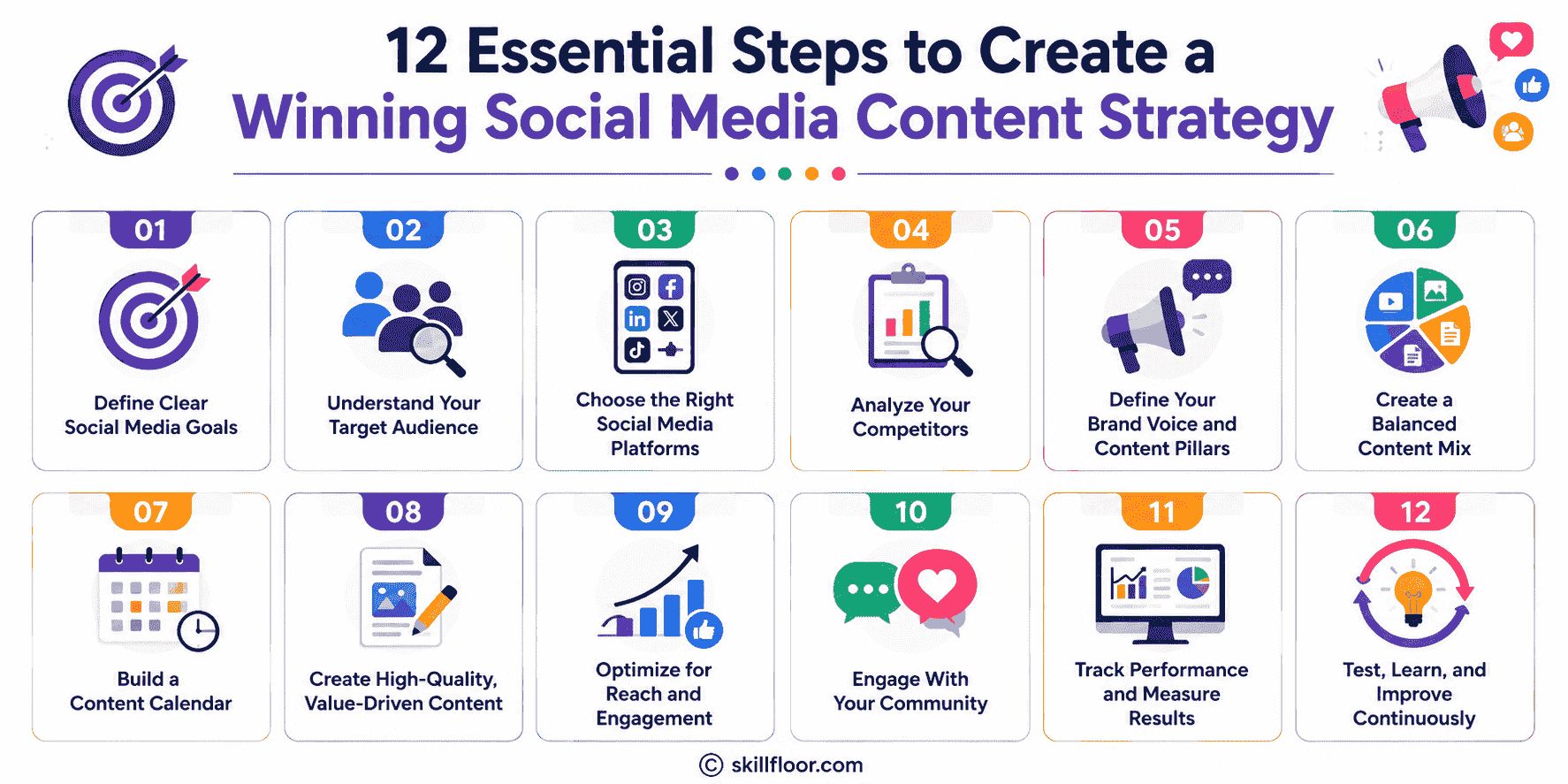
Step 7: Build a Content Calendar
Success on social media requires consistency, and a content calendar keeps you on track. By organising your content ahead of time, you can minimise last-minute stress, post frequently, and link it with your marketing objectives.
Include the following in your content calendar:
-
Monthly Planning: Map out campaigns, educational posts, and business goals for the month.
-
Weekly Scheduling: Assign specific content types to each day to maintain a consistent posting routine.
-
Seasonal Campaigns: Plan content around holidays, festivals, and industry events to stay relevant.
-
Product Launches: Create teaser posts, launch announcements, and follow-up content to maximize reach.
-
Content Batching: Create multiple posts in one session to save time and maintain consistency.
-
Planning Tools: Use platforms like Notion, Trello, or Google Sheets to organize, collaborate, and schedule your content efficiently.
You can increase efficiency, maintain consistency, and provide insightful contents that engage your audience with the help of a well-planned content schedule.
Step 8: Create High-Quality, Value-Driven Content
Consistently creating content is insufficient; it must offer value. High-quality content motivates your audience to take action by educating, inspiring, or solving problems.
Keep these best practices in mind:
-
Hook Readers Quickly: Users are immediately drawn in and encouraged to stop scrolling and participate via attention-grabbing headlines, queries, or unexpected data.
-
Use Storytelling: Content becomes more memorable, creates emotional connections, and builds trust through meaningful examples, customer experiences, and real stories.
-
Maintain Visual Consistency: Brand identification is strengthened and a polished, identifiable social media presence is produced by using consistent colours, typefaces, and design elements.
-
Include Strong CTAs: Good calls to action (CTAs) entice viewers to visit your website, leave a remark, share, save, or do the requested action.
-
Write SEO-friendly Captions: Strategic hashtags, legible captions, and pertinent keywords increase discoverability and expand the audience for your material.
-
Repurpose your Content: Repurposing contents: To increase reach and content value, turn blogs, videos, or webinars into reels, carousels, infographics, and posts.
Creating informative, interesting, and optimised information aids in drawing in the appropriate audience, boosting interaction, and establishing enduring bonds with your followers.
Step 9: Optimize for Reach and Engagement
Creating excellent content is only half the fight. Reaching the correct audience, boosting visibility, and promoting interactions are all made possible by optimising each post.
Focus on these key elements:
-
Relevant Hashtags and Keywords: Naturally occurring keywords and well-chosen hashtags enhance discoverability and assist your content in reaching your target audience.
-
Optimal Posting Times: Visibility, engagement, and the possibility of meaningful interactions are all increased when you publish when your audience is most engaged.
-
Compelling Captions with Strong CTAs: Users are encouraged to like, comment, share, save, or visit your website with compelling captions and obvious calls to action.
-
Active Community Engagement: Building relationships, creating audience loyalty, and developing trust are all facilitated by frequently responding to messages and comments.
By improving these components, you may expand the audience for your content, enhance interaction, and strengthen your social media presence.
Step 10: Engage With Your Community
It takes more than just posting content to cultivate a loyal audience. Regular communication promotes long-term engagement, builds connections, and builds trust.
Focus on these key practices:
-
Timely Responses: Quick responses to direct messages and comments indicate your company respects consumer input and promotes deep dialogue.
-
User-Generated Content (UGC): Photos, reviews, and testimonials from customers enhance your brand's authenticity, boost its trustworthiness, and encourage others to interact with it.
-
Active Community Management: Brand loyalty is strengthened and a pleasant community experience is created through frequent interactions, discussion involvement, and audience support.
-
Social Listening and Trust: In order to resolve issues, comprehend audience needs, and establish enduring trust, it is helpful to keep an eye on brand mentions, conversations, and consumer feedback.
Followers become loyal supporters who actively support and promote your brand when you communicate with the community on a regular basis.
Step 11: Track Performance and Measure Results
You can determine what is effective and where you need to make improvements by measuring your social media performance. Frequent examination guarantees that your plan remains in line with your company's objectives.
Focus on these key areas:
-
Key Performance Indicators (KPIs): The success of your content strategy is shown by metrics like reach, engagement, click-through rate, follows, saves, shares, and conversions.
-
Analytics Tools: Platforms that offer useful performance statistics and audience behaviour include Meta Business Suite, LinkedIn Analytics, Google Analytics, and platform insights.
-
Monthly Performance Reporting: Frequent reports help make data-driven decisions for future content development, measure campaign success, and discover content trends.
-
Continuous Optimization: To improve long-term outcomes, analytics insights are used to improve posting schedules, content styles, and interaction tactics.
Regular performance monitoring enhances content quality, optimises return on investment, and guarantees that your social media strategy yields quantifiable business outcomes.
Step 12: Test, Learn, and Improve Continuously
Over time, an effective social media approach changes. You can find what appeals to your audience and enhance your performance with regular testing and optimisation.
Focus on these key practices:
-
A/B Testing and Content Experiments: Experimenting with various headlines, images, captions, and content formats can assist determine what generates the most interaction.
-
Content Refresh and Repurposing: Adding fresh content to well-performing posts increases their worth and maintains the relevance of your content.
-
Trend and Algorithm Monitoring: Keeping up with platform algorithm changes and industry developments helps you stay visible and successfully modify your approach.
-
Continuous Optimization: Long-term social media success is supported by continuous improvements based on performance insights, audience input, and testing outcomes.
Your content will remain current, boost engagement, and eventually produce better marketing outcomes with regular testing and continual development.
Essential Tools to Build Your Social Media Content Strategy
The right tools make it easier to plan, schedule, create content, and track performance, which helps brands implement plans more successfully.
1. Content Creation Tools
Create engaging visuals and branded content that captures attention across social media platforms.
-
Canva
-
Adobe Express
-
Visme
2. Content Planning & Calendar Tools
Organize ideas, manage workflows, and maintain a consistent content publishing schedule.
-
Notion
-
Trello
-
Asana
-
ClickUp
3. Social Media Scheduling Tools
Automate publishing and manage multiple social media accounts efficiently.
-
Buffer
-
Later
-
Sprout Social
4. Analytics & Performance Tracking Tools
Measure content performance, audience behavior, and campaign success using data insights.
-
Google Analytics 4
-
Meta Business Suite
-
LinkedIn Analytics
-
Sprout Social Analytics
5. Keyword & Trend Research Tools
Discover trending topics, audience interests, and content opportunities with research data.
-
Google Trends
-
Semrush
-
Ahrefs
6. AI Writing & Content Ideation Tools
Generate creative ideas, improve writing, and accelerate content production with AI assistance.
-
ChatGPT
-
Claude
-
Gemini
-
Jasper AI
Pro Tip: Don't overdo it by attempting every tool. One scheduling platform, one analytics tool, and one design tool should be your starting points. Depending on your team's requirements and financial constraints, you can add more tools to your toolkit as your plan develops.
Platforms like Skillfloor help learners develop practical marketing skills through industry-focused training, enabling them to apply effective strategies in real business scenarios.
Common Social Media Content Strategy Mistakes to Avoid
Small errors can cause even the most effective content strategy to fail. By avoiding these typical mistakes, you can increase engagement, maintain consistency, and get better outcomes from your social media activities.
-
Posting without Clear Goals: It is challenging to measure performance or determine whether your social media strategy is effective when content is created without clear objectives.
-
Ignoring your Audience: Over time, sharing content without taking into account the needs or interests of the audience frequently results in less engagement and fewer meaningful connections.
-
Being Inconsistent: Regular posting fosters trust, but extended intervals between postings might diminish exposure and cause your audience to get disinterested.
-
Over-Promoting Products: Followers may become overwhelmed by frequent sales posts. To keep viewers interested, mix advertising content with informative, practical, and entertaining postings.
-
Not Tracking Performance: Ignoring social media analytics makes it more difficult to enhance your marketing strategy and content by preventing you from knowing what works.
-
Following Every Trend: You risk confusing your audience and undermining the identity and messaging of your business by chasing every current topic that isn't relevant.
Frequently Asked Questions (FAQs)
1. How often should I review my social media strategy?
Review your strategy every month to identify what works, what needs improvement, and what changes can help you achieve better results.
2. Can small businesses succeed on social media?
Yes, small businesses can grow on social media by sharing valuable content, understanding their audience, staying consistent, and building genuine customer relationships.
3. What type of content gets more engagement?
Content that educates, entertains, inspires, or solves customer problems usually gets more engagement than content focused only on selling products.
4. Should I use the same content on every platform?
No, customize content for each platform because audiences, formats, and user behaviors differ across Instagram, LinkedIn, Facebook, and other channels.
5. How can I increase social media followers naturally?
Share valuable content consistently, engage with your audience, use relevant hashtags, collaborate with others, and encourage followers to share your content.
6. Do I need a large budget for social media marketing?
No, businesses can start with a small budget by focusing on quality content, organic growth, and using affordable tools effectively.
Developing a social media content strategy involves more than just posting frequently or adhering to every trend. To achieve significant development, you must comprehend your audience, produce insightful content, monitor outcomes, and continuously improve.
Successful brands don't rely on luck; instead, they make deliberate choices now that strengthen their relationships later. Every insightful article, genuine discussion, and data-driven enhancement contributes to the development of trust, a rise in engagement, and a step closer to long-term company success.
You don't have to make all the changes at once because the competition is getting fiercer. Start with a single strategic move, take note of the outcomes, and keep becoming better. These modest steps will eventually turn your social media presence into a potent growth engine.
Digital Marketing Courses in Other Locations in India
Ahmedabad | Aurangabad | Bangalore | Bhilai | Bhopal | Bhubaneshwar | Chandigarh | Chennai | Cochin | Coimbatore | Dehra Dun | Delhi | Faridabad | Ghaziabad | Gorakhpur | Guntur | Gurgaon | Guwahati | Hyderabad | Jaipur | Kanpur | Khammam | Kolkata | Lucknow | Madurai | Mumbai | Mysore | Nagpur | Noida | Patna | Pondicherry | Pune | Ranchi | Shimoga | Surat | Thane | Thiruvananthapuram | Tiruchirappalli | Tirupati | Vadodara | Visakhapatnam | Warangal | Jalandhar | Jodhpur | Indore | Durgapur | Jamshedpur | Dhanbad | Kota | Karnal | Udaipur | Amritsar | calicut | Nashik | Ludhiana | varanasi | thrissur | Mangalore | Raipur |