








































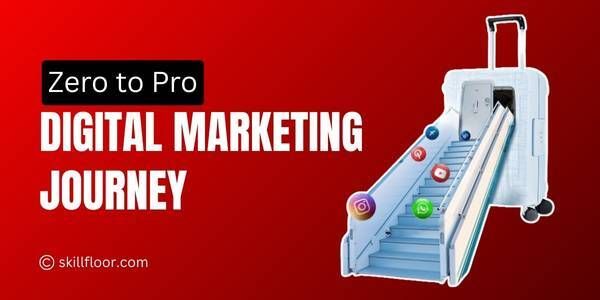
Transition from Zero to Digital Marketing Pro: A Clear Roadmap
Start your journey from zero to digital marketing pro with this clear, actionable roadmap. Upskill, get certified, and accelerate your career with Skillfloor.
When someone wants to dive into digital marketing and become a true pro, the journey can feel both exciting and overwhelming. The digital world is advancing at lightning speed; businesses are investing billions in online campaigns, AI tools are changing marketing tactics, and data-driven choices are becoming commonplace. The problem is that if you don't change now, you can miss out on possibilities to advance your career.
Perhaps you've experienced the same thing: browsing LinkedIn and wondering, "How did they get there?" when you see colleagues acquire interesting marketing positions. In reality, they weren't pros at first. Most started just where you are now: curious, driven, yet overpowered by the vast number of tools and opportunities available in digital marketing.
This is more than just a marketing story; it's a story of transition from knowledge to expertise in digital marketing. You can indeed get there.
Why Digital Marketing is the Career Game-Changer
The field of digital marketing is growing, offering enormous opportunities. Today's ambitious workers find social media, SEO, and online campaigns to be a top job choice because businesses want knowledge in these areas.


-
Global digital ad spend is projected to hit $700 billion by 2025, opening doors for skilled professionals.
-
Businesses increasingly demand marketers who can navigate AI tools, analytics, and multi‑channel campaigns.
-
Career flexibility is unmatched: freelance, full‑time, or consultancy — the possibilities are endless.
-
Around 860,000+ new job openings in digital marketing are expected as companies shift more resources online.
-
In India alone, the sector is projected to generate nearly 900,000 new jobs with salaries rising up to 30% year‑over‑year.
The problem is that the route may seem chaotic. The learning curve seems never-ending, from social media and paid advertisements to SEO and content. A digital marketing course can offer structure, direction, and practical experience.
This is where a structured roadmap becomes your superpower.
The Roadmap to Becoming a Digital Marketing Pro
1. Understanding Digital Marketing Basics
Digital marketing helps companies reach the right audience at the right time by promoting goods and services online. From local stores to international brands, it links, engages, and converts consumers.
The main channels of digital marketing include:
-
SEO (Search Engine Optimization): Increases your website's ranking on search engines like Google, making it easier for prospective clients to find you.
-
PPC (Pay-Per-Click Advertising): Paid advertisements that show up on social media or search engines and swiftly increase traffic.
-
Social Media Marketing: Use social media sites like Facebook, Instagram, LinkedIn, or TikTok to interact with users, create communities, and increase revenue.
-
Email Marketing: Sending customized emails to your audience to inform them, market items, and nurture leads.
-
Content Marketing: Producing podcasts, films, infographics, and blogs to inform, amuse, and naturally draw in viewers.
However, being aware of the channels is insufficient. The proper mindset—being inquisitive, data-driven, experimenting, comprehending consumers, evaluating outcomes, and viewing each campaign as a teaching opportunity—is developed through taking a digital marketing course.
The path to becoming a pro in digital marketing is made much easier by starting with these fundamentals, which provide a solid foundation.
2. Learning the Core Skills
Gaining proficiency in these fundamental abilities builds the groundwork for success by enabling you to develop successful campaigns, engage audiences, and produce quantifiable outcomes.
-
SEO Fundamentals: To increase website visibility, draw in organic visitors, and successfully raise search ranks, learn keywords and on-page and off-page SEO.
-
Social Media Marketing Strategies: Develop communities, conduct campaigns, and provide interesting content for social media sites including Facebook, Instagram, LinkedIn, and TikTok.
-
Paid Advertising Basics: Gain an understanding of Facebook and Google Ads to effectively improve conversions, produce leads, and deliver targeted visitors.
-
Email Marketing Essentials: Create customized email campaigns to increase engagement, retain consumers, and nurture leads for your company or brand.
-
Content Creation & Copywriting: Create convincing language and engaging content that draws in, educates, and converts people across digital platforms.
3. Hands-On Experience
Develop practical skills by putting strategies into practice, doing new things, and creating projects that show your ability.
-
Starting Personal Projects or Blogs: Make your own website or blog to practice SEO, content, and marketing techniques while obtaining practical experience.
-
Practicing on Social Media Platforms: To learn about audience engagement and platform dynamics, manage social media accounts, plan posts, and conduct mini-campaigns.
-
Freelancing Small Projects to Build a Portfolio: Take on small freelance projects to show your abilities, acquire real-world experience, and develop a solid professional portfolio.




4. Building a Personal Brand
Make an impression online by highlighting your skills and accomplishments, establishing a connection with the right audience, and aligning with your digital marketing objectives.
-
Optimize Profiles: Make sure your social media and LinkedIn accounts accurately showcase your skills, accomplishments, and experience.
-
Showcase Work: To showcase your skills and draw in new business, put your case studies and portfolio on display.
-
Network Smartly: Make connections with experts, participate in conversations, and join communities to expand your online visibility.
5. Advanced Growth & Specialization
Develop your abilities by concentrating on trends, statistics, and specialization to become a marketing specialist.
-
Learning Analytics and Conversion Optimization: Making data-driven marketing decisions with confidence requires an understanding of website and campaign analytics, tracking important metrics, and optimizing conversions.
-
Choosing a Niche: Choose a specialty, like social media marketing, PPC, or SEO, to gain in-depth knowledge and make an impression.
-
Continuous Learning and Staying Updated: Examine marketing tactics, new tools, and industry trends on a regular basis to stay competitive and advance your career.
6. Tracking Progress & Measuring Success
Set specific objectives, monitor performance, and use tools to continuously maximize outcomes to keep an eye on your progress.
-
Set Milestones and KPIs: Establish precise benchmarks and KPIs to gauge development, monitor expansion, and assess the effectiveness of marketing campaigns.
-
Use Performance Tools: Utilize analytics and tracking technologies to keep an eye on campaigns, spot opportunities, refine tactics, and effectively enhance outcomes over time.
Where to Start Learning Digital Marketing
Feeling excited yet not knowing where to begin is quite acceptable. Starting with an organized digital marketing course that covers the basics, incorporates real-world projects, and assists in building a solid portfolio is the best course of action.
This process is made easy by platforms like Skillfloor, where you can learn SEO, social media, paid advertisements, email marketing, and more while obtaining certifications that prove your abilities to potential employers. You can comfortably advance from beginner to expert without spending time on haphazard courses or guesswork if you start with the correct advice.
What Makes Skillfloor Stand Out
-
Structured Learning Paths: In order to ensure a seamless learning experience, Skillfloor provides structured courses that lead novices step-by-step from basic to intermediate skills.
-
Hands-On Projects: Students apply their expertise, develop their portfolios, and gain confidence in digital marketing through practical assignments and real-world projects.
-
Industry-Recognized Certifications: Obtain employer-recognized certificates that attest to your abilities and enhance your employment prospects in cutthroat digital marketing industries.
-
Expert Instructors: Learn from experienced business experts who offer mentorship, practical insights, and current advice on marketing trends.
-
Flexible Learning: Self-paced online courses make it easy for students to fit learning into hectic personal or professional schedules by enabling them to study whenever and wherever they choose.
-
Career Growth Support: Through advice, tools, and connections to actual marketing possibilities, Skillfloor promotes professional growth, reskilling, and upskilling.
Digital Marketing Roadmap / Action Plan
1. Beginner (0–3 months) – Learn the Basics & Tools
Build a solid foundation and familiarize yourself with key ideas in digital marketing.
Key Focus Areas:
-
Digital Marketing Fundamentals: SEO, SEM, social media marketing, email marketing, content marketing, analytics.
-
Essential Tools: Google Analytics, Google Ads, Canva, HubSpot, Mailchimp, WordPress basics.
Action Steps:
Take at least 1 foundational course in digital marketing.
Start a practice project (e.g., create a blog or social media page).
Learn to track website traffic and basic metrics using Google Analytics.
2. Intermediate (3–6 months) – Experiment & Apply Knowledge
Gain hands-on experience by creating campaigns and testing strategies.
Key Focus Areas:
-
SEO & Content Marketing: Write blog posts, optimize for keywords, track performance.
-
Social Media Marketing: Run small campaigns on Instagram, LinkedIn, or Facebook.
-
Email Marketing: Build a mailing list and send newsletters.
-
Analytics: Use data to measure and improve campaigns.
Action Steps:
Start your first digital campaign (small PPC campaign, email campaign, or social media ad).
Metrics like CTR, engagement, and conversion rate can be used to monitor outcomes and determine what works.
Keep track of every project in a portfolio or learning notebook.
3. Pro (6+ months) – Build Portfolio, Specialize & Apply
Become prepared for the workforce and establish yourself as a skilled digital marketer.
Key Focus Areas:
-
Specialization: Pick a niche like SEO, PPC, social media ads, email automation, or content strategy.
-
Portfolio Development: Showcase projects, campaigns, and results in a portfolio.
-
Professional Growth: Network, freelance, or apply for jobs.
Action Steps:
Finish five to ten real-world projects (personal, internship, or freelancing).
Create a personal brand, such as a portfolio website or LinkedIn profile.
Apply for freelance work, internships, and professional positions.
Tip: Since this roadmap is adaptable, each person's progress may differ. To attain true growth, concentrate on regular learning, practical skill application, project experimentation, monitoring outcomes, and progressively developing knowledge.
Starting the path to becoming a pro in digital marketing can initially seem overwhelming, but every little step matters. You can gradually become an expert by learning the fundamentals, practicing with actual projects, developing your brand, and monitoring your advancement. Recall that curiosity and constancy, not speed, are what lead to growth. Take one skill at a time, put what you've learned into practice, and keep getting better. You can confidently turn your passion into a fulfilling profession in digital marketing with commitment and the correct direction.
Digital Marketing Courses in Other Locations in India
Ahmedabad | Aurangabad | Bangalore | Bhilai | Bhopal | Bhubaneshwar | Chandigarh | Chennai | Cochin | Coimbatore | Dehra Dun | Delhi | Faridabad | Ghaziabad | Gorakhpur | Guntur | Gurgaon | Guwahati | Hyderabad | Jaipur | Kanpur | Khammam | Kolkata | Lucknow | Madurai | Mumbai | Mysore | Nagpur | Noida | Patna | Pondicherry | Pune | Ranchi | Shimoga | Surat | Thane | Thiruvananthapuram | Tiruchirappalli | Tirupati | Vadodara | Visakhapatnam | Warangal | Jalandhar | Jodhpur | Indore | Durgapur | Jamshedpur | Dhanbad | Kota | Karnal | Udaipur | Amritsar | calicut | Nashik | Ludhiana | varanasi | thrissur | Mangalore | Raipur |