








































Can I Learn Digital Marketing on My Own? A Complete Beginner's Roadmap (2026)
Yes, you can learn digital marketing on your own. This 2026 beginner’s roadmap covers skills, free resources, and how beginners can build real-world experience.
When I first started exploring online career opportunities, digital marketing was a skill that kept appearing everywhere. People were using it to build freelance careers, grow businesses, and secure well-paying jobs.
Naturally, I had one question: Can I learn digital marketing on my own?
Based on my experience, the answer is yes.
The biggest challenge wasn't finding learning resources; it was knowing where to start. With countless blogs, videos, and experts offering different advice, it's easy to feel overwhelmed. What helped me most was focusing on one skill at a time and applying what I learned through practice.


In this guide, you'll learn whether self-learning digital marketing is realistic, the challenges involved, and a practical roadmap to get started.
What Is Digital Marketing?
The process of advertising products, services, or brands online is known as digital marketing. It helps companies grow their customer base by developing connections and increasing revenue. Digital marketing uses the internet to reach consumers where they spend the majority of their time, in contrast to traditional marketing like radio, television, or newspapers.
Can You Really Learn Digital Marketing on Your Own?
Absolutely.
One of the few professional skills that can be acquired without a formal degree or expensive training program is digital marketing.
Digital marketing, compared to many traditional careers, places a higher value on practical skills and real-world outcomes than academic qualifications.
Almost everything you need to know may be found online these days. Many professionals in the field freely exchange tactics, case studies, guides, and thoughts.
The secret is to know how to study and use information efficiently, not to have access to it.
Why Self-Learning Works
There are several reasons why self-learning digital marketing is possible:
-
Free learning resources are widely available.
-
Marketing tools offer free versions for beginners.
-
You can practice immediately by creating your own projects.
-
Most digital marketing skills are learned through hands-on experience.
-
Employers increasingly value digital marketing portfolios and results over degrees.
Learning digital marketing on your own may be quite successful and help you develop valuable skills over time if you practice frequently and remain consistent.
Benefits of Learning Digital Marketing on Your Own
1. Flexible Learning Schedule: Flexibility is one of the main benefits of self-learning. Whether it's early in the morning, over lunch, or late at night, you can learn whenever it suits your schedule.
This makes digital marketing an ideal skill for:
-
Students
-
Working professionals
-
Parents
-
Entrepreneurs
-
Freelancers
2. Cost-Effective Education: The cost of many digital marketing courses can be high. You may acquire helpful content, tutorials, and online courses without having to pay a lot of money if you learn on your own.
3. Learn at Your Own Pace: Everybody learns at a different pace and in a different way. You can spend more time on challenging subjects and get through simpler ones more quickly when you learn on your own.
4. Freedom to Specialize: Since digital marketing covers a wide range of topics, you can experiment with different skills and select the specialization that best suits your interests.
As you learn, you may discover a particular interest in:
-
SEO
-
Content Marketing

-
Social Media Marketing
-
Paid Advertising
-
Email Marketing
-
Marketing Analytics


By concentrating on the digital marketing skills that help you achieve your professional objectives, self-learning enables you to become an expert in the areas that most interest you.
5. Gain Real-World Experience Faster
Knowing how to use your knowledge right away is one of the main advantages of self-learning. To obtain real-world experience while learning, you can manage social media profiles, develop a blog, or work on personal projects.
This practical method helps you develop your abilities, boost your self-esteem, and construct a portfolio that will appeal to employers or clients.
Challenges of Learning Digital Marketing by Yourself
Although mastering digital marketing on your own is flexible and cost-effective, it also has drawbacks that, if not handled well, could delay your success.
1. Information Overload: Too much knowledge is one of the main challenges faced by beginners. Online resources include thousands of blogs, videos, podcasts, and courses. It's simple to switch between topics and get overwhelmed without a clear plan.
2. Lack of Structure: Traditional courses offer a structured curriculum. You have to design your own learning route when learning on your own. A lot of beginners spend time learning advanced techniques before understanding the basics in the absence of a framework.
3. Staying Consistent: Self-learning requires discipline. No instructor will remind you to study or complete assignments. Success depends heavily on your commitment and consistency.
4. Limited Feedback: It might be challenging to determine whether you are correctly applying topics when you are learning on your own. Your development can be accelerated by feedback from communities, mentors, or experienced marketers.
5. Constant Industry Changes: Digital marketing evolves rapidly. Search engine algorithms change, social media platforms update their features, and advertising systems constantly evolve. Continuous learning is essential for long-term success.
Step-by-Step Roadmap to Learn Digital Marketing on Your Own
If you're not sure where to start, you may effectively develop your digital marketing skills step by step by adhering to a structured learning roadmap.
Step 1: Learn Digital Marketing Fundamentals
Spend some time understanding fundamental marketing ideas, such as audience demands, consumer behavior, branding, and communication, before studying more digital marketing areas.
Learn about:
-
Target audiences
-
Customer personas
-
Buyer journeys
-
Sales funnels
-
Branding
-
Consumer psychology
Having a strong understanding of marketing principles enables you to develop more effective plans, make wiser choices, and produce better outcomes across various digital platforms.
Step 2: Master Search Engine Optimization (SEO)
Because it helps websites increase their visibility and draw visitors through search engine results, SEO is one of the most crucial digital marketing competencies.
Start by learning:
-
On-page SEO
-
Off-page SEO
-
Technical SEO basics
-
Keyword research
-
Link building
-
Search intent optimization
Gaining knowledge of SEO may boost your value to employers, clients, and enterprises while also increasing organic traffic and website performance.
Step 3: Learn Social Media Marketing
Social media marketing enables companies to engage potential clients on many platforms, connect with their audience, develop trust, and raise brand awareness.
Study:
-
Facebook Marketing
-
Instagram Marketing
-
LinkedIn Marketing
-
X (Twitter) Marketing
-
YouTube Marketing
-
Content calendars
Managing your own profiles and experimenting with various content techniques is one of the best ways to learn social media marketing.
Step 4: Learn Paid Advertising
Compared to many organic marketing strategies, paid advertising enables businesses to quickly reach specific audiences and generate website traffic, leads, and sales.
Focus on:
-
Google Ads basics
-
Instagram Ads
-
Campaign setup
-
Audience targeting
-
Budget management
Gaining an understanding of the fundamentals of paid advertising will help you become a more valuable and adaptable digital marketer.
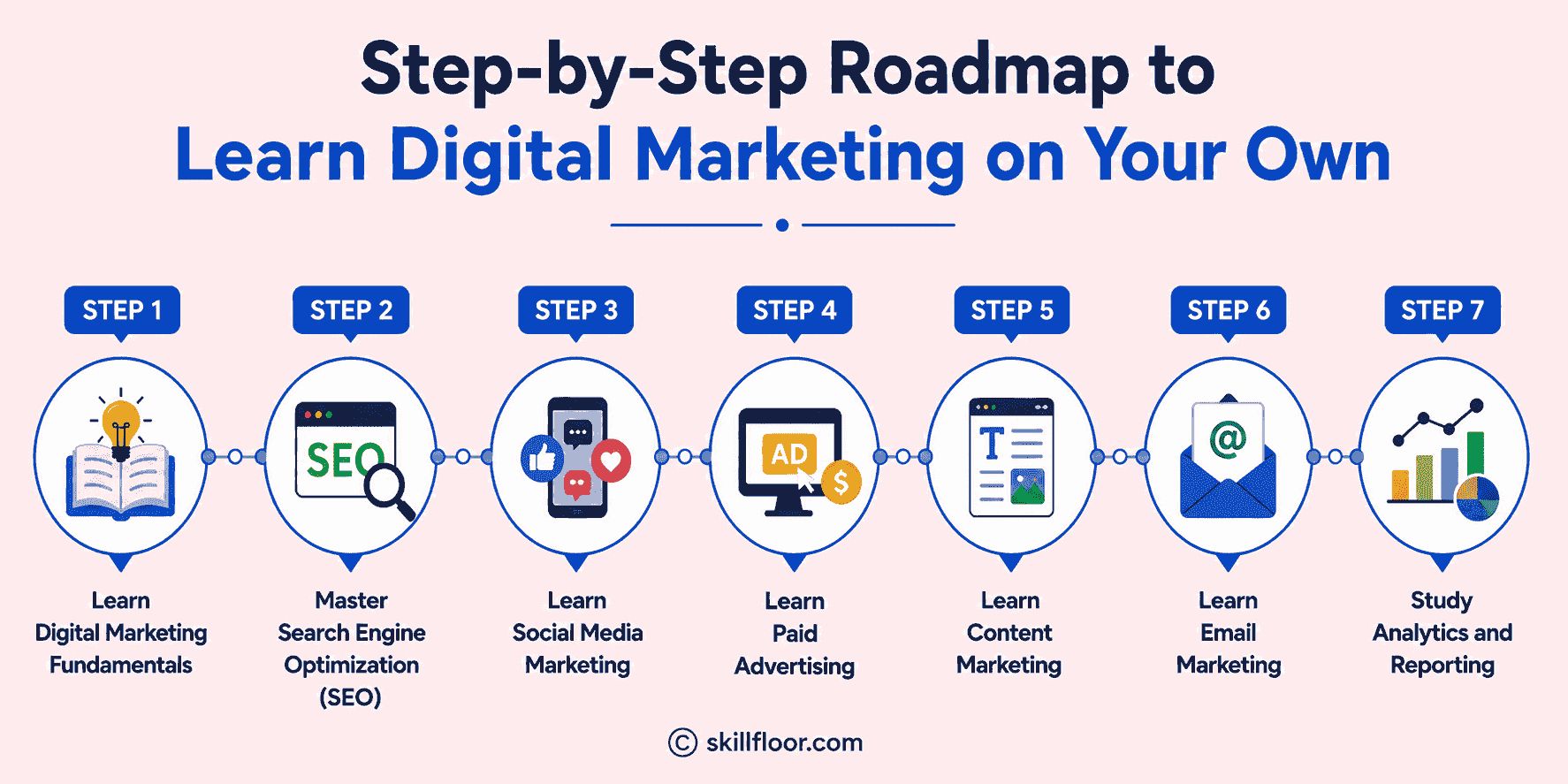
Step 5: Learn Content Marketing
By assisting companies in publishing helpful content that attracts and engages their target audience, content marketing plays a crucial part in digital marketing.
Learn topics such as:
-
Blog writing
-
Content strategy
-
Keyword research
-
Copywriting
-
Storytelling
-
Content distribution
Building trust, educating potential clients, boosting engagement, and motivating people to take action or make purchases are all facilitated by creating great content.
Step 6: Learn Email Marketing
One of the best digital marketing strategies is still email marketing, which enables companies to interact directly with clients and create enduring connections.
Learn:
-
Email list building
-
Newsletter creation
-
Email automation
-
Segmentation
-
Conversion optimization
-
Lead nurturing
By boosting engagement, nurturing leads, and increasing conversions, learning email marketing will help you become a better marketer overall.
Step 7: Study Analytics and Reporting
By monitoring website traffic, user activity, and campaign effectiveness, analytics and reporting assist marketers in determining what is effective and what requires improvement.
Learn how to measure:
-
Website traffic
-
Conversion rates
-
Click-through rates
-
Bounce rates
-
Customer acquisition costs
-
Return on investment (ROI)
Gaining proficiency in analytics enables you to optimize marketing tactics, make well-informed decisions, and improve outcomes through data-driven insights.
Best Free Resources to Learn Digital Marketing
Fortunately, there are many free online resources for digital marketing that may assist beginners in picking up the necessary skills and keeping abreast of market developments.
1. Free Online Courses
One of the best ways to start learning digital marketing fundamentals is through free online courses. Many platforms offer beginner-friendly lessons covering SEO, social media marketing, content marketing, email marketing, analytics, and digital advertising. Popular options include Google Skillshop, HubSpot Academy, Meta Blueprint, Google Digital Garage, Semrush Academy, and LinkedIn Learning's free courses and trials.
If you prefer a more structured learning experience with live guidance, practical projects, and industry-focused training, you can also explore Skillfloor alongside free learning resources.
What Does the Course Cover?
-
Core Modules: Learn about Google Ads, content marketing, email marketing, social media marketing, SEO, and analytics.
-
Live Projects & Internship: For hands-on experience, work on actual campaigns and finish an internship with a focus on the sector.
-
Certifications: Obtain recognized industry and platform-based qualifications in addition to your Skillfloor certification.
-
Placement Assistance: To increase employability, get help with resumes, interview preparation, and job referrals.
-
Flexible Learning Options: Weekday, weekend, fast-track, and live online training batches are available.
-
Course Fees: Training, projects, an internship, certificates, and placement assistance are all included in the ₹14,900 course.
2. Google Learning Resources
Google provides free educational resources that help beginners understand SEO, digital advertising, analytics, and other key ideas straight from top platforms.
3. Industry Blogs
Regularly reading blogs about digital marketing from platforms like Search Engine Journal, Search Engine Land, Ahrefs Blog, Semrush Blog, and HubSpot Blog can help you stay up to date on search engine updates, industry trends, and tried-and-true tactics that can advance your understanding of marketing.
4. YouTube Channels
Beginners can find easy-to-follow tutorials on digital advertising, social media, SEO, and content marketing on YouTube.
5. Podcasts and Webinars
Webinars and podcasts offer insightful commentary from marketing professionals, teaching you new tactics, industry news, and useful advice based on actual experiences.
How to Practice Digital Marketing Without a Job
One of the most common challenges beginners encounter is how to gain practical experience in digital marketing without actually working in the field.
The good news is that you can still build your skills through real-world experiments, internships, and personal projects, all of which provide valuable opportunities to practice digital marketing effectively.
1. Start a Blog
One of the best ways to practice digital marketing is to start a blog by building a website on a subject you find interesting.
This helps you practice:
-
SEO
-
Content Marketing
-
Analytics
-
Conversion Optimization
It helps you develop a strong portfolio for potential future jobs while gaining practical expertise in SEO, content creation, and analytics.
Utilize social media to share your ideas, thoughts, and learning journey. This approach will help you analyze audience behavior, improve your communication skills, and build your online presence.
3. Create Social Media Projects
Create a social media page focused on a specific niche to test different content ideas, monitor engagement, and identify which types of posts resonate best with your audience.
4. Help Small Businesses
Support local small businesses by providing marketing assistance. This not only helps solve real challenges they face but also gives you valuable experience in SEO, advertising, and content marketing.
5. Volunteer for Nonprofits
Assist nonprofits that require help with digital marketing. By doing this, you contribute to important social issues and community development while gaining practical experience.
How Long Does It Take to Learn Digital Marketing?
Learning digital marketing might take any time from a few months to more than a year, depending on your objectives, practice, commitment, and consistency.
1–3 Months
You will gain knowledge of common terminology, fundamental ideas in digital marketing, and how various online marketing channels interact.
3–6 Months
By working on actual projects and basic campaigns, you will develop useful abilities in SEO, content marketing, and social media.
6–12 Months
Based on your interests, you will acquire additional expertise and begin concentrating on particular areas like SEO, paid advertisements, or content strategy.
Beyond 12 Months
Through practical experience, advanced education, and keeping up with evolving digital marketing tools and trends, you will continue to get better.
You don't quickly become an expert in digital marketing. It is a lifelong learning process in which you continue to develop your skills via experience, practice, and keeping up with changes in the field.
Self-Learning vs. Paid Digital Marketing Courses: Which Is Better?
Self-learning vs paid digital marketing courses both have benefits, but the best choice depends on your budget, goals, and learning style.
|
Factor |
Self-Learning |
Paid Courses |
|
Cost |
Free or low-cost resources |
Paid, sometimes expensive |
|
Structure |
Unstructured learning path |
Well-structured curriculum |
|
Flexibility |
Learn anytime at your pace |
Fixed schedule or modules |
|
Guidance |
No direct mentor support |
Expert guidance available |
|
Practice |
Depends on self-effort |
Includes assignments and projects |
|
Speed |
Slower learning process |
Faster skill development |
|
Experience |
Self-built projects |
Guided real-world projects |
|
Certification |
Not always included |
Usually provides certificates |
|
Networking |
Limited community exposure |
Access to peer and industry networks |
Depending on your needs, either approach may be effective. To accelerate skill development and improve practical comprehension, many effective digital marketers combine premium courses with free learning resources.
Signs You're Ready for a Digital Marketing Job or Freelancing
When you have real experience, practical abilities, and the self-assurance to manage marketing activities on your own, you are prepared for a digital marketing career or freelance work.
-
You are able to independently design, develop, and manage entire digital marketing campaigns for various target markets and corporate objectives.
-
You have a thorough understanding of content marketing, social media marketing, SEO, and how these channels interact to promote growth.
-
You have successfully demonstrated your proficiency in digital marketing through real-world projects, internships, or personal work.
-
You may comprehend performance measures, evaluate marketing data, and enhance campaigns depending on findings and outcomes.
-
You confidently convey tactics, elucidate outcomes, and clearly convey marketing concepts to team members or clients.
When assessing digital marketing skills and abilities, employers and clients place a higher value on genuine projects, demonstrated outcomes, and practical experience than on credentials.
Frequently Asked Questions
1. Can I Learn Digital Marketing for Free?
Yes. Many high-quality resources, tutorials, blogs, and courses are available at no cost.
2. Do I Need a Degree to Become a Digital Marketer?
No. Most employers prioritize practical skills, experience, and results over formal education.
3. Is Digital Marketing Difficult to Learn?
Digital marketing is not difficult, but it requires dedication, practice, and continuous learning.
4. Can I Learn Digital Marketing in Three Months?
You can learn the fundamentals within three months, but becoming highly skilled requires ongoing practice.
5. Which Digital Marketing Skill Should Beginners Learn First?
SEO and content marketing are excellent starting points because they provide a strong foundation for understanding online marketing.
The biggest advantage self-taught digital marketers have is that they learn by doing. A blog with 20 published articles, a small SEO project, or a social media page you've grown yourself often teaches more than dozens of hours of passive learning. Focus on building projects, not collecting courses, and you'll develop skills that employers and clients actually value.
Digital Marketing Course in Ahmedabad | Digital Marketing Course in Bangalore | Digital Marketing Course in Chennai | Digital Marketing Course in Coimbatore | Digital Marketing Course in Hyderabad | Digital Marketing Course in Pune | Digital Marketing Course in Delhi | Digital Marketing Course in Mumbai
Digital Marketing Courses in Other Locations in India
Ahmedabad | Aurangabad | Bangalore | Bhilai | Bhopal | Bhubaneshwar | Chandigarh | Chennai | Cochin | Coimbatore | Dehra Dun | Delhi | Faridabad | Ghaziabad | Gorakhpur | Guntur | Gurgaon | Guwahati | Hyderabad | Jaipur | Kanpur | Khammam | Kolkata | Lucknow | Madurai | Mumbai | Mysore | Nagpur | Noida | Patna | Pondicherry | Pune | Ranchi | Shimoga | Surat | Thane | Thiruvananthapuram | Tiruchirappalli | Tirupati | Vadodara | Visakhapatnam | Warangal | Jalandhar | Jodhpur | Indore | Durgapur | Jamshedpur | Dhanbad | Kota | Karnal | Udaipur | Amritsar | calicut | Nashik | Ludhiana | varanasi | thrissur | Mangalore | Raipur |