





































What Is Inbound Marketing: Strategies, Examples, Benefits & Challenges
Learn what inbound marketing is, including its strategies, examples, benefits, and challenges. Discover how businesses attract customers through useful content.
Why do some brands become the first choice for customers even before they make a purchase?
Instead of pushing products, successful brands provide valuable information that helps customers make better decisions. This builds trust, creates connections, and attracts the right audience.
This is where inbound marketing plays an important role. It helps businesses attract, engage, and build relationships with customers by focusing on their needs and providing valuable experiences. In this blog, we will explore what inbound marketing is, its strategies, examples, benefits, and challenges.
What Is Inbound Marketing?
Inbound marketing is a customer-centric approach that attracts potential customers by creating valuable content and experiences tailored to their needs. Instead of interrupting audiences with ads or cold calls, it focuses on drawing people in naturally through blogs, SEO, social media, and helpful resources. The goal is to earn attention rather than buy or demand it.


This approach builds trust over time, guiding potential customers through their buyer's journey at their own pace. It turns strangers into visitors, leads, and eventually loyal customers.
How Inbound Marketing Works: The Three-Stage Funnel
Inbound marketing operates through three key stages: attracting, engaging, and delighting the right audience.
1. Attract
Attract the right audience by creating valuable content that addresses their needs and interests. Blogs, SEO, and social media help increase visibility and bring potential customers to your website.
2. Engage
Once someone visits, the goal is to build a relationship. This includes clear website content, email nurturing, and useful follow-up resources that help the person move closer to a decision.
3. Delight
Continue delivering value even after a purchase or sign-up through excellent support and ongoing engagement. A positive customer experience encourages loyalty, repeat business, and recommendations
Key Strategies of Inbound Marketing
These are the core strategies that make inbound marketing effective. The right combination depends on your target audience, business goals, and the stage of the customer journey.
1. Content Marketing
Content marketing is the foundation of inbound marketing. It focuses on creating blogs, articles, videos, and guides that answer your audience's questions and solve their problems. By consistently providing valuable content, businesses can build trust, establish authority, and attract potential customers naturally.
2. Search Engine Optimisation (SEO)
SEO helps people find your content when they search online. It improves your website's visibility by optimising keywords, content, and technical elements. A strong SEO strategy brings consistent organic traffic from people actively looking for the products, services, or information you offer.
3. Social Media Marketing
Social media helps businesses connect with their audience beyond their website. Sharing valuable content and engaging with users on different platforms increases brand awareness and encourages meaningful interactions. It also helps drive traffic back to your website and supports long-term customer relationships.
4. Email Marketing
Email marketing helps businesses stay connected with potential and existing customers. Through personalised emails, newsletters, and follow-up messages, businesses can nurture leads, share valuable content, and guide customers through the buying journey without being overly promotional.
5. Marketing Automation
Marketing automation helps businesses manage repetitive marketing tasks more efficiently. It automatically delivers relevant emails, follow-ups, and recommendations based on customer behaviour. This saves time while providing a more personalised experience for every customer.
6. Lead Magnets
Lead magnets encourage visitors to take the first step towards becoming a customer. Businesses offer valuable resources such as e-books, templates, webinars, or checklists in exchange for contact information. This helps generate qualified leads while providing immediate value to potential customers.
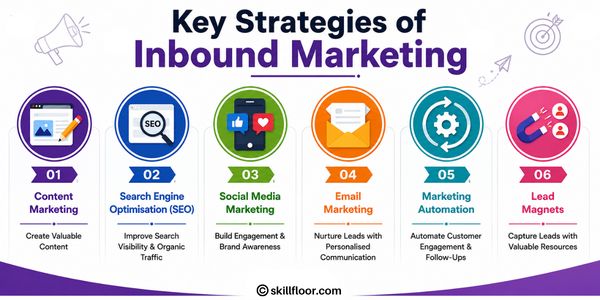
These inbound strategies are an important part of digital marketing, helping businesses attract audiences and build stronger customer relationships.
Real-World Examples of Inbound Marketing
Inbound marketing may look different across industries, but the goal remains the same: provide value first and build trust over time.
-
A software company publishes step-by-step blogs and video tutorials, helping users solve common problems before introducing its products or services.
-
A fitness brand shares workout tips and healthy recipes on social media, building trust and encouraging people to explore its programmes naturally.

-
A university or training institute offers free webinars and downloadable career guides, helping prospective students learn about courses before they enrol.
-
An e-commerce brand sends personalised product recommendations and helpful emails based on a customer's browsing history, creating a more relevant shopping experience.
-
A travel company creates destination guides and travel planning tips, attracting people searching for holiday information before they book a trip.


Benefits of Inbound Marketing
-
Builds trust before a sales conversation even starts, because the audience found you through value, not interruption.
-
Tends to be more cost-efficient over time, since good content keeps working long after it's published.
-
Attracts a more relevant audience, since people usually arrive already interested in the topic.
-
Supports long-term brand authority, especially when content is consistent and genuinely useful.
-
Works well alongside other channels like paid advertising, rather than replacing them entirely.
What the Data Says About Inbound Marketing
The effectiveness of inbound marketing is also supported by industry research. According to HubSpot’s State of Inbound Marketing research, organisations that focused more than half of their lead-generation budget on inbound channels reported an average cost per lead of $143, compared with $373 for organisations dominated by outbound marketing. The study found that inbound leads cost 62% less on average.
More recent research from the Content Marketing Institute shows the continued value of content-led marketing. Its 2025 B2B Content Marketing research found that 74% of B2B marketers said content marketing helped generate demand or leads, while 49% said it helped generate sales or revenue.
Common Challenges of Inbound Marketing
Although inbound marketing is highly effective, it requires patience, consistency, and continuous optimisation. Being aware of these challenges helps businesses achieve better results.
-
It takes time: SEO and content marketing deliver results gradually, so it may take weeks or even months to see consistent growth.
-
It requires consistency: Publishing valuable content regularly is essential for attracting and engaging the right audience over time.
-
It demands the right skills: Successful inbound marketing requires expertise in content creation, SEO, audience research, and content distribution.
-
Measuring ROI can be challenging: Unlike paid advertising, it can be difficult to connect a single piece of content directly to conversions or sales.
-
Competition is increasing: With more businesses investing in content marketing, standing out requires original, valuable, and audience-focused content.
Inbound vs Outbound Marketing
While both inbound and outbound marketing aim to generate leads and increase brand awareness, they differ in how they attract and engage customers. The table below highlights their key differences.
|
Factor |
Inbound Marketing |
Outbound Marketing |
|
Approach |
Attracts people through useful content |
Pushes a message to a broad audience |
|
Examples |
Blogs, SEO, social content, email nurturing |
Cold calls, TV ads, banner ads, mass email blasts |
|
Cost pattern |
Higher effort upfront, lower cost over time |
Ongoing spend needed to keep results going |
|
Trust building |
Builds trust before a sales conversation |
Trust is built after repeated exposure, if at all |
|
Best suited for |
Long-term brand and organic growth |
Quick reach or time-bound announcements |
Common Tools Used in Inbound Marketing
Most inbound strategies rely on a mix of content, SEO, and automation tools to work efficiently. Platforms like HubSpot, WordPress, and SEMrush help create, optimize, and track content performance. Email tools like Mailchimp or ActiveCampaign handle nurturing leads without manual follow-up.
On the analytics side, tools like Google Analytics and Google Search Console show what's working and what needs improvement. Social scheduling platforms like Buffer or Hootsuite keep content consistent across channels. Together, these tools help teams scale inbound efforts without losing personalization.
Mastering inbound marketing tools requires a strong understanding of digital marketing strategies and practical implementation. Skillfloor’s digital marketing course helps learners build these skills through practical projects, industry tools, and expert guidance.
FAQs
1. What is inbound marketing in simple words?
Inbound marketing attracts customers through valuable content instead of interruptive advertising. It builds trust and encourages long-term relationships.
2. What is the difference between inbound and outbound marketing?
Inbound marketing attracts customers through valuable content. Outbound marketing reaches customers through advertisements and direct promotions.
3. How long does inbound marketing take to show results?
It typically needs a few months of consistent, quality output before results start compounding. This is different from paid ads, which can bring quick but short-lived visibility.
4. Is inbound marketing still relevant in the age of AI search?
Yes, inbound marketing is still relevant in the age of AI search because valuable content helps brands stay visible and build trust. It attracts users by providing useful answers to their needs.
5. Can small businesses use inbound marketing without a big budget?
Yes. Inbound marketing depends more on consistent effort, strategy, and skills than ad spend, making it accessible for small businesses while still requiring time and expertise to succeed.
Inbound marketing isn't a quick trick; it's a long-term system built on trust, value, and consistency. By attracting the right audience, engaging them meaningfully, and delighting them long after the sale, brands create relationships that keep paying off. While it takes time and effort compared to outbound tactics, the results compound, making it one of the most sustainable ways to grow. Start with one strategy, stay consistent, and let your content do the work of bringing customers to you.
Digital Marketing Courses in Other Locations in India
Ahmedabad | Aurangabad | Bangalore | Bhilai | Bhopal | Bhubaneshwar | Chandigarh | Chennai | Cochin | Coimbatore | Dehra Dun | Delhi | Faridabad | Ghaziabad | Gorakhpur | Guntur | Gurgaon | Guwahati | Hyderabad | Jaipur | Kanpur | Khammam | Kolkata | Lucknow | Madurai | Mumbai | Mysore | Nagpur | Noida | Patna | Pondicherry | Pune | Ranchi | Shimoga | Surat | Thane | Thiruvananthapuram | Tiruchirappalli | Tirupati | Vadodara | Visakhapatnam | Warangal | Jalandhar | Jodhpur | Indore | Durgapur | Jamshedpur | Dhanbad | Kota | Karnal | Udaipur | Amritsar | calicut | Nashik | Ludhiana | varanasi | thrissur | Mangalore | Raipur |