








































What Is Digital Marketing with Google All About
Learn the basics of digital marketing with Google, including SEO, PPC, and analytics. See how Google tools help your website get more visitors and reach people!

Digital marketing has emerged as one of the most successful strategies for companies to interact with customers online. In order to make well-informed decisions about what to buy, where to travel, and which services to trust, consumers now mostly rely on search engines, social media platforms, and video content.
Among all platforms, Google plays the most dominant role in shaping this online behavior.
Google is the most popular search engine, processing approximately 8.5 billion searches every day (about 99,000 every second), according to industry studies and Google data. It also has a 91–93% global search engine market share.
This massive number of searches shows why companies view Google as their main platform for online expansion, client acquisition, and brand awareness.


Google provides a comprehensive and integrated ecosystem for online marketing, including search visibility through SEO, paid advertising through Google Ads, performance tracking through Google Analytics, video marketing through YouTube (which has over 2.5 billion monthly active users), and local discovery through Google Maps and Google Business Profile.
What Is Digital Marketing?
The practice of advertising goods and services through digital platforms such as websites, mobile applications, social media, email, and search engines is known as digital marketing.
-
Search engines
-
Websites
-
Social media platforms
-
Email marketing
-
Mobile apps
-
Online video platforms
Unlike traditional marketing (TV, newspapers, billboards), digital marketing allows businesses to:
-
Target specific audiences
-
Track performance in real-time
-
Adjust strategies instantly
-
Reach global audiences at lower costs
Because of its adaptability, digital marketing is one of the sectors with the quickest rate of growth in the world. This is especially true when businesses follow a digital marketing strategy that enables them to scale effectively and swiftly adjust to shifting online trends.
What Is Digital Marketing with Google?
Using Google's platforms and tools to advertise websites, goods, or services online is known as digital marketing with Google. It covers paid and organic tactics, including Google Ads, SEO, content optimization, and analytics monitoring.
It helps businesses:
-
Appear in Google search results
-
Run targeted advertisements
-
Understand customer behavior
-
Improve website performance
-
Increase online visibility and sales
At its core, it uses Google's strong tools and precise real-time data to help businesses make better marketing decisions, reach the right audience, enhance performance, and expand online by combining search visibility, advertising, and data insights.
Due to its assistance for businesses of all sizes, digital marketing with Google is popular. Everyone can utilize Google resources to draw clients, track outcomes, and steadily improve growth—from small local businesses to multinational corporations.
Why Google Is Important in Digital Marketing
Google is more than simply a search engine; it is the foundation of online presence, influencing how companies draw in, interact with, and win over customers in this digital marketing guide.
-
Massive User Base: Every day, billions of people use Google across all platforms to look up information, goods, and services.
-
High Purchase Intent: Google users are more likely to swiftly become paying customers because, in contrast to social media users, they actively search for solutions.

-
Data-Driven Marketing: Google helps organizations analyze performance and make more intelligent, data-driven marketing decisions by offering comprehensive insights into user activity.
-
Multiple Marketing Channels: Google enables companies to integrate analytics, video marketing, advertisements, and SEO into a single, potent digital marketing ecosystem.
-
Strong Local Business Visibility: Google increases foot traffic, phone calls, and local customer engagement opportunities by helping local businesses show up in Maps and search results.


Core Components of Digital Marketing with Google
1. Google Search (SEO – Search Engine Optimization)
SEO is the practice of using keywords, content optimization, and technical enhancements to increase a website's exposure and rating on Google search results.
Key SEO factors:
-
Keyword optimization
-
High-quality content
-
Mobile-friendly design
-
Fast loading speed
-
Backlinks
Why SEO matters:
-
Free organic traffic
-
Long-term results
-
Builds trust and authority
Example: A blog optimized for “best smartphones under 20000” ranks on Google’s first page and gets consistent organic traffic daily.
2. Google Ads (Paid Advertising)
Google Ads is a paid advertising platform that enables companies to display tailored advertisements for rapid traffic on websites, YouTube, and search results.
Types of Google Ads:
-
Search Ads
-
Display Ads
-
Video Ads (YouTube)
-
Shopping Ads
-
App Ads
How it works: As a way for your ad to show up when people search for pertinent terms on Google, you place a bid on keywords.
Benefits:
-
Instant traffic
-
Highly targeted audience
-
Measurable ROI
-
Flexible budget control
Example: A bakery runs Google Ads for “birthday cakes near me,” appearing instantly at the top and attracting nearby customers quickly.
3. Google Analytics
Google Analytics is a potent tool that monitors and evaluates user behavior, traffic sources, website performance, and conversions to enhance marketing tactics.
It shows:
-
Number of visitors
-
User behavior
-
Traffic sources
-
Conversion rates
-
Bounce rates
Why it’s important:
Google Analytics is crucial because it helps companies identify what is working and what needs to be improved. Without analytics, marketing is just guessing and ineffective.
4. Google Business Profile (Local SEO)
Local businesses may increase their visibility, consumer engagement, calls, and in-store visits by using Google Business Profile to show up in Google Search and Maps.
Benefits:
-
Increased local visibility
-
Customer reviews
-
Location-based traffic
-
Call and direction features
Example: A local salon appears on Google Maps when users search “haircut near me,” increasing calls, visits, and customer bookings.
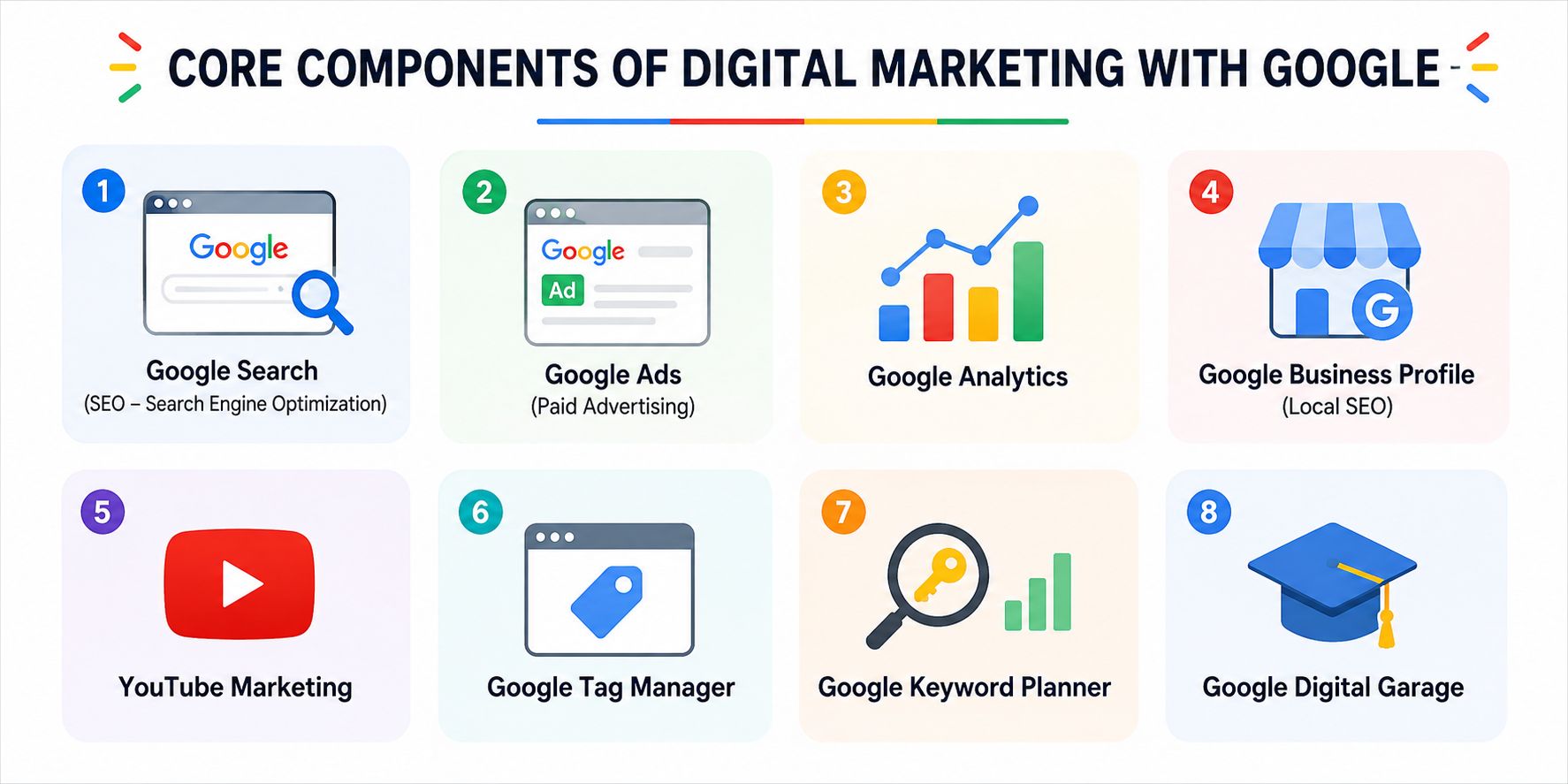
5. YouTube Marketing
YouTube marketing makes use of YouTube video content to effectively increase traffic and conversions, educate consumers, engage audiences, and raise brand awareness.
Why YouTube matters:
-
Video content builds trust
-
Higher engagement rates
-
Great for brand storytelling
Businesses use YouTube for:
-
Product reviews
-
Tutorials
-
Brand awareness
-
Educational content
6. Google Tag Manager
With Google Tag Manager, marketers can effortlessly manage and implement tracking codes without having to modify the source code of their websites.
Benefits:
-
Easier tracking setup
-
Better marketing integration
-
Improved data accuracy
7. Google Keyword Planner
For improved SEO and Google Ads planning, businesses can use Google Keyword Planner, a free tool, to find appropriate keywords, search volume, and competition levels.
Benefits:
-
Finds high-performing keywords
-
Helps plan SEO content strategy
-
Improves Google Ads targeting
-
Estimates search volume and competition
Example: A business targeting “best laptops for students” uses Keyword Planner to find related keywords like “budget student laptops” for better reach and traffic.
8. Google Digital Garage
Beginners and experts can take courses in digital marketing, SEO, analytics, and career skills on Google Digital Garage, a free learning portal.
You can learn:
-
Digital marketing basics
-
SEO fundamentals
-
Google Ads training
-
Analytics certification
Because of this, it's an excellent place for beginners to start when taking a digital marketing course in order to develop solid core skills and useful marketing knowledge.
Benefits of Digital Marketing with Google
-
Global Reach: By removing geographical restrictions and successfully increasing brand visibility globally, digital marketing with Google enables businesses to reach clients anywhere in the globe.
-
Targeted Advertising: To increase engagement and conversions, target particular audiences based on location, interests, search behavior, and demographics.
-
Cost Efficiency: The PPC strategy makes advertising affordable, scalable, and extremely cost-effective for businesses because you only pay when users interact with your adverts.
-
Real-Time Tracking: Google technologies give organizations the ability to observe user activity, instantaneously assess campaign effectiveness, and quickly make adjustments to optimize marketing outcomes.
-
Higher Conversion Rates: Google searches are already intentional, which increases the likelihood that users will become customers and greatly boosts revenue and overall business growth.
How Digital Marketing Works with Google
Using data-driven technologies to efficiently draw in, engage, and convert audiences online, digital marketing with Google connects user search intent with pertinent advertisements, content, and websites.
-
User Search Intent: Businesses target Google searches made by users with specific needs in order to match intent and give pertinent answers right away.
-
Ad or Organic Visibility: Based on SEO and bidding tactics, Google presents either sponsored advertisements or organic results, guaranteeing visibility for pertinent companies at the appropriate moment.
-
Click and Website Visit: When consumers click on advertisements or search results, they arrive at websites where companies offer comprehensive details, deals, and engagement-enhancing solutions.
-
Tracking and Analytics: Through analytics tools, Google monitors user behavior, assisting companies in precisely and effectively understanding marketing campaign performance, behavior, and efficacy.
-
Optimization and Improvement: To enhance performance, conversions, and overall digital marketing outcomes, businesses constantly evaluate data and optimize keywords, advertisements, and content tactics.
Common Challenges in Google Digital Marketing
Digital marketing with Google is effective, but it also presents a number of difficulties that companies and marketers must carefully manage in order to achieve successful outcomes.
-
High Competition: The same Google keywords are targeted by multiple businesses. As a result, it becomes more difficult and costly to rank on the top page or receive ad clicks.
-
Constant Algorithm Updates: Google modifies its search algorithm on a regular basis. Even if your SEO approach was previously effective, these changes may have an abrupt impact on website rankings.
-
Rising Advertising Costs: Google Ads may get pricey, particularly in markets with intense competition. Inadequate campaign setup can easily waste money without producing positive outcomes.
-
Learning Curve for Beginners: Google's strong yet intricate features include Ads, Analytics, and Search Console. It is frequently difficult for beginners to comprehend and apply them successfully.
-
Need for Continuous Optimization: Using Google for digital marketing is a continuous process. For campaigns and SEO tactics to remain successful, they must be updated, tested, and improved on a regular basis.
Future of Digital Marketing with Google
With developments in AI-powered search, voice search optimization, automation in advertising, video-first content strategies, and highly tailored user experiences based on data and real-time consumer behavior trends, Google's digital marketing landscape is changing.
These developments are making marketing more effective, data-driven, and user-focused, enabling companies to more precisely contact the appropriate audience at the right time. Early adoption of these advances increases a company's chances of long-term digital growth and competitiveness.
-
AI-powered search experiences
-
Increased automation in Google Ads
-
Growth of voice search
-
Video-first content consumption
-
Personalized search results based on user behavior
Early adoption of these improvements increases a company's chances of sustaining long-term visibility, enhanced consumer reach, better brand authority, and sustained growth in the cutthroat digital market.
A digital marketing course, which helps develop practical skills in SEO, Google Ads, analytics, and content marketing to stay relevant in today's changing digital scene, can be explored by those who wish to fully comprehend these developments.
For structured learning, institutions such as Skillfloor provide hands-on, industry-focused digital marketing training with real-world projects, giving students the confidence and practical experience they need to launch a career or expand their business online.
FAQs on Digital Marketing with Google
1. How long does it take to see results from Google digital marketing?
The time varies depending on the strategy. SEO may take 3–6 months to show strong results, while Google Ads can generate traffic and leads almost immediately after launching a campaign.
2. Do small businesses really benefit from Google digital marketing?
Yes, small businesses benefit greatly because Google allows local targeting, budget control, and high-intent traffic, helping them compete with larger brands effectively.
3. What skills are needed to start digital marketing with Google?
Key skills include keyword research, content writing, basic analytics understanding, ad campaign management, and knowledge of tools like Google Ads and Google Analytics.
4. Is coding required for Google digital marketing?
No, coding is not required for most digital marketing activities. However, basic website understanding (like HTML structure) can help in SEO and analytics tracking.
5. What is the difference between organic traffic and paid traffic on Google?
Organic traffic comes from SEO and appears naturally in search results, while paid traffic comes from Google Ads where businesses pay to show their listings at the top of search results.
Digital marketing with Google has become one of the easiest and most powerful ways for businesses to grow online. Google connects brands with consumers who are already looking for their goods or services using technologies like Search, Ads, Analytics, YouTube, and Business Profile. By providing improved reach, transparent data, and astute targeting, it helps both small and large enterprises. It may increase sales, improve engagement, and bring in more visitors when applied properly. Learning and utilizing Google marketing tools may help anyone remain ahead of the curve, establish a strong online presence, and achieve consistent long-term growth in an easy and efficient manner as the digital world continues to expand.
Digital Marketing Course in Ahmedabad | Digital Marketing Course in Bangalore | Digital Marketing Course in Chennai | Digital Marketing Course in Coimbatore | Digital Marketing Course in Hyderabad | Digital Marketing Course in Pune | Digital Marketing Course in Delhi | Digital Marketing Course in Mumbai
Digital Marketing Courses in Other Locations in India
Ahmedabad | Aurangabad | Bangalore | Bhilai | Bhopal | Bhubaneshwar | Chandigarh | Chennai | Cochin | Coimbatore | Dehra Dun | Delhi | Faridabad | Ghaziabad | Gorakhpur | Guntur | Gurgaon | Guwahati | Hyderabad | Jaipur | Kanpur | Khammam | Kolkata | Lucknow | Madurai | Mumbai | Mysore | Nagpur | Noida | Patna | Pondicherry | Pune | Ranchi | Shimoga | Surat | Thane | Thiruvananthapuram | Tiruchirappalli | Tirupati | Vadodara | Visakhapatnam | Warangal | Jalandhar | Jodhpur | Indore | Durgapur | Jamshedpur | Dhanbad | Kota | Karnal | Udaipur | Amritsar | calicut | Nashik | Ludhiana | varanasi | thrissur | Mangalore | Raipur |