










































Why Social Media is Important for Business
Why social media is important for business growth, brand visibility, customer trust, and sales. Learn how businesses use social platforms to stay competitive.
Did you know that there are currently over 5.4 billion social media users? This means that around 65% of the world's population uses the internet regularly, whether to browse, watch videos, or discover brands they love. Social media has become one of the most effective platforms for businesses to gain visibility, generate discussions, and attract consumers due to its vast audience.
What would happen if 9 out of 10 internet users followed at least one brand? That's social media's true power. People interact with, remark on, share, and have faith in the companies they interact with. Social media platforms are, therefore, an effective means of fostering genuine client loyalty and trust.
The Digital Shift in Consumer Behavior
The way consumers engage with brands has undergone a significant shift. Nowadays, a large percentage of consumers' time is spent on social media sites like Facebook, Instagram, LinkedIn, TikTok, and X. In addition to connecting with friends, they utilize these platforms to find items, read reviews, follow brands, and ask for recommendations.
Companies no longer only compete based on pricing or product quality. They're vying for our attention. Businesses can reach clients where they are by having a strong online presence, particularly on social media. Social media is now one of the most straightforward and successful platforms for brand storytelling, marketing, and communication.


What Happens When Businesses Ignore Social Media
Businesses that ignore social media miss out on the significant influence of social media marketing on contemporary consumer choices, brand discussions, and long-term online growth. They also lose visibility, relevance, and trust.
-
Reduced Brand Visibility: Without social media presence, businesses vanish from consumer feeds, which reduces recognition, recall, and chances to remain at the forefront of competitors' online markets.
-
Lost Customer Trust: Consumers expect companies to be approachable; online silence diminishes credibility, loyalty, and the opportunity for long-term relationships with audiences by appearing antiquated, unresponsive, and untrustworthy.
-
Weaker Competitive Position: While others stay hidden, rivals that use social media platforms engage audiences more quickly, create communities, quickly adjust to trends, and gain market share.
-
Limited Customer Insights: Ignoring social media gives you no access to client demands, preferences, grievances, and developing industry trends through comments, chats, and analytics.
-
Higher Marketing Costs: Without social media, companies are forced to rely on expensive traditional advertising, losing out on potential for optimization, economical targeting, and quantifiable performance information from digital campaigns.
-
Reduced Sales Opportunities: Purchase decisions are influenced by social media platforms; their absence leads to fewer touchpoints, poorer trust signals, decreased traffic, and lost online channel conversions.
The Importance of Social Media for Businesses
1. Increases Brand Awareness
Social media makes companies identifiable, memorable, and constantly present across digital platforms and conversations, helping businesses remain visible where people spend time.
Social Media Importance
-
Wider Reach Exposure: Social media platforms give firms rapid access to consumers around the world, increasing their visibility outside of local marketplaces.
-
Consistent Brand Presence: Frequent posting guarantees that your brand shows up in feeds often, strengthening recognition and maintaining its position at the top of consumers' minds.
-
Audience Recall Strength: Repeated exposure to images and messages makes it easier for consumers to recall brands, boosting familiarity, trust, and trustworthiness.
-
Competitive Market Visibility: Businesses can stand out on social media platforms where consumers do their homework, weigh their options, and assess companies.
Stronger brand awareness builds familiarity and trust through digital marketing, shaping preference and making customers more likely to choose your business when real purchase decisions arise.
2. Enhanced Customer Engagement
The possibility of social media to promote personal interaction with customers is another factor adding to why social media is important for business. Social media gives businesses the ability to interact with their audience in real time, answer questions, and resolve issues quickly. Customers feel heard and valued through this direct communication, which promotes loyalty and trust.
Social Media Importance
-
Two-Way Communication: Social media platforms enable companies to engage people directly by listening, responding, and having real conversations rather than one-sided advertising.
-
Community Building Power: Brands may build devoted communities where consumers feel appreciated, involved, and emotionally connected to common interests by using engagement-focused content.
-
Interactive Content Impact: In contrast to passively reading content, audiences are kept actively involved through polls, articles, live videos, and comments.
-
Customer Voice Visibility: Customers can express their thoughts, experiences, and feedback through social interaction, which affects the perception and trustworthiness of a company.
Increased consumer involvement turns audiences into proactive brand promoters, boosting long-term company growth, enhancing satisfaction, and strengthening loyalty.
3. Builds Customer Relationships and Trust
Long before a customer makes a purchase, social media enables businesses to show authenticity, consistency, and openness, giving them a sense of self-worth, confidence, and emotional connection.
Social Media Importance


-
Human Brand Presence: Customers find brands more relevant, engaging, and human when they provide authentic stories, individuals, and behind-the-scenes moments.
-
Consistent Communication: Customers are reassured by consistent, open communication that your company is dependable, proactive, and sincerely committed to long-term partnerships.
-
Social Proof Influence: Credibility is validated by reviews, comments, and user-generated content, increasing the likelihood that new clients would trust your business.
-
Transparent Brand Values: Transparency is increased by honestly responding to criticism, errors, and inquiries, which boosts client confidence and trust.
Positive referrals, loyalty, repeat business, and long-term, sustainable business growth are all results of solid customer relationships based on trust.
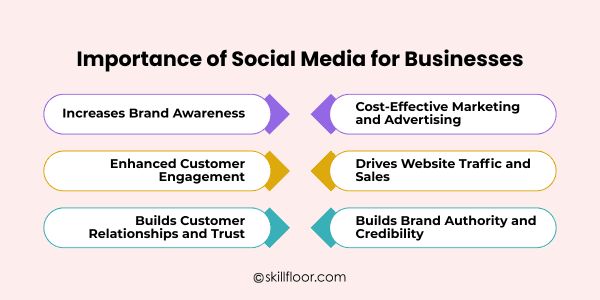
4. Cost-Effective Marketing and Advertising
Social media advertising enhances visibility, precise targeting, and quantifiable outcomes, all while avoiding the high expenditures associated with traditional marketing channels. This enables businesses to reach targeted audiences with limited resources.
Social Media Importance
-
Lower Marketing Costs: Social media platforms make marketing more accessible for startups and small enterprises by offering more cost-effective advertising possibilities than traditional methods.
-
Precise Audience Targeting: By reaching specific audiences, interests, and habits, advanced targeting solutions help marketers cut down on wasteful spending and boost campaign effectiveness.
-
Flexible Budget Control: Campaigns can be started, paused, or modified at any moment, giving businesses more control over expenditure and performance optimization.
-
Measurable ROI Tracking: Businesses can analyze progress and confidently refine plans with the support of built-in analytics that clearly display engagement, clicks, and conversions.
Cost-effective social initiatives help organizations develop sustainably without going over budget by optimizing reach and outcomes.
5. Drives Website Traffic and Sales
Social media platforms turn attention into action and engagement into quantifiable income development by directing interested people to websites and landing pages.
Social Media Importance
-
Targeted Traffic Flow: Social media content draws in customers who are already considering your products, resulting in high-quality traffic that is more likely to convert.
-
Shorter Buying Journey: Clear calls to action and direct connections cut down on steps, facilitating a quicker transition for clients from discovery to purchase.
-
Content-Driven Conversions: Testimonials, product displays, and instructional postings all have an impact on decisions, promoting clicks and assured purchasing behavior.
-
Retargeting Opportunities: Through repeated, pertinent exposure, social media platforms enable remarketing to prior visitors, enhancing conversion rates.
Using social media to drive quality traffic improves overall business growth, enhances sales, and increases conversions.
6. Builds Brand Authority and Credibility
Social media promotes companies as informed industry voices by regularly disseminating insightful information, knowledge, and thought leadership that audiences eventually come to respect and trust.
Social Media Importance
-
Expert Content Sharing: By showcasing your expertise through informative writings, advice, and insights, you may establish your brand as a trustworthy authority in the field.
-
Thought Leadership Presence: By expressing your thoughts on issues and trends, you establish your company as progressive and powerful in your industry.
-
Consistent Value Delivery: Providing helpful content on a regular basis establishes your brand's reputation by demonstrating that it is more concerned with problem-solving than product sales.
-
Audience Trust Signals: Positive comments, shares, and engagement serve as credibility signals that strengthen trust with both new and existing audiences.
Social Media Mistakes Businesses Should Avoid
Many companies struggle on social media, but it's not because they don't try hard; it's actually because they don't know what to do, don't execute it consistently, and don't fully grasp how contemporary consumers interact online.
1. Lack of Clear Goals
Aligning actions with social media objectives guarantees focus, quantifiable progress, and significant outcomes; posting without clear goals results in haphazard material, wasted effort, and confusion.
2. Inconsistent Posting Habits
Inconsistent posting schedules reduce long-term engagement and algorithmic reach across platforms, erode visibility and trust, and cause consumers to forget your brand.
3. Ignoring Audience Engagement
Ignoring messages and comments betrays a lack of interest, harming relationships and deterring future communication from prospective clients looking for responsiveness and connection.
4. Overly Promotional Content
Posts that are useful, instructive, and relatable perform better and maintain audience attention over time; excessive self-promotion overwhelms audiences and wears them out.
5. No Performance Analysis
Businesses are unable to identify what works, what doesn't, and where there is room for expansion when performance data are not examined.
6. Copying Competitors Blindly
In crowded social media environments, imitating competitors without authenticity leads to a boring message that weakens distinction and makes brands unmemorable.
How to Create a Strong Social Media Strategy
A strong social media strategy guides continuous content, interaction, and measurement while converting online activity into long-term business success by matching audience demands with business objectives.
1. Set Clear Objectives
Establish specific goals before publishing to guarantee that each campaign promotes quantifiable results, brand direction, and deliberate activities rather than haphazard content creation across channels on a regular basis.
2. Know Your Audience
To create content that seems timely, relevant, and valuable across selected channels for growth, conduct in-depth research on your target audience to comprehend their behaviors, preferences, and pain points.
3. Build Core Skills
Invest time in honing your social media skills so that you can confidently plan content, analyze data, adjust to trends, and carry out initiatives without making assumptions or getting inconsistent outcomes overall.
4. Maintain Posting Consistency
Establish a regular publishing schedule to raise audience expectations, increase visibility, and gradually communicate dependability to followers and algorithms on all of the main social media sites.
5. Measure And Optimize
Regularly monitor performance indicators to determine what works, improve messaging, streamline formats, and make data-driven choices that support outcomes and direct future content development initiatives.
6. Adapt And Improve
As platforms, algorithms, and audience behaviors change over time, stay flexible and adaptive by testing concepts, taking feedback into consideration, and modifying your approach to stay relevant.
Social media has evolved beyond just a platform for advertisements and updates. It has become a powerful environment for building connections, gaining trust, and allowing businesses to grow organically over time. Companies that actively participate in events, listen to their customers, and offer genuine value can forge stronger relationships that extend beyond individual transactions. Every post, message, and comment presents an opportunity to be noticed, remembered, and chosen. People prefer to engage with brands that seem authentic and approachable, even as trends continuously change. In a world where attention is crucial, businesses can maintain visibility, foster loyalty, and grow consistently by using social media thoughtfully and purposefully.
Digital Marketing Courses in Other Locations in India
Ahmedabad | Aurangabad | Bangalore | Bhilai | Bhopal | Bhubaneshwar | Chandigarh | Chennai | Cochin | Coimbatore | Dehra Dun | Delhi | Faridabad | Ghaziabad | Gorakhpur | Guntur | Gurgaon | Guwahati | Hyderabad | Jaipur | Kanpur | Khammam | Kolkata | Lucknow | Madurai | Mumbai | Mysore | Nagpur | Noida | Patna | Pondicherry | Pune | Ranchi | Shimoga | Surat | Thane | Thiruvananthapuram | Tiruchirappalli | Tirupati | Vadodara | Visakhapatnam | Warangal | Jalandhar | Jodhpur | Indore | Durgapur | Jamshedpur | Dhanbad | Kota | Karnal | Udaipur | Amritsar | calicut | Nashik | Ludhiana | varanasi | thrissur | Mangalore | Raipur |