

































Digital Marketing Future in India
Explore the future of digital marketing in India, focusing on trends, AI-driven strategies, and the growing importance of personalized customer experiences.
The future of digital marketing in India is evolving beyond traditional methods such as SEO, social media posting, and online advertising. Innovations like artificial intelligence, short-form videos, creator marketing, conversational commerce, first-party data, personalization, regional-language content, and AI-powered search are transforming how Indian businesses engage with and convert customers.
The scale of this opportunity is already evident in the data.
According to DataReportal's "Digital 2026: India" report, India had approximately 1.03 billion internet users by the end of 2025, representing a 70% internet penetration rate. The country also had around 500 million social media user identities, which accounts for 34.1% of the total population.
Advertising investments are following this trend. Ipsos reported that India's digital advertising market reached ₹49,000 crore in FY2025, growing 20% year over year and constituting 44% of total advertising expenditure. Ipsos projects that digital advertising will reach ₹56,400 crore in FY2026, which will represent 46% of total advertising spending.


These figures demonstrate that digital marketing is no longer just another promotional channel in India; it is becoming a fundamental aspect of how businesses enhance visibility, generate leads, sell products, retain customers, and remain competitive.
Key Statistics About Digital Marketing in India
Before looking at future trends, here are some numbers that explain the current scale of India's digital ecosystem:
|
Digital Marketing Metric |
Latest Figure |
|
Internet users in India |
1.03 billion |
|
Internet penetration |
70% |
|
Social media user identities |
500 million |
|
Social media share of population |
34.1% |
|
Digital advertising spends, FY2025 |
₹49,000 crore |
|
Digital advertising growth |
20% YoY |
|
Digital share of total advertising |
44% |
|
Projected digital ad spend, FY2026 |
₹56,400 crore |
|
Projected digital ad share, FY2026 |
46% |
|
Mobile share of digital advertising |
78% |
|
FMCG + e-commerce share of digital advertising |
68% |
|
YouTube advertising reach |
500 million |
|
Instagram advertising reach |
481 million |
|
Connected TV users |
40 million, projected 50 million in 2026 |
DataReportal's figures are based primarily on data available in late 2025, while Ipsos figures refer to India's advertising market by financial year. Social-platform advertising reach should not be interpreted as identical to monthly active users.
Is Digital Marketing Growing in India?
Yes. Digital marketing is expanding as internet adoption, smartphone usage, online commerce, social media consumption, and digital advertising continue to grow.
India had 1.03 billion internet users at the end of 2025, with internet penetration reaching 70%. DataReportal estimates that India's internet user base increased by 223 million, or 27.7%, between October 2024 and October 2025.
At the same time, digital advertising is taking an increasingly large share of India's advertising market.
Ipsos reported that digital advertising grew 20% year over year to ₹49,000 crore in FY2025, giving digital a 44% share of total advertising expenditure. Television accounted for 27%, while print accounted for 18%.
Ipsos expects digital advertising to grow another 15% to ₹56,400 crore in FY2026, increasing its share to 46%.
This creates opportunities for businesses of all sizes—from startups and D2C brands to educational institutions, real-estate companies, hospitals, financial services firms, and local businesses.
The Current State of Digital Marketing in India in 2026
-
Growing Internet Penetration: India boasts over 1 billion internet users, with approximately 1.03 billion users and a 70% internet penetration rate, according to the latest data. This creates significant opportunities for businesses to reach customers online.
-
Mobile-First Audience: Mobile devices dominate India's digital ecosystem, with 78% of digital advertising spending directed towards mobile platforms. As a result, businesses need to ensure their websites are mobile-friendly, have fast-loading pages, and invest in mobile advertising and engaging short-form content.
-
Social Media Growth: There are around 500 million social media user accounts in India, representing 34.1% of the population. Platforms like Instagram, YouTube, and Facebook enable businesses to build brand awareness, engage customers, and promote products effectively.
-
Rising Digital Advertising: Digital advertising in India is projected to reach approximately ₹49,000 crore in FY2025, reflecting a 20% year-over-year growth. It's expected to grow further to ₹56,400 crore in FY2026, accounting for 46% of total advertising expenditure.
-
Video and Creator Marketing: Video marketing is continuously expanding, with YouTube reaching about 500 million people through advertising and Instagram reaching around 481 million. Businesses are increasingly utilizing short videos, creators, reviews, tutorials, and product demonstrations.
-
Regional Language Marketing: India's diverse audience is driving the demand for regional-language marketing. Businesses are creating content in languages such as Hindi, Kannada, Tamil, Telugu, Malayalam, Marathi, and Bengali to better connect with customers based on their language preferences and locations.
-
E-commerce Integration: Digital marketing and e-commerce are becoming increasingly interconnected, allowing customers to discover products via search engines, social media, videos, and influencers before making online purchases. The fast-moving consumer goods (FMCG) sector and e-commerce together account for 68% of digital advertising spending.
-
AI-Powered Marketing: Artificial intelligence (AI) is transforming digital marketing by enhancing content research, personalization, customer segmentation, campaign analysis, automation, and chatbots. By 2026, marketers are expected to increasingly integrate AI capabilities with human creativity, strategy, expertise, and understanding of customer needs.

What does the Future of Digital Marketing in India look like?
1. AI and Automation: The Future of Smarter Marketing
Artificial intelligence (AI) is no longer just a catchphrase; it's revolutionizing how companies handle marketing. AI may soon enable companies to get even deeper insights into their clientele, resulting in hyper-targeted advertisements that have a more intimate feel.
-
Why It Matters: Imagine receiving a recommendation for a product just in time. That is the capability of AI. In the Digital Marketing Future in India, personalize marketing by evaluating data, and enhancing campaign effectiveness.
-
What You Should Do: Start small if you are a company owner. Automate processes such as sending individualized emails or making product suggestions based on past client purchases by utilizing AI technologies.
2. Voice Search: Changing the Way, We Look for Information
Voice search is rapidly expanding in India. Instead of typing on their phones, more individuals are speaking on them. Voice search is helping consumers by simplifying tasks such as obtaining cricket scores or nearby eateries.
-
Why It Matters: India has a lot of voice search users, especially for native languages. Businesses must modify their content for spoken inquiries as a result of this shift in search engine algorithms.
-
What You Should Do: Make sure all the content on your website answers conversational questions. To improve your company's search engine ranking, provide answers to frequently asked voice search queries, such as "Where's the nearest bakery?"



3. The Power of Influencer Marketing: Authentic Connections
These days, social media influencers are everywhere. Influencers have a sizable fan following in India on platforms like YouTube, Instagram, and even TikTok. They are frequently trusted by the public more than more established celebrities.
-
Why It Matters: Influencers provide authentic and relatable content. As a result of their genuine approach to audience connection, which increases brand trust and engagement, brands are working with them more and more.
-
What You Should Do: Take the time to engage with micro-influencers rather than large ones. Your business will profit from their tiny but devoted fan bases as they frequently have greater audience engagement and better ties.
4. Video and Content Marketing Dominance
People enjoy videos. The amount of video material has increased dramatically, ranging from unpacking to cooking lessons. Instagram and YouTube are two of the most popular social media sites in India.
-
Why It Matters: Video content is more easily absorbed than text and captures attention more rapidly. People will pick video over other forms of information consumption when mobile data becomes more affordable.
-
What You Should Do: Increase how much video you use in your advertising. Simple, real videos shot on a smartphone are a great way to establish rapport and gain the audience's confidence.
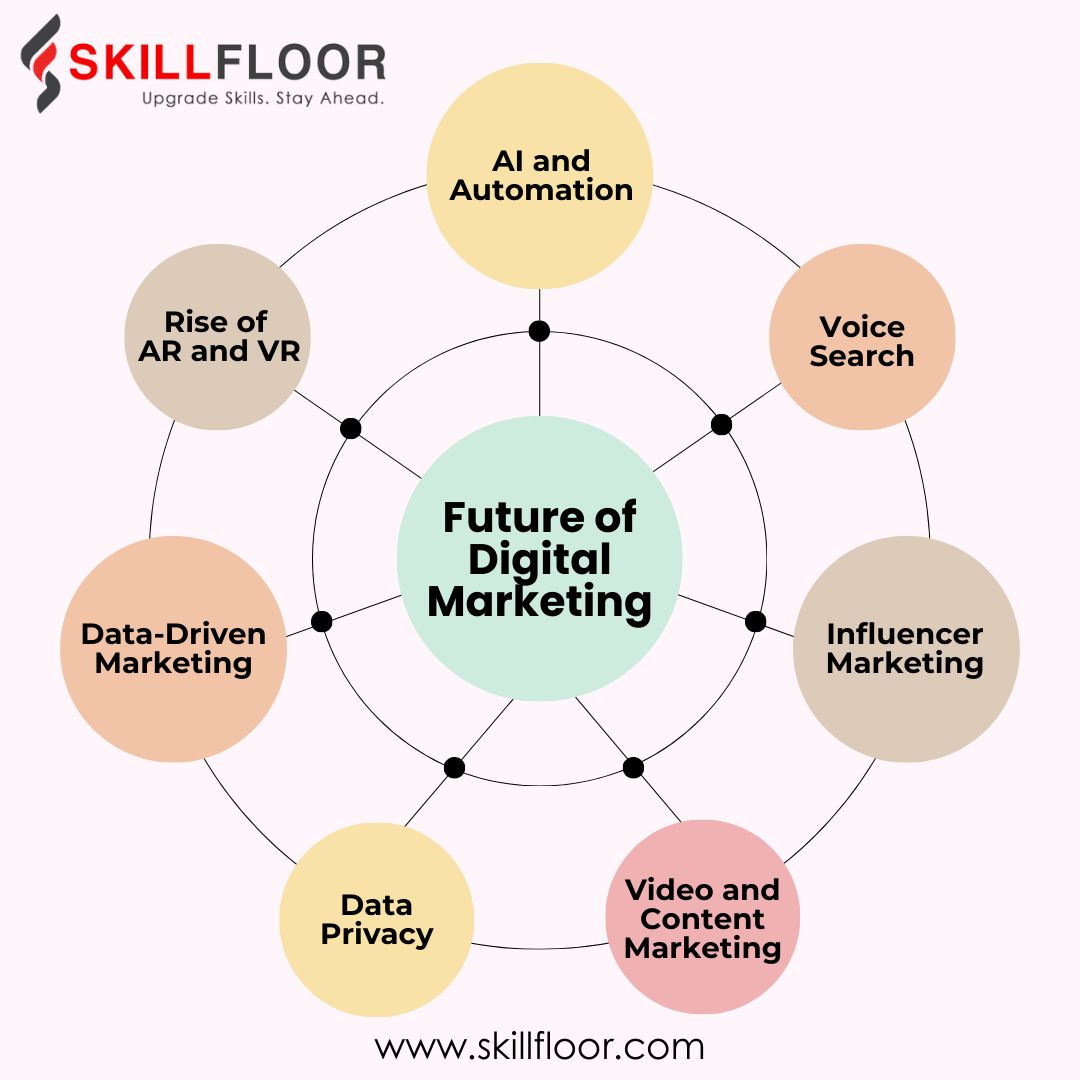
5. Data Privacy: The New Normal for Digital Marketing
Enormous power entails enormous responsibility. Businesses need to secure client data more the more information they know about them. Data privacy has gained popularity in recent years. Stricter legislation is being introduced by governments all around the world, including in India, to guarantee that personal data is treated appropriately.
-
Why It Matters: Clients want guarantees about the security of their personal information. While improper data management can result in legal problems and a loss of loyalty, transparency fosters trust and has an effect on the Digital Marketing Future in India.
-
What You Should Do: Give data privacy a priority. Make sure that your consumers are aware of the data you gather and the reasons behind it, and that you are taking reasonable precautions to secure their personal information.
6. Data-Driven Marketing: Enhancing Customer Engagement
Businesses are better able to interact when they use consumer data to build tailored advertising. Organizations may increase engagement and drive greater conversion rates by providing relevant content based on behavior and preference analysis.
-
Why It Matters: Businesses may provide consumers with individualized information that appeals to them through data-driven marketing. Higher conversion rates are the result of increased engagement and improved customer connections.
-
What You Should Do: Make use of consumer information to ascertain preferences. Make sure that the messaging you use in your marketing efforts is meaningful and pertinent to your target audience by customizing them to suit their unique demands.
7. The Rise of AR and VR: A New Way to Engage Customers
Virtual reality (VR) and augmented reality (AR) are gradually gaining traction in digital marketing. People might feel as though they are a part of the action because of the immersive experiences that these technologies produce.
-
Why It Matters: E-commerce is changing as a result of AR and VR, which let buyers see things before they buy them. This all-encompassing encounter increases self-assurance, improves client pleasure, and lowers return rates.
-
What You Should Do: Observe improvements in AR and VR. Examine how you may improve your business by using virtual try-ons or immersive experiences to provide clients with a more dynamic and interesting buying experience.
Industries That Will Benefit from Digital Marketing in India
-
E-commerce Industry: Digital marketing is helping e-commerce companies grow by expanding their reach and increasing revenues. The Digital Marketing Future in India predicts that personalized and targeted advertisements will help online commerce continue to flourish.
-
Education Sector: Edtech firms are reaching students throughout the country, promoting online courses, and growing internationally by utilizing digital marketing. The Digital Marketing Future in India holds the potential to completely transform the way that education is advertised and provided.
-
Healthcare Industry: Digital marketing is a tool used by hospitals and other healthcare organizations to communicate with patients. By providing telemedicine services, instructional materials, and appointment scheduling, these efforts result in increased patient involvement and better treatment.
-
Real Estate Market: With the use of targeted advertisements, virtual reality, and video tours, real estate companies can now more effectively present their properties online and facilitate the home-finding process for their clients.
-
Travel and Tourism: By providing individualized trip packages, promoting locations, and improving user experience with immersive material like films and virtual tours, travel agencies are reaching adventure-seekers and travelers through digital marketing.

Future of Digital Marketing Careers in India
The expansion of digital channels is likewise opening up fresh opportunities for marketing experts.
However, the job market for digital marketing is evolving in step with technology.
Future marketers may work across areas such as:
-
SEO
-
Performance Marketing
-
Social Media Marketing
-
Content Strategy
-
Analytics & Data Insights
-
CRM & Marketing Automation
-
Influencer Marketing & Conversion Optimization
-
AI-Assisted Marketing & AI Search Optimization
The distinctions between these roles can also grow more flexible.
For instance, a modern SEO professional might need to grasp analytics, content strategy, AI search, user experience, and technical SEO.
In a similar way, a performance marketer may increasingly engage with automation, AI-generated creative, customer data, and predictive analytics.
Will Digital Marketing Remain a Good Career in India?
Digital marketing is likely to remain an essential aspect of business, as companies will continue to need effective ways to attract new customers, communicate value, generate demand, and retain existing customers.
However, gaining digital marketing knowledge is not a one-time endeavor. Professionals who want to build practical skills can consider a digital marketing course that covers current tools, platforms, analytics, AI, and emerging marketing practices.
The tools, platforms, algorithms, consumer behavior, and privacy regulations are constantly changing. Skillfloor, as a digital marketing course provider, helps learners develop relevant skills and stay prepared as the industry continues to evolve.
Those who regularly update their skills and understand changing customer behaviour will be better positioned to adapt to these shifts.
Skills Digital Marketers Will Need in the Future
The future digital marketer will need a combination of technical, creative, analytical, and strategic skills.
Technical Skills
-
SEO
-
Paid advertising
-
Web analytics
-
Marketing automation
-
CRM platforms
-
Conversion optimization
-
AI marketing tools
-
Basic understanding of data
Creative Skills
-
Copywriting
-
Storytelling
-
Video content
-
Creative strategy
-
Content planning
-
Communication
Analytical Skills
-
Data interpretation
-
Campaign analysis
-
Customer research
-
A/B testing
-
Performance measurement
Strategic Skills
-
Marketing strategy
-
Customer journey planning
-
Audience segmentation
-
Brand positioning
-
Business understanding
AI Skills
Digital marketers should also learn how to:
-
Write effective prompts
-
Evaluate AI-generated content
-
Use AI for research
-
Automate repetitive workflows
-
Analyse marketing data with AI
-
Create content variations
-
Use AI responsibly
The most capable professionals won't merely understand how to operate AI tools.
They will understand which issues AI ought to address and where human judgment brings more value.
Challenges Facing the Future of Digital Marketing in India
Digital marketing in India keeps expanding, yet companies encounter obstacles such as intensifying competition, growing expenses, content saturation, privacy issues, and shifting customer behaviour.
1. Increasing Competition
An increasing number of businesses are putting money into digital channels, which makes it tougher to capture attention, gain visibility, and achieve organic reach.
2. Rising Customer Acquisition Costs
Growing competition may drive up advertising expenses, pushing businesses to enhance targeting, conversion rates, and campaign efficiency.
3. Content Saturation
Content created by AI is growing quickly, which makes originality, expertise, valuable information, and genuine brand communication increasingly important.
4. Privacy and Data Regulation
Businesses need to adjust to evolving privacy rules while handling customer data, personalization, advertising, and analytics in a responsible manner.
How Indian Businesses Can Prepare for the Future of Digital Marketing
Indian companies should prioritize solid digital foundations, customer requirements, new technologies, and quantifiable outcomes instead of chasing every fresh marketing trend.
1. Build a Strong Website
Build a quick, mobile-optimized, safe website that provides a reliable experience and helps customers easily locate key information.
2. Create Helpful Content
Respond to genuine customer inquiries with helpful, original material rather than writing articles purely to rank for keywords and boost search positions.
3. Prepare for AI Search
Produce content that is clear, credible, and well-organized so that search engines and AI systems can comprehend, process, and possibly cite it.
4. Build First-Party Relationships
Build direct connections with customers using suitable subscriptions, loyalty schemes, accounts, communities, and permission-based communication methods.
5. Invest in Video
Leverage short videos, how-to guides, demos, testimonials, and partnerships with creators to grab attention and convey product value effectively.
6. Use Regional Content
When targeting India's varied markets, tailor campaigns to regional languages, local tastes, cultural nuances, and customer requirements.
7. Use AI Responsibly
Apply AI to research, personalization, analysis, content support, and automation, while keeping human supervision, precision, originality, and brand consistency intact.
8. Measure Business Outcomes
Monitor leads, sales, revenue, customer acquisition, retention, and lifetime value rather than concentrating solely on impressions, followers, or clicks.
Digital Marketing Future in India: 2026–2030 Outlook
The coming years are likely to bring significant changes to how Indian businesses approach digital marketing.
2026–2027: AI Becomes Part of Everyday Marketing
Artificial intelligence (AI) is expected to become increasingly integral to various aspects, including content creation, campaign management, analytics, customer support, search, and marketing automation.
Marketers will spend less time on repetitive tasks and more time focusing on strategy, creative direction, customer understanding, and decision-making.
Search methods will continue to evolve as consumers increasingly use a combination of traditional search engines, AI assistants, social platforms, marketplaces, and other discovery channels.
2028–2030: More Connected and Personalized Marketing
Looking ahead, digital marketing may become more automated and personalized. Businesses might leverage integrated customer data, AI systems, automation, and real-time signals to create more responsive customer experiences.
At the same time, issues of privacy, transparency, and trust will remain critical.
Additionally, marketing in regional languages is expected to gain importance as businesses aim to reach audiences beyond India's major metropolitan areas.
While the exact pace of these changes is hard to predict, one thing is clear: digital marketing will continue to evolve alongside advancements in technology and shifts in consumer behavior.
Frequently Asked Questions
1. What is the future of digital marketing in India?
The future will focus on AI, evolving search, short-form video, creator marketing, regional languages, personalization, automation, first-party data, and privacy-conscious strategies.
2. Is digital marketing growing in India?
Yes, digital marketing continues growing as businesses across e-commerce, education, healthcare, finance, real estate, travel, and retail increasingly use digital channels.
3. Will AI replace digital marketing jobs?
AI may automate repetitive tasks, but marketers will still need creativity, strategy, customer understanding, analytical thinking, communication, and strong business decision-making skills.
4. What digital marketing skills will be in demand?
SEO, performance marketing, analytics, content strategy, social media, CRM, automation, conversion optimization, AI-assisted marketing, and AI search optimization will remain valuable skills.
5. Is SEO still important with AI search?
Yes, SEO remains important but is evolving. Businesses still need useful content, technical accessibility, authority, clear information, and strong user experiences.
6. How will regional languages affect digital marketing in India?
Regional languages will help businesses reach diverse audiences through localized content, multilingual websites, regional creators, local SEO, and language-specific digital campaigns.
The future of digital marketing in India is not about choosing between SEO, social media, video, advertising, AI, or content marketing. Instead, it involves integrating these elements to create connected, useful, and personalized customer experiences across various digital touchpoints.
AI will enable marketers to work more efficiently, and search will become increasingly conversational. Additionally, video content, creators, and regional-language materials will play a significant role in product discovery. As businesses strive to build stronger relationships with customers throughout their journey, first-party data, privacy-conscious strategies, and automation will become increasingly important.
However, technology alone will not ensure success. Businesses must also offer valuable products, provide trustworthy information, communicate creatively, and understand their customers. From 2026 to 2030, those businesses and digital marketers who continuously adapt their strategies, skills, and technologies will be better positioned to thrive in the evolving digital landscape.
Digital Marketing Courses in Other Locations in India
Ahmedabad | Aurangabad | Bangalore | Bhilai | Bhopal | Bhubaneshwar | Chandigarh | Chennai | Cochin | Coimbatore | Dehra Dun | Delhi | Faridabad | Ghaziabad | Gorakhpur | Guntur | Gurgaon | Guwahati | Hyderabad | Jaipur | Kanpur | Khammam | Kolkata | Lucknow | Madurai | Mumbai | Mysore | Nagpur | Noida | Patna | Pondicherry | Pune | Ranchi | Shimoga | Surat | Thane | Thiruvananthapuram | Tiruchirappalli | Tirupati | Vadodara | Visakhapatnam | Warangal | Jalandhar | Jodhpur | Indore | Durgapur | Jamshedpur | Dhanbad | Kota | Karnal | Udaipur | Amritsar | calicut | Nashik | Ludhiana | varanasi | thrissur | Mangalore | Raipur |
-
 yash Kalal63https://skillfloor.com/blog/digital-marketing-future-in-india
 -
yash Kalal63This piece gives a clear and insightful look into the future of digital marketing in India. The trends and opportunities discussed are very helpful for students and professionals alike. Great read for anyone interested in where the industry is headed
-
KHUSHIAwesome list! Could you do a follow-up post on how to start blogging in 2026 — step by step for beginners?
-
Mansi JainGreat article! This blog clearly explains how digital marketing is shaping the future in India. The insights on trends and opportunities were very valuable — thank you for sharing such useful content!